EMF and Male Fertility: How Exposure May Affect Sperm Health
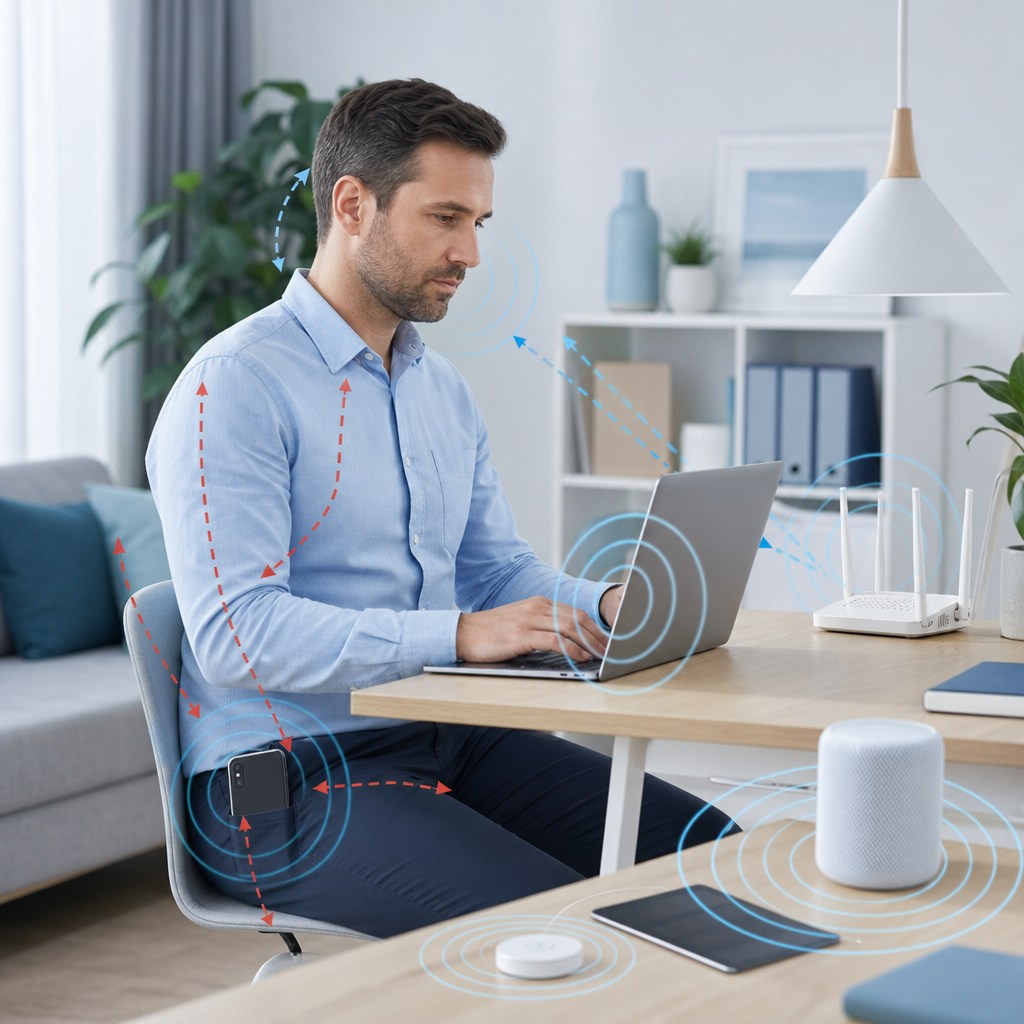
EMF exposure may affect male fertility by influencing sperm motility, viability, oxidative balance and testicular temperature. Laboratory findings justify practical exposure reduction, but human evidence remains mixed and does not prove that everyday devices cause infertility. Reduce avoidable close-range exposure through placement and, where you use them, EMF neutralisation — and seek medical assessment for fertility concerns.
Introduction
Electromagnetic fields are now part of ordinary Australian homes, vehicles and workplaces. Phones, laptops, routers and wireless accessories can create cumulative daily exposure around the body. This article separates established evidence from uncertainty, explains the possible effects on sperm health, and provides practical steps without presenting EMF reduction as medical treatment.
Male fertility deserves careful handling. Infertility can involve reproductive, hormonal, genetic, anatomical and lifestyle factors. EMF exposure is one possible environmental consideration, not a complete explanation. For wider context on EMF and health, see our EMF health concerns hub. Couples planning pregnancy may also want our EMF and fertility guide for couples — this guide focuses specifically on men and sperm health.
Protect your family from EMF exposure
Browse our science-backed neutralizer products.
Shop EMF ProtectionKey takeaways
- Laboratory and observational research has identified possible associations between radiofrequency EMF exposure and changes in sperm motility, viability and oxidative stress.
- Current research does not establish that normal mobile phone or Wi-Fi exposure directly causes infertility in an individual man.
- Carrying an active phone against the groin combines close-range radiofrequency exposure with possible heat and sedentary behaviour.
- EMF neutralisation offers a layered approach that complements behavioural changes — apply discs to phones, laptops and routers, and add Whole House USB where ambient exposure matters.
- Neutralising main sources can allow normal device use without constant rearrangement, but keeping phones out of pockets and laptops off the lap still matters, especially for heat. Aulterra products are not fertility treatments and do not replace medical care.
- Fertility testing is more useful than trying to infer sperm health from headaches, fatigue or an EMF meter.
Summary table
Different sources create different exposure patterns at the groin. A phone in a pocket is not the same as a router across the room or a laptop on the lap. This table separates the main source categories, typical male fertility considerations and the most practical actions in an Australian home.
- Field type
- Radiofrequency
- Main consideration
- Close groin contact, variable transmit power and possible heat
- Practical response
- Keep in a bag or on a desk; use speaker mode for longer calls; apply a Neutralizer Disc to address RF at the source
- Field type
- Radiofrequency plus heat and charger fields
- Main consideration
- Direct contact at the groin
- Practical response
- Use a desk or stand for heat and extra separation; apply a Neutralizer Disc to the laptop
- Field type
- Radiofrequency
- Main consideration
- Continuous background transmission near bed or desk
- Practical response
- Position away from beds, sofas and work chairs; optional mains timer overnight; apply a Neutralizer Disc or consider Whole House USB for ambient coverage
- Field type
- Radiofrequency
- Main consideration
- Long duration beside the body while sleeping
- Practical response
- Charge away from the bed
- Field type
- Radiofrequency and low-frequency fields
- Main consideration
- Phone, laptop, router and peripherals stacked close
- Practical response
- Neutralise main sources (discs + Whole House USB where useful); add distance or wired connections as complementary steps
- Field type
- Thermal (not RF)
- Main consideration
- Laptop or warm phone close to testes
- Practical response
- Improve placement first — heat and RF often overlap
Research abstract: what does the evidence say about EMF and male fertility?
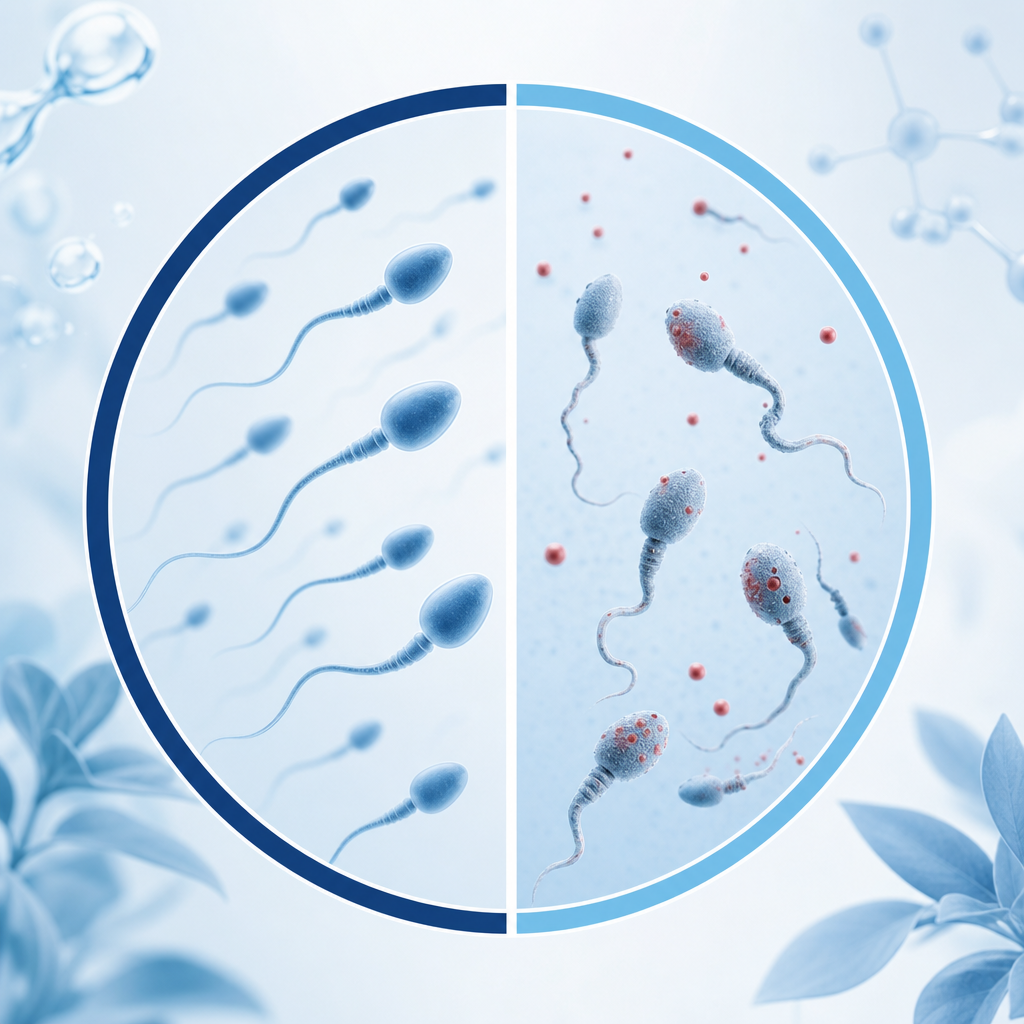
Research suggests that radiofrequency electromagnetic fields may influence some sperm characteristics under certain exposure conditions. Reported areas include motility, viability, morphology, DNA integrity and oxidative balance. However, variations in exposure methods, laboratory models and participant characteristics mean the evidence cannot establish that ordinary device use causes infertility in a particular person.
A systematic review and meta-analysis by Adams and colleagues, published in Environment International, examined mobile phone exposure and sperm quality. The authors found evidence of reduced sperm motility and viability across the included studies, while also identifying substantial limitations and variation between study designs (ScienceDirect). For wider context on sperm motility research, see our independent scientific studies guide.
A more recent systematic review published in Environment International and indexed by PubMed examined radiofrequency EMF exposure in relation to male fertility outcomes. It reinforces that this is an active research question rather than a settled clinical diagnosis (PubMed).
The distinction between a biological effect and a clinical fertility outcome matters. A laboratory change in sperm movement does not automatically mean a man will be infertile. Fertility depends on multiple semen parameters, reproductive anatomy, hormones, genetics, timing and the fertility of both partners.
Research also differs by exposure type. A sperm sample exposed directly in a laboratory is not equivalent to a phone sitting on a desk. Animal studies can explore mechanisms but cannot be applied directly to human fertility outcomes. Observational studies involving phone habits can be affected by recall errors, occupation, heat, stress and lifestyle.
The evidence therefore supports precaution, not panic. It is reasonable to reduce unnecessary exposure near the reproductive organs. It is not reasonable to tell someone that EMF is the confirmed cause of their infertility without a proper clinical investigation.
How could EMF exposure affect sperm health?
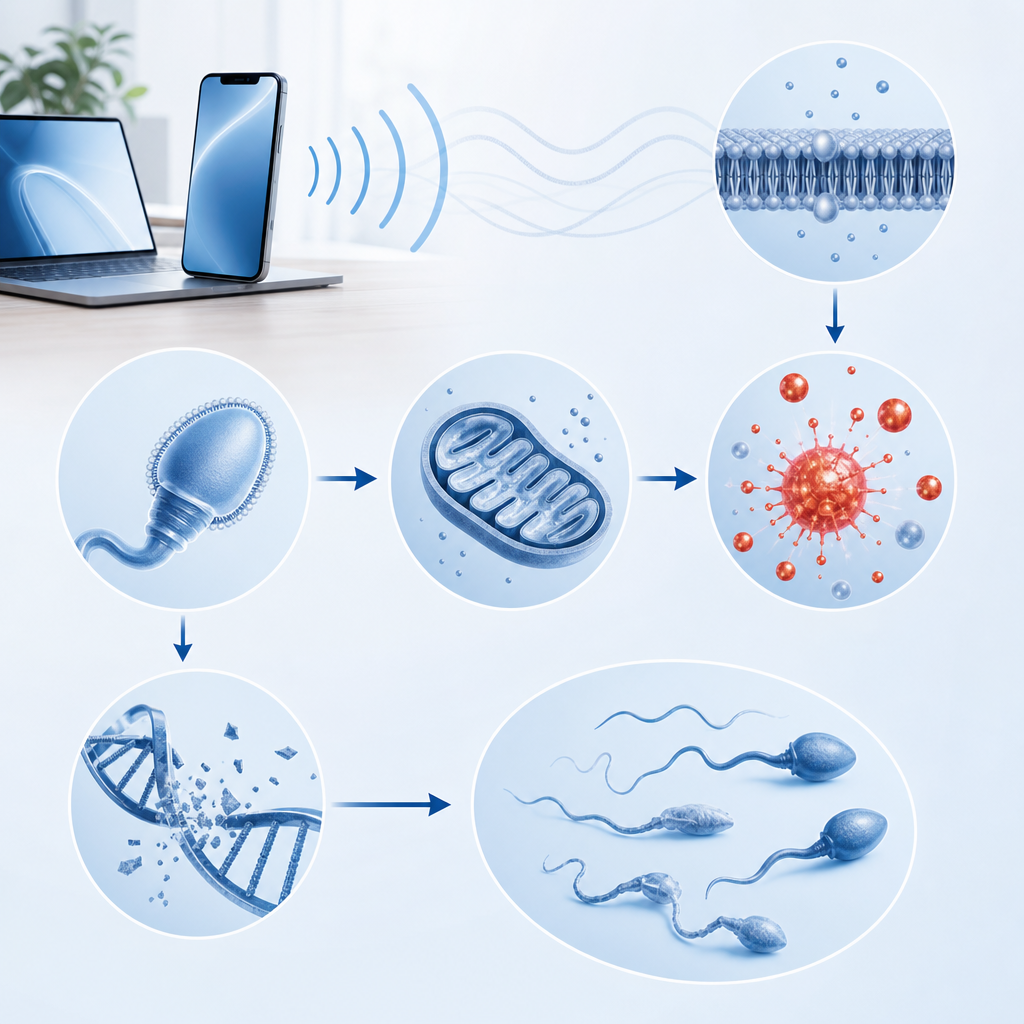
Hypothesised laboratory pathway — not established for everyday device use.
1. RF source — Radiofrequency waves emitted by everyday devices such as smartphones.
2. Cell membrane — RF may interact with the lipid components of the cell membrane, potentially affecting its properties.
3. Sperm cell — The sperm cell, with its specialised membrane and compact head, is the cell type studied in this proposed chain.
4. Mitochondria — Mitochondria in the midpiece may be impaired, reducing energy (ATP) production for motility.
5. Oxidative stress (ROS) — Impaired mitochondria and related stress may increase reactive oxygen species and oxidative damage.
6. DNA fragmentation — Oxidative stress may damage sperm DNA, leading to strand breaks and fragmentation.
7. Sperm quality — DNA damage and reduced energy may contribute to poorer motility, morphology and overall sperm quality.
That sequence is biologically plausible in controlled experiments; it is not proof that everyday pocket or lap use causes infertility in a particular man. Heat from devices close to the testes is a separate confounder and is not shown in the figure.
Oxidative stress
Reactive oxygen species have legitimate roles in sperm function. Excessive oxidative activity, however, can damage lipids, proteins and genetic material. Some experimental EMF studies report oxidative changes alongside reduced sperm movement or viability.
This does not mean every wireless signal creates harmful oxidative stress. Exposure frequency, power, duration, distance, tissue absorption and experimental conditions all matter. Nutrition, smoking, infection, inflammation and environmental pollutants can also influence oxidative balance.
Mitochondrial function and motility
Sperm need energy to move effectively. Mitochondria located in the midpiece help support that movement. Experimental findings linking radiofrequency exposure with mitochondrial disturbance offer one possible explanation for altered motility.
Motility is clinically relevant, but it is only part of a semen analysis. Concentration, morphology, semen volume and other factors also affect interpretation. Results can vary between samples, which is why fertility professionals may recommend repeat testing rather than relying on one result.
DNA integrity
Some laboratory studies have investigated whether EMF exposure is associated with sperm DNA fragmentation or related markers. These findings deserve attention because genetic integrity matters for fertilisation and embryo development.
The evidence is not strong enough to diagnose EMF-related DNA damage from device habits alone. Specialist testing may be appropriate in selected fertility cases, but the decision belongs in a clinical assessment.
Heat as a confounding factor
Heat is often overlooked in discussions about EMF and male fertility. A laptop resting directly over the groin can raise local temperature regardless of its wireless connection. A phone working hard in a weak-signal area may also become warm.
That means a poor setup can combine two issues: heat and radiofrequency exposure close to the testes. Moving the device away addresses both without requiring a debate about which factor matters more.
Which everyday EMF sources deserve the most attention?
Prioritise sources that are close to the groin, transmit frequently or remain near the body for long periods. A phone in a pocket, laptop on the lap and wireless device beside the bed deserve more attention than equipment used briefly across a room. Exposure control should follow proximity, duration and transmission behaviour.
Mobile phones carried on the body
A phone does not transmit at one fixed level. Its behaviour changes with signal strength, data use, calls, background applications and connection type. Exposure at the body is also affected by distance, so moving the phone from a pocket to a bag is a simple control.
If you must carry it close to the body, review which wireless functions are actually required. Flight mode can reduce transmission, but Bluetooth and Wi-Fi settings should be checked separately because their behaviour depends on the device.
Do not rely on an EMF-blocking phone case as proof that all exposure has been blocked. Poorly designed shielding can interfere with signal reception and cause a phone to adjust its transmitting power. Product design and intended use matter. EMF neutralisation works differently — it retunes the field at the source rather than blocking the signal, so the phone can continue to function normally.
Laptops and tablets
Despite the name, a laptop is better used on a desk. This reduces heat at the groin and increases distance from internal wireless transmitters. A separate keyboard can create more space where needed.
Downloading large files or joining video calls can involve more sustained wireless activity than reading an offline document. The practical answer is not to avoid useful technology. It is to improve placement and use wired internet where that fits the workspace.
Routers, mesh nodes and smart devices
Routers usually operate continuously, making placement important. Avoid positioning a router directly beside a bed, underneath a frequently occupied chair or next to a home-office desk when another location provides adequate coverage.
Mesh systems can add access points throughout a home. That may improve connectivity, but each node becomes another source. Place nodes for network performance without surrounding sleeping and working positions unnecessarily.
Electric fields and household infrastructure
EMF is not limited to radiofrequency signals. Mains wiring, appliances, power supplies and electrical faults can produce electric or magnetic fields. A consumer radiofrequency meter will not necessarily measure these other field types.
Australian exposure guidance is set by the Australian Radiation Protection and Nuclear Safety Agency. ARPANSA explains that radiofrequency limits are intended to protect against established adverse health effects (ARPANSA). Meeting a public exposure limit, however, is not the same as proving that every long-term fertility question has been resolved.
How can men reduce cumulative daily exposure?
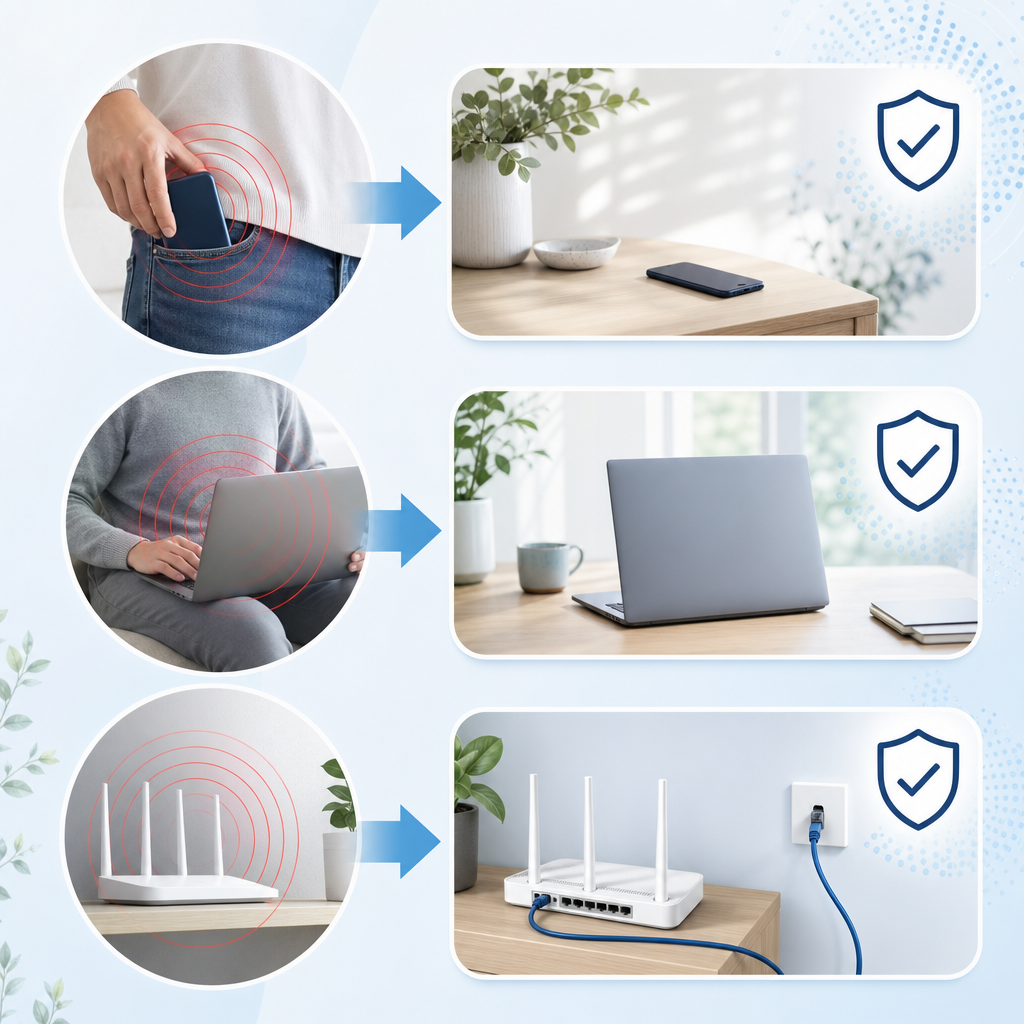
Most avoidable close-range exposure at the groin comes from everyday placement — a phone in a pocket, a laptop on the lap, a router beside the bed or desk. Increasing distance, shortening contact time and switching to wired connections where practical are low-cost steps compatible with fertility care. The panel above shows three common shifts.
Practical steps: distance and placement
- Increase distance between the source and the body — especially the groin.
- Reduce the time spent in close contact with transmitting devices.
- Remove wireless functions that serve no useful purpose, and substitute wired connections where practical.
- Address heat where devices rest against the body — a laptop on the lap is the most common example.
Heat and radiofrequency often overlap at the groin. Moving a laptop to a desk, keeping a phone on a surface rather than in a pocket, and relocating a router away from where you sleep and work address proximity directly.
Change phone habits
Use speaker mode and keep the phone away from your body for longer calls. Place the phone on a desk rather than in a pocket when working. Avoid sleeping with it beneath a pillow or against the torso.
When reception is poor, consider waiting before making a long call if the call is not urgent.
Improve the bedroom
The bedroom is a sensible place to reduce unnecessary overnight exposure. Move charging phones away from the bed, avoid placing routers against the bedroom wall where practical, and switch off wireless functions that are not needed overnight.
The goal is not to make the room technologically sterile. It is to stop surrounding the body with active devices for no practical reason. Your home should work with you, not against you.
Measure carefully
An EMF meter can help locate strong sources and compare positions, but measurement is easy to misinterpret. A single reading does not represent total exposure, absorbed dose or fertility risk. Different meters detect different frequencies and field types.
Use measurements to answer practical questions. Is one side of the bed higher than another? Does moving the router reduce the reading at the desk? Is a device transmitting while apparently idle? See our home EMF testing guide for meter types and limits. For complex electrical concerns, use a qualified professional rather than relying entirely on a consumer meter.
Support established fertility factors
EMF reduction should sit beside established health measures. Discuss smoking, alcohol, medications, occupational exposures, weight, infections, heat and relevant medical conditions with a health professional. Do not stop prescribed medication based on an online article.
Healthdirect Australia recommends speaking with a doctor when pregnancy is not occurring as expected or when there are known fertility concerns (Healthdirect Australia). A clinician may arrange semen analysis, hormone testing, examination or specialist referral.
Placement and distance address proximity and heat directly. They do not retune the electromagnetic field at each source. EMF neutralisation — through Neutralizer Discs on phones, laptops and routers, and Whole House USB where ambient exposure matters — works at the source so everyday device use does not require constant rearrangement, but it does not remove the value of keeping phones out of pockets or laptops off the lap, especially for heat.
Where do Aulterra EMF protection products fit?
Aulterra products are designed for layered EMF neutralisation at personal, device, room and travel levels. Neutralizer Discs, pendants, whole-house USB and whole-car USB devices retune incoherent fields at the source rather than blocking signals.
The mechanism is field retuning, not shielding — see how Aulterra neutralisation works. The phone continues to function; the aim is to address the incoherent field component linked to oxidative stress in laboratory research, not to block communication.
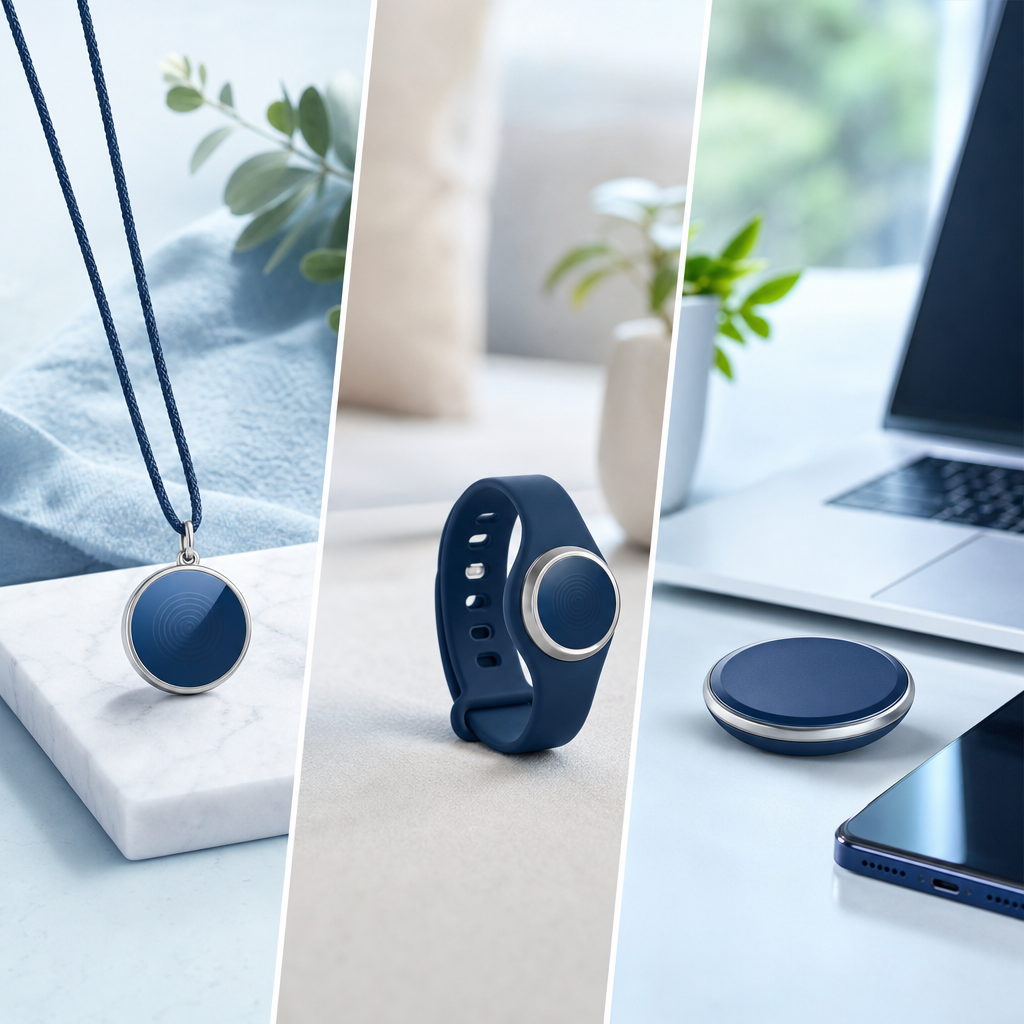
Neutralizer Discs can be applied to commonly used devices such as phones, tablets, laptops and routers. A pendant or wristband provides a wearable option for people moving between multiple environments. A whole-car USB neutraliser is intended for the concentrated mix of electronics and wireless systems encountered during travel.
The practical approach is to map exposure by location:
- Personal layer: consider a pendant or wristband for changing environments.
- Device layer: apply discs to frequently used phones, laptops and other devices.
- Room layer: consider Whole House USB for ambient home exposure; apply discs to routers and improve placement where practical.
- Travel layer: consider the whole-car USB neutraliser for regular driving.
At EMF Neutralizer, we describe this as layered EMF protection. It is designed to help people take control of their immediate environment rather than sell fear about every electrical device. Browse the EMF protection hub before choosing products.
Our customer outcome descriptions include an estimated 60–85% improvement in perceived EMF-related fatigue after product application across residential use cases. This is EMF Neutralizer's own qualitative customer experience data, not a controlled clinical finding.
In one workplace case from our own experience, an individual spent long working days surrounded by a laptop, external monitor, mobile phone and wireless peripherals. After products were applied to the concentrated device cluster, the user estimated that headache frequency fell by 70–90% over four weeks and reported better concentration. Individual results vary.
No EMF product is proven to improve sperm count or guarantee conception. Fertility concerns belong with semen analysis and medical care.
Why we focus on combined exposure, not one device in isolation
Our view is that modern exposure should be assessed as a system. Regulatory compliance usually evaluates defined sources and exposure conditions, while real homes combine phones, routers, smart meters, computers, televisions and wireless accessories. The invisible electromagnetic burden is therefore shaped by cumulative daily exposure, device proximity and personal behaviour.
This does not mean that several compliant devices automatically create a dangerous environment. It means single-device thinking can miss how people actually live.
Consider a man working from home. His phone stays in his pocket, a laptop rests on his lap, a router sits beside the desk and wireless earbuds remain connected. Each source has a different power, frequency and transmission pattern. His practical question is not whether one device passes a standard. It is whether the entire setup can be improved without reducing his ability to work.
Our answer is yes. Neutralise your main devices and improve placement together. Move the phone out of the pocket. Raise the laptop onto a desk. Relocate the router. Use wired connections when convenient. Neutralisation and distance each address a different part of the setup; neither makes the other unnecessary.
This position also avoids two unhelpful extremes. The first says every wireless signal is harmless under every circumstance. The second claims EMF is the hidden cause of nearly every symptom or fertility problem. Neither position gives men a useful decision process.
The better standard is proportional action. Reduce what is easy to reduce. Preserve useful technology. Track meaningful outcomes. Use semen analysis and medical advice for fertility questions. Use symptom reports only for what they are: personal observations.
When should fertility concerns be medically investigated?
Seek medical advice when conception is taking longer than expected, semen results are abnormal, sexual function has changed, or there is a history of testicular injury, infection, surgery or reproductive illness. Urgent assessment is appropriate for severe testicular pain or swelling. EMF reduction should never delay diagnosis or evidence-based care.
A fertility assessment may include medical history, physical examination and semen analysis. Further testing depends on the findings. The World Health Organization describes infertility as a condition involving the male or female reproductive system, which underscores why both partners may need assessment (WHO).
Tell the clinician about occupational and environmental exposures. Relevant details may include heat, solvents, pesticides, radiation, shift work and intensive device use close to the body. This gives the clinician context without assuming the cause.
If you make practical EMF changes, keep them compatible with clinical care. Do not delay semen testing while waiting to see whether a product works. Do not interpret improved energy or fewer headaches as proof that sperm quality has improved. Only appropriate testing can assess that question.
References
- Adams, J.A. et al., "Effect of mobile telephones on sperm quality: A systematic review and meta-analysis", Environment International. https://doi.org/10.1016/j.envint.2014.04.015
- Environment International systematic review indexed by PubMed, PMID 38492496. https://pubmed.ncbi.nlm.nih.gov/38492496/
- Australian Radiation Protection and Nuclear Safety Agency, "Mobile phones". https://www.arpansa.gov.au/understanding-radiation/radiation-sources/more-radiation-sources/mobile-phones
- World Health Organization, "Infertility". https://www.who.int/news-room/fact-sheets/detail/infertility
- Healthdirect Australia, "Infertility". https://www.healthdirect.gov.au/infertility
Stay informed on EMF wellness
Get practical tips and product updates in your inbox.
Frequently asked questions
Does our "emf and male fertility" guide explain what the evidence does and does not show?
Yes. This guide explains that current evidence has not established that everyday EMF below recognised public limits causes male infertility in an individual man, while outlining where sperm research remains limited and how to reduce avoidable close-range exposure at home.
Can carrying a mobile phone in a pocket affect sperm?
Research has identified possible associations between close mobile phone exposure and changes in sperm motility or viability, but it has not proven that pocket use causes infertility in an individual man. Carrying the phone in a bag or placing it on a desk is a simple precaution.
Does Wi-Fi cause male infertility?
Current evidence does not establish that compliant everyday Wi-Fi causes male infertility. Wi-Fi comes from routers and from phones, laptops and other connected devices — reduce avoidable close-range exposure by keeping those sources away from your groin, bed and work chair where practical.
Can sperm damage from EMF be reversed?
There is no reliable basis for promising that suspected EMF-related sperm changes can be reversed. Sperm health is influenced by many factors. A clinician can assess semen parameters, investigate likely causes and recommend evidence-based management.
Should I stop using a laptop on my lap?
Using a desk or laptop stand is a sensible precautionary step because it increases distance from wireless components and reduces direct heat around the groin. Heat can also confound attempts to isolate EMF as the cause of a sperm change.
Do EMF neutralisers improve sperm count or fertility?
Aulterra neutralisers retune incoherent fields at the source so normal phone and laptop use does not require constant avoidance. They are not proven to increase sperm count or guarantee conception. Many men neutralise devices and continue usual habits; others add distance as a complementary precaution, especially where heat is involved. Semen concerns belong with a GP or fertility specialist.
How can I test whether EMF is affecting my fertility?
A consumer EMF meter cannot determine whether exposure has affected fertility. Semen analysis and medical evaluation are the appropriate methods for assessing sperm health, while an EMF meter can help identify sources and compare locations.
Are EMF protection products TGA approved?
EMF protection products including neutraliser discs and whole-house USB devices are not medical devices and are not subject to TGA (Therapeutic Goods Administration) regulation in Australia. The TGA regulates products intended to diagnose, prevent, or treat medical conditions. EMF neutralisation products are environmental wellness products designed to modify the electromagnetic field properties of emission sources. They are not presented as treatments for infertility or any medical condition. Fertility concerns and semen results should be assessed and managed by a GP or fertility specialist.

Richard Kent
Science-backed EMF wellness education from the EMF Neutralizer team.
Related articles
Comparison page: pendant vs wristband vs disc for EMF protection
A pendant is the strongest all-purpose choice for personal EMF protection, while a wristband suits people who prefer a wearable away from the neck. A disc is di…
5G Health Concerns Australia
Australian health authorities say 5G radiofrequency exposure below national limits has not been shown to cause adverse health effects. However, that does not ma…
EMF and pregnancy risks
EMF and pregnancy risks remain uncertain at normal household exposure levels. Australian and international regulators have not established that compliant everyd…