How to Test EMF Levels at Home Australia: A Practical Guide for 2026
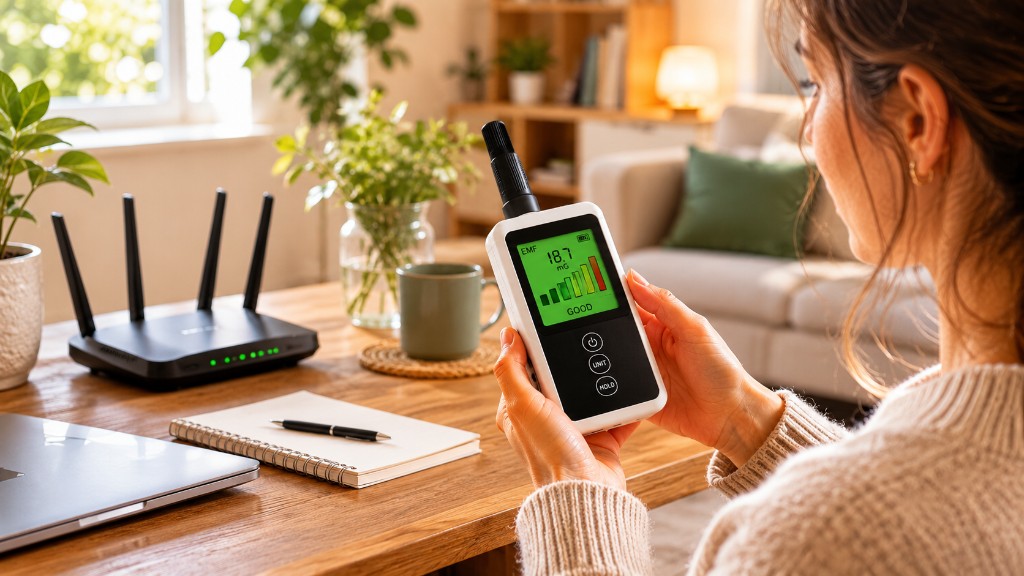
Most Australian homes contain more than 15 active EMF sources at any given moment. Your NBN router, smart meter, microwave, baby monitor, laptop, mobile phone, television, cordless phone, and every Bluetooth peripheral in the house is continuously radiating electromagnetic fields into your living space. Yet fewer than 5% of Australian homeowners have ever picked up a meter and actually measured what they are living inside.
That gap between exposure and awareness is the problem this guide addresses. You cannot make informed decisions about your environment if you do not know what your environment contains. Testing your home for EMF is not a complicated or expensive process. It requires a basic understanding of what you are measuring, a meter suited to the task, a methodical approach to each room, and a clear framework for interpreting what the numbers mean.
This guide covers all of it. By the time you finish reading, you will know which meter to buy, how to use it, what readings are considered acceptable under Australian standards, where the hotspots in your home are most likely to be hiding, and what practical steps you can take once you have the data. Whether you are motivated by persistent sleep problems, unexplained fatigue, concern for your children, or simply a desire to take control of your immediate environment, the process starts with measurement. Let us get into it.
Key Takeaways
- The average Australian home has more than 15 simultaneous EMF sources, and cumulative daily exposure from multiple devices is the relevant measure, not any single device in isolation.
- There are three distinct types of EMF to test: radiofrequency (RF) radiation, magnetic fields, and electric fields. Each requires specific meter capabilities or a multi-field device.
- ARPANSA sets Australian public exposure limits based on ICNIRP guidelines, but these thresholds apply to single-source, acute exposure scenarios, not to chronic, multi-source residential environments.
- A quality consumer EMF meter in Australia costs between $150 and $600 AUD and provides reliable directional data for identifying hotspots and tracking changes over time.
- Common EMF hotspots in Australian homes include smart meters, NBN routers, microwave ovens, baby monitors, and home office desk setups.
- Once you have your baseline readings, a layered protection strategy combining distance, shielding, and neutralisation products gives you the most practical and sustainable outcome.
Protect your family from EMF exposure
Browse our science-backed neutralizer products.
Shop EMF ProtectionSummary Table: Popular EMF Meters Available in Australia (2026)
- Price Range (AUD)
- $260 - $310
- Measures
- RF, magnetic field, electric field
- Best For
- All-round home testing
- Skill Level
- Beginner to intermediate
- Price Range (AUD)
- $200 - $250
- Measures
- RF, magnetic field, electric field
- Best For
- Value multi-field testing
- Skill Level
- Intermediate
- Price Range (AUD)
- $380 - $430
- Measures
- RF only
- Best For
- Detailed RF/wireless auditing
- Skill Level
- Intermediate to advanced
- Price Range (AUD)
- $150 - $190
- Measures
- RF, magnetic field, electric field
- Best For
- Budget multi-field entry point
- Skill Level
- Beginner
- Price Range (AUD)
- $440 - $510
- Measures
- RF only
- Best For
- High-sensitivity RF testing
- Skill Level
- Advanced
What Is EMF and Why Should You Test It
Electromagnetic fields are areas of energy that surround electrical devices and wireless transmitters. They exist on a broad spectrum. At the high-frequency end you have ionising radiation such as X-rays and gamma rays, which carry enough energy to break chemical bonds in biological tissue. The type of EMF produced by household devices sits at the non-ionising end of the spectrum, meaning the energy level is lower and the mechanism of interaction with the body is less direct.
That does not mean it is irrelevant. Non-ionising EMF includes radiofrequency radiation from Wi-Fi routers, mobile phones, smart meters, and Bluetooth devices, as well as extremely low frequency (ELF) magnetic and electric fields from powerlines, appliance wiring, and mains electricity running through your walls.
The mainstream position is that non-ionising EMF at the levels produced by consumer devices is too low to cause measurable biological harm. That position is based on regulatory thresholds set for single-device, acute exposure scenarios. It does not account for the reality of a person sitting inside a home where a router, smart meter, laptop, phone, television, and several smart appliances are all operating simultaneously for sixteen hours a day, every day.
At EMF Neutralizer, our position is direct: cumulative, chronic exposure to multiple simultaneous EMF sources creates an invisible electromagnetic burden that the body registers even when each individual device output falls below regulated thresholds. The aggregate daily load is the relevant measure. Regulatory limits are a floor, not a target, and treating them as a target means accepting a standard designed for controlled test conditions, not for the way Australians actually live in 2026.
Testing your home does not require you to accept either extreme of this debate. It simply gives you data. Data lets you make decisions. That is the point.
The Three Types of EMF You Need to Measure
Before you pick up a meter, you need to understand what you are trying to detect. There are three distinct EMF fields present in a typical Australian home, and they behave differently, come from different sources, and require different approaches to reduce.
Radiofrequency (RF) Radiation RF radiation sits in the frequency range of roughly 3 kHz to 300 GHz. In a residential setting, it comes from Wi-Fi routers (operating at 2.4 GHz and 5 GHz), mobile phones and cellular networks (including 4G and 5G), smart meters transmitting data to the grid, Bluetooth devices, baby monitors, smart TVs, and cordless phones. It is measured in microwatts per square centimetre (µW/cm²) or milliwatts per square metre (mW/m²). Of the three field types, RF is the one most Australians are underestimating in 2026 because the number of wireless devices in the average home has grown substantially over the past decade.
Extremely Low Frequency (ELF) Magnetic Fields ELF magnetic fields are generated by electrical current flowing through any conductor, which means they are present wherever electricity is in use. Common sources include powerlines overhead or underground near your home, switchboards, electrical wiring in walls, appliances with motors (refrigerators, washing machines, air conditioners), laptops, and desktop computers. They are measured in milligauss (mG) or microtesla (µT). Magnetic fields pass through most building materials without significant attenuation, which makes distance the primary mitigation strategy.
ELF Electric Fields Electric fields are generated by voltage rather than current. They are present whenever a device is plugged in, even if it is switched off, as long as the cable is carrying mains voltage. Electric fields are measured in volts per metre (V/m) and are more easily shielded than magnetic fields. Grounded conductive materials attenuate electric fields significantly, which is why earthed electrical wiring reduces your exposure compared to unshielded wiring.
Understanding which field type is elevated in which room determines what you can realistically do about it. A meter that only detects one field type will leave you with an incomplete picture.
Types of EMF Radiation in Australian Homes
The Australian residential environment in 2026 is more electromagnetically complex than it was a decade ago. The rollout of the NBN has placed high-output routers in virtually every home. Smart meters have been installed across most states and territories, typically attached to or embedded in the wall of the home itself. The proliferation of smart home devices, streaming devices, and wireless peripherals means the average home now has multiple devices transmitting RF continuously, not just when actively in use.
Here is a breakdown of the most significant sources by category.
Wireless and RF Sources
NBN Routers and Modems An NBN router is one of the highest-output RF sources in the average Australian home, and unlike a mobile phone, it broadcasts continuously in all directions 24 hours a day. Most routers operate on both 2.4 GHz and 5 GHz bands simultaneously. Dual-band and tri-band routers, which are now standard in homes with multiple streaming devices, output higher aggregate RF levels than older single-band units. Placement matters enormously. A router positioned in a living room or home office, where you spend multiple hours daily, will contribute far more to your cumulative daily exposure than one positioned in a hallway or utility space.
Smart Meters Smart meters have been progressively installed across Australian states and territories by energy retailers and distributors. They communicate consumption data wirelessly to the grid using radiofrequency signals, typically in the 915 MHz range. The transmission pattern is not continuous in the way a router is. Smart meters typically burst-transmit at intervals, but the peak RF levels during those transmissions can be significant at close range. Because smart meters are typically installed on an exterior wall, the rooms on the other side of that wall receive the highest internal exposure. Bedrooms and home offices positioned adjacent to the meter box are a particular concern.
Mobile Phones and Tablets The mobile phone is the EMF source most people carry closest to their body for the longest period each day. When a phone is searching for signal, actively on a call, or transmitting data, its RF output increases substantially. In low-signal areas, a phone works harder to maintain connection, producing higher emissions. The same applies to tablets with cellular connections. These are the sources over which you have the most direct control, and measuring their output at typical use distances is instructive.
Bluetooth Devices Bluetooth operates in the 2.4 GHz band, the same band as most Wi-Fi networks. Individual Bluetooth devices produce lower power levels than routers, but in a typical home office or lounge room, you may have wireless headphones, a keyboard, a mouse, a smartwatch, speakers, and a smart TV all broadcasting Bluetooth signals simultaneously. The cumulative contribution is not negligible.
Wired and Electrical Sources
Powerlines Australians living near high-voltage overhead powerlines or underground cable corridors will typically measure elevated ELF magnetic fields in the rooms and outdoor areas closest to the infrastructure. The intensity drops off with distance according to an inverse relationship, so even modest increases in distance produce significant reductions in field strength. The relevant Australian guideline for public exposure to powerline magnetic fields is set by ARPANSA.
Household Wiring and Electrical Panels The wiring running through your walls carries mains current at 50 Hz, generating ELF magnetic and electric fields throughout the home. The switchboard or consumer mains panel is typically the highest ELF source in the building structure. Rooms immediately adjacent to the switchboard, or where wiring runs along the wall closest to where you sleep or sit, will show elevated readings.
Appliances Appliances with electric motors produce significant ELF magnetic fields while operating. Refrigerators, washing machines, dryers, dishwashers, and air conditioning units all fall into this category. The fields drop off quickly with distance, typically following an inverse-square relationship, but at contact range or within half a metre, the readings can be substantial. Microwave ovens are a dual source: they produce ELF fields from their electrical components and, if the door seal is worn or compromised, they can leak RF radiation in the 2.4 GHz range.
ARPANSA Guidelines and Safe Exposure Limits
ARPANSA, the Australian Radiation Protection and Nuclear Safety Agency, is the national authority responsible for setting and maintaining radiation protection standards in Australia. For EMF exposure, ARPANSA's standards are based on the guidelines published by the International Commission on Non-Ionizing Radiation Protection (ICNIRP).
The current ARPANSA standard for public exposure to radiofrequency EMF (covering the range from 100 kHz to 300 GHz, which includes Wi-Fi, mobile phones, and smart meters) sets a general public reference level. At 2.4 GHz (Wi-Fi frequency), the ARPANSA/ICNIRP reference level for continuous public exposure is 1,000,000 µW/m², which is equivalent to 100 µW/cm². At 900 MHz (smart meter and mobile network frequency), the reference level is lower, reflecting the frequency-dependent absorption characteristics of biological tissue.
For ELF magnetic fields (such as those from powerlines and household wiring at 50 Hz), the ARPANSA reference level for the general public is 1,000 mG (100 µT).
What These Numbers Actually Mean in Practice
Those reference levels sound reassuringly high until you understand what they represent. ARPANSA and ICNIRP thresholds are based on preventing acute, short-term thermal effects, meaning tissue heating from RF exposure. They are derived from occupational and controlled-exposure research, then divided by safety factors to produce public limits.
They are not derived from long-term, residential, multi-source exposure research. They do not address the scenario of a person spending sixteen hours a day inside a home with an NBN router, a smart meter on the adjacent wall, a laptop on the desk, a phone in their pocket, and multiple smart devices transmitting in the background. The regulatory framework simply does not model that scenario.
This is why independent researchers and organisations such as the BioInitiative Working Group have proposed far more precautionary guidelines. The BioInitiative 2012 report, which has been updated with subsequent research, recommends a precautionary limit of 3 to 6 µW/m² for outdoor, chronic RF exposure in areas where people live and sleep, compared to ARPANSA's 1,000,000 µW/m². That is a gap of many orders of magnitude.
You do not need to resolve that scientific debate to benefit from testing your home. What you need to know is:
- Green zone (low concern): RF below 10 µW/m², ELF magnetic field below 1 mG. These are levels consistent with precautionary research recommendations.
- Amber zone (moderate, worth reducing): RF between 10 and 1,000 µW/m², ELF magnetic between 1 and 3 mG. Reduction through distance and positioning is advisable, particularly in bedrooms and children's rooms.
- Red zone (elevated, act on it): RF above 1,000 µW/m², ELF magnetic above 3 mG. These levels warrant active mitigation. You are well below ARPANSA's formal limit but significantly above precautionary benchmarks.
Using this three-tier framework gives you actionable categories without either dismissing the readings as irrelevant or creating unnecessary alarm.
Choosing the Right EMF Meter
The meter you choose determines the quality and completeness of the data you collect. There are three broad categories of consumer EMF meters relevant to residential testing in Australia.
Single-Axis vs. Three-Axis Meters
For ELF magnetic field measurement, meters can be single-axis or three-axis. A single-axis meter measures the field in one direction at a time, which means you need to rotate the meter through all three spatial axes and record the peak reading to get an accurate result. A three-axis (isotropic) meter simultaneously measures all three axes and displays the combined field strength, which is more convenient and less prone to user error. For home testing, a three-axis ELF capability is preferable.
Key Meters Available in Australia
Trifield TF2 ($260-$310 AUD) The Trifield TF2 is the most commonly recommended all-in-one meter for home testing among Australian EMF professionals and informed consumers. It measures RF radiation, ELF magnetic fields (with a true three-axis weighted mode), and ELF electric fields. Its frequency-weighted magnetic field mode is particularly useful for residential testing because it weights measurements to reflect the frequencies most commonly encountered in homes. The display is analogue-style with a digital readout, the response time is fast enough to capture smart meter bursts, and the sensitivity is appropriate for assessing rooms against precautionary benchmarks. It is not a laboratory instrument, but for residential purposes it is highly capable.
Cornet ED88TPlus ($200-$250 AUD) The Cornet ED88TPlus offers reasonable multi-field capability at a lower price point. It covers RF from 100 MHz to 8 GHz, ELF magnetic fields, and ELF electric fields. Its RF sensitivity is slightly lower than the Trifield TF2 and the Safe and Sound Pro II, meaning it may underreport low-level ambient RF in environments where background levels are already modest. In higher-RF environments such as urban homes near multiple Wi-Fi networks, it performs adequately. It is a solid choice for a budget-conscious buyer who wants multi-field coverage.
Safe and Sound Pro II ($380-$430 AUD) If RF radiation is your primary concern, particularly in relation to smart meters, NBN routers, and 5G infrastructure, the Safe and Sound Pro II is the most sensitive consumer RF meter available in Australia at this price point. It covers 200 MHz to 8 GHz and has an analogue display bar graph with a numerical readout and an audio output that lets you hear the signal characteristics of different RF sources. It does not measure ELF magnetic or electric fields, so you would need a separate instrument for those. Audiophiles of EMF testing favour it because the audio output reveals the pulsing patterns of Wi-Fi, smart meter, and cellular transmissions in a way that a numerical display does not convey.
GQ EMF-390 ($150-$190 AUD) The GQ EMF-390 is the entry-level option on this list. It covers RF, ELF magnetic fields, and ELF electric fields, and includes data logging and graphing capability via a computer connection, which is genuinely useful for tracking smart meter burst patterns over time. Its RF sensitivity is the lowest of the meters listed here, and it may miss low-level ambient RF in quiet environments. For a first-time tester who wants to identify obvious hotspots and get a general picture of their home without a significant investment, it is a reasonable starting point.
Acoustimeter AM-11 ($440-$510 AUD) The Acoustimeter AM-11 is a specialist RF meter designed with both numerical and LED bar graph displays covering 200 MHz to 8 GHz. It is highly sensitive and well-regarded for its accuracy at low RF levels, which is where the precautionary benchmarks sit. Like the Safe and Sound Pro II, it is RF-only. For comprehensive home surveys, you would pair it with a separate ELF meter. It is the preferred choice for consultants conducting professional EMF surveys.
Our Recommendation
For most Australian households conducting their first home EMF survey, the Trifield TF2 is the best single-instrument choice. It covers all three field types, it is accurate enough to provide meaningful data relative to precautionary benchmarks, and it is straightforward to use without specialist training. If RF from wireless devices is your dominant concern and you want the most sensitive reading possible, add a Safe and Sound Pro II or Acoustimeter AM-11 to complement it.
Step-by-Step: How to Test Every Room
Testing your home methodically produces far more useful data than spot-checking the obvious locations. Follow this process room by room.
Before You Start
- Document your sources. Walk through the home and list every EMF source: routers, smart meter location, appliances, entertainment systems, smart devices, baby monitors, and any wiring visible in utility areas. Photograph the meter box location from inside the adjacent room so you know which wall it is on.
- Set your devices to normal operation. Test under real-world conditions. Wi-Fi should be on, appliances in typical use patterns, phones present in the rooms where they are normally kept. Do not turn anything off before testing. You are measuring your actual environment, not an idealised one.
- Choose your measurement positions. For each room, measure at head height when seated (approximately 90-100 cm for desk work), at pillow height for beds (approximately 50-60 cm from the mattress surface), and at standing height (approximately 150 cm). Record readings in the centre of the room and within 30 cm of each significant source.
- Allow the meter to stabilise. RF readings fluctuate. Hold the meter still at each position for at least 30 seconds and record both the peak reading and the average reading. For smart meters, allow a full two-minute observation window to capture burst transmissions.
Bedroom Testing
The bedroom is the highest priority room in the house because it is where you spend the most time in one continuous period, and sleep is the window during which your body conducts its primary restorative processes. Elevated EMF during sleep is the concern most consistently reported by people who come to us with fatigue and sleep quality issues.
Test at pillow height on all sides of the bed. If your bedroom shares a wall with the smart meter, test the wall-adjacent side of the bed specifically. Test within 30 cm of any powerpoint sockets adjacent to the bed head, as these will produce ELF electric fields even when nothing is plugged into them if the circuit is live. Test for RF near any devices left on overnight: phones on the bedside table, tablet chargers, baby monitors.
The bedroom is also where you want your lowest readings. If any position on or near the bed produces RF above 10 µW/m² or ELF magnetic above 1 mG, treat that as a priority for mitigation.
Living Room and Common Areas
The living room typically contains the NBN router (or a mesh network node), a smart TV, a set-top box, a gaming console, and multiple Bluetooth devices. Measure at the sofa position where you typically sit, at 1 metre and 2 metres from the router, and directly adjacent to the television at typical viewing distance. If you have a mesh Wi-Fi network with nodes distributed through the home, measure within 1 metre of each node.
Pay attention to the reading at your typical seating position relative to the router. In many Australian living rooms, the router is positioned on an entertainment unit or shelf within 2-3 metres of the main seating area, which consistently produces RF readings in the amber to red zone of our precautionary framework.
Kitchen Testing
The kitchen concentrates several significant ELF sources: the refrigerator, microwave, dishwasher, and any smart appliances. Test within 30 cm of the microwave door while operating and from 1 metre distance. A worn or aged door seal will show elevated RF leakage detectable on a meter covering the 2.4 GHz range. Test adjacent to the refrigerator, particularly at the motor compressor location (typically at the back or base of the unit), while the motor is running.
For homes with an induction cooktop, test ELF magnetic fields at cooktop height and at the abdominal level of a person standing at the stove while a burner is active. Induction cooktops can produce elevated ELF magnetic fields at the operator's position.
Home Office Testing
The home office, particularly one with a laptop or desktop computer, external monitor, wireless keyboard, wireless mouse, and a phone charging on the desk, is frequently the highest-EMF environment in the home outside of the smart meter wall. The concentration of multiple sources within arm's reach over an eight-hour working day creates a sustained cumulative exposure that few people think to measure.
Test at desk height at your typical seating position, at the laptop screen face, adjacent to the charging adaptor, and at 30 cm and 1 metre from the router if it is in the same room.
Children's Rooms
Children's rooms deserve the same rigour as the master bedroom, and potentially more. Children's skulls are thinner than adults', their brain tissue has higher water content and electrical conductivity, and they have more years of cumulative exposure ahead of them. Test at pillow height on all sides of the bed, at any desk or study area, and adjacent to any devices present in the room including tablets, baby monitors, and wireless toys.
Common EMF Hotspots in Australian Homes
Based on the testing work I have done across residential environments, these are the sources that most consistently produce elevated readings.
Smart Meters
The smart meter is frequently the single highest RF source in an Australian home and the one residents are least aware of. Because the meter is on the exterior wall, people assume it does not affect the interior. That assumption is wrong. The RF burst transmissions from a smart meter penetrate the wall and are measurable inside the home, particularly in the room directly adjacent to the meter box.
I worked with a family who had been experiencing persistent sleep disturbances and low daytime energy for several months. They had multiple Wi-Fi routers and smart devices, but the detail that mattered most was the location of their smart meter: directly on the other side of the wall from the master bedroom bed head. When I measured at pillow height on that side of the bed, the RF readings during smart meter transmission bursts were in the red zone of our precautionary framework. The family's sleep quality issues began making a great deal more sense in that context. After applying layered EMF protection to the primary sources in the home, including the smart meter panel, router, and mobile phones, the family reported meaningful sleep improvement within the first two weeks, and daytime fatigue estimated to reduce by 60-80% based on their own accounts.
What to do: Test the rooms adjacent to your meter box specifically. Measure with a two-minute observation window to capture burst transmissions. If the room is a bedroom, consider repositioning the bed away from that wall. The Aulterra Whole House USB is designed to create whole-home coverage rather than addressing only a single device.
NBN Routers and Mesh Wi-Fi Systems
The NBN router is a persistent, high-output RF source. Unlike a phone, it transmits continuously regardless of whether any device is actively connected. Dual-band routers transmit on both 2.4 GHz and 5 GHz simultaneously, and mesh network nodes distributed through the home multiply the number of active transmission points. In a home with a three-node mesh network, you may have high-output RF sources in the living room, bedroom corridor, and upstairs landing simultaneously.
What to do: Position routers in lower-traffic areas rather than central living spaces. Use a wired ethernet connection for stationary devices such as desktop computers and smart TVs. Consider turning routers off at night using a timer outlet. For devices that must remain wireless and active, neutraliser discs applied directly to the router address the device at source.
Powerlines and Underground Cables
Australians living within 50 metres of overhead high-voltage powerlines or within the corridor of underground high-voltage cables will typically measure elevated ELF magnetic fields. At 10 metres from a high-voltage overhead line, magnetic field readings can range from several milligauss to tens of milligauss depending on the current load. At 50 metres, readings are typically near background levels.
If you suspect powerline exposure, test ELF magnetic fields in the rooms and outdoor areas closest to the infrastructure. Note that field strength varies with the load on the line, so testing at different times of day may produce different readings.
Electrical Panels and Switchboards
The main switchboard in an Australian home is typically located in a hallway, laundry, or garage. The ELF magnetic field directly adjacent to a loaded switchboard can be significant. More critically, the rooms sharing a wall with the switchboard, or sleeping in a bedroom on the other side of the hallway from the switchboard, can receive ongoing ELF exposure. Test within 30 cm of the switchboard with all circuits active and record the reading at 1 metre intervals moving away from it.
Interpreting Your Results
Once you have systematically tested each room and recorded your readings, the next step is categorising what you found.
Using the Three-Tier Framework
Map your readings against the framework introduced earlier:
Green Zone
- RF: Below 10 µW/m² (0.001 µW/cm²)
- ELF Magnetic: Below 1 mG (0.1 µT)
- ELF Electric: Below 10 V/m
This is consistent with precautionary research guidelines and represents a genuinely low-exposure environment. Rooms measuring in this zone require no immediate action. Continue to test periodically as your device inventory changes.
Amber Zone
- RF: 10 to 1,000 µW/m²
- ELF Magnetic: 1 to 3 mG
- ELF Electric: 10 to 50 V/m
Readings in this range warrant attention, particularly in sleeping areas and spaces where you spend extended daily hours. The readings are below ARPANSA's formal reference levels but above precautionary benchmarks. Practical mitigation measures including increased distance, source relocation, and neutralisation products are appropriate.
Red Zone
- RF: Above 1,000 µW/m²
- ELF Magnetic: Above 3 mG
- ELF Electric: Above 50 V/m
These readings call for active mitigation. You remain well below ARPANSA's formal exposure limits, but you are operating well above the levels recommended by precautionary research. Priority action in sleeping areas, children's rooms, and primary work spaces is warranted.
Prioritising by Time and Location
Not all high-reading locations are equally important. Prioritise based on two factors: the duration of exposure and the biological sensitivity of who occupies that space.
A kitchen hotspot near the microwave matters less than an equivalent reading at the bed head, because you stand near the microwave for minutes per day but lie near the bed head for eight hours. A reading in an adult's home office is a concern, but the same reading in a child's bedroom is a higher priority. Use your testing data to build a priority list: location, field type, reading level, and daily hours of exposure.
Tracking Changes Over Time
Your first survey establishes a baseline. Test again after making any change to your device environment: adding a new router, replacing a smart meter, installing solar panels (which add inverter-related ELF sources), or relocating your home office setup. The baseline survey makes subsequent changes measurable rather than speculative.
What to Do After Testing: Reducing and Neutralising EMF
Testing without acting on the results is incomplete. Once you have your data, you have a clear mandate to neutralise your environment. Here is the practical framework.
Distance: The Most Effective Single Strategy
For all EMF field types, increasing distance from the source reduces exposure. This is not a linear relationship. ELF magnetic fields drop off roughly following an inverse-cube law with increasing distance from a dipole source, meaning doubling your distance from a source can reduce the field strength by a factor of four to eight. RF fields follow an inverse-square law in free space, meaning doubling distance quarters the power density.
Practical distance strategies include: moving the bed away from the smart meter wall, repositioning the router from the living room to a hallway, keeping phones off the bedside table at night, and not using a laptop directly on your lap.
Reducing Wireless Dependencies
For every device currently communicating wirelessly that could communicate via a wired connection, making the switch reduces your RF exposure at the cost of minor inconvenience. Desktop computers, smart TVs, printers, and streaming devices can all be connected via ethernet, eliminating their contribution to ambient RF.
Turning off Wi-Fi at night via a timer outlet reduces the hours of router transmission during the period when your body's restorative processes are most active. For many people, this single change produces the most noticeable improvement in sleep quality of any mitigation strategy.
Neutralisation: Addressing What You Cannot Move or Remove
Distance and wired connections address some sources but not all. The smart meter cannot be moved. The NBN router needs to be on for practical household use. The mobile phone travels with you and operates in environments you do not control. Neutralisation products are designed to address the sources that distance and redesign cannot reach.
The Aulterra range available through EMF Neutralizer uses paramagnetic mineral compounds to interact with the electromagnetic field, not to block or shield, but to alter the coherence of the field in a way that reduces its biological interaction potential. To understand the mechanism and the research behind it, the how it works and science and evidence pages on the EMF Neutralizer website provide detailed explanations.
The Aulterra Whole House USB plugs into any USB port connected to mains power, including a USB adapter in a standard powerpoint, and works through the electrical circuit of the home, providing coverage across the wired infrastructure.
For individual devices, neutraliser discs can be applied directly to routers, phones, laptops, smart meters, and other high-use devices. The layered approach, combining whole-home products with device-level discs on the highest-output sources, provides the most comprehensive coverage.
One customer who tested their home before and after using the Aulterra Whole House USB product shared this: "I tested our living room and bedroom with a Trifield TF2 before and after installing the whole house USB. The meter readings didn't change, which I expected because the product doesn't block or reduce emissions. What changed was how I slept and how I felt during the day. I was sceptical at first, but two months in I would not go without it."
That feedback reflects an important point: neutralisation products do not change the readings on your meter. If someone sells you a product claiming to reduce the numbers on your EMF meter, treat that claim with great scepticism. A blocking or shielding product would change meter readings. A neutralisation product changes the biological interaction profile of the field, not its physical power density. Your meter measures physical power density. This is why pre- and post-testing with a meter is useful for confirming hotspot locations and validating physical mitigation strategies such as repositioning, but is not the appropriate tool for evaluating neutralisation efficacy.
A Layered EMF Protection Strategy
The most effective residential EMF approach combines multiple strategies rather than relying on any single one. Think of it in layers:
- Physical mitigation: Increase distance, relocate devices, use wired connections, turn off sources at night.
- Device-level neutralisation: Apply neutraliser discs to the highest-output sources you cannot eliminate: router, smart meter panel, mobile phones, laptops.
- Whole-home neutralisation: Use whole-home products from our home EMF protection collection to address the background field environment through the electrical infrastructure.
- Personal protection: For devices you carry, apply neutralisation to the device itself.
The goal of this layered EMF protection approach is not to reduce your meter readings to zero. That is not achievable in a functioning modern home. The goal is to neutralise your environment as thoroughly as possible, supporting your biology through the hours you are most exposed rather than simply accepting the cumulative daily exposure as an unavoidable fact of modern life. For product choices by setting, see our EMF protection guide.
Your home should work with you, not against you. Testing gives you the map. The strategies above give you the tools. What you do with them is your choice, and taking that control is the whole point.
References
-
ARPANSA RF Standard (Radiation Protection Standard for Maximum Exposure Levels to Radiofrequency Fields: 3 kHz to 300 GHz) - The Australian Radiation Protection and Nuclear Safety Agency's primary standard governing public and occupational exposure to radiofrequency electromagnetic fields in Australia. Based on ICNIRP 2020 guidelines and used as the authoritative benchmark for Australian regulatory compliance.
-
World Health Organization International EMF Project - The WHO's ongoing research programme assessing health and environmental effects of exposure to static and time-varying electric and magnetic fields in the frequency range 0-300 GHz. Provides the international evidence base that informs national guidelines including those adopted by ARPANSA.
-
BioInitiative Working Group Report (BioInitiative 2012, updated) - A comprehensive review authored by independent scientists, researchers, and public health professionals examining the scientific literature on biological and health effects of non-ionising electromagnetic fields. Proposes precautionary exposure guidelines significantly lower than formal ICNIRP/ARPANSA limits, based on long-term and biological-effect research rather than acute thermal-effect thresholds.
-
ICNIRP Guidelines for Limiting Exposure to Electromagnetic Fields (2020) - The International Commission on Non-Ionizing Radiation Protection's current guidelines covering the 100 kHz to 300 GHz frequency range. The primary technical basis for ARPANSA's RF standard and the most widely adopted EMF exposure framework in the world.
-
Carpenter DO and Sage C (editors), BioInitiative Report: A Rationale for Biologically-based Exposure Standards for Low-Intensity Electromagnetic Radiation - Peer-reviewed scientific basis for precautionary EMF benchmarks, frequently cited in discussions of the gap between regulatory limits and biologically relevant exposure thresholds.
-
ARPANSA Fact Sheet: Electric and Magnetic Fields from Powerlines and Electrical Equipment - ARPANSA's public guidance document explaining ELF electric and magnetic fields from household and infrastructure sources in the Australian context, including reference levels for 50 Hz fields relevant to powerlines and household wiring.
Stay informed on EMF wellness
Get practical tips and product updates in your inbox.
Frequently asked questions
What does our "how to test emf levels at home australia" guide consider a safe EMF level in Australia?
This guide treats ARPANSA's formal reference levels as the regulatory benchmark while noting much lower precautionary targets for chronic residential exposure. ARPANSA's formal reference level for RF radiation at 2.4 GHz is 100 µW/cm² for the general public, based on ICNIRP guidelines. However, independent researchers including the BioInitiative Working Group recommend precautionary benchmarks far lower: below 0.001 µW/cm² (10 µW/m²) for chronic residential RF exposure, particularly in sleeping areas. For ELF magnetic fields at 50 Hz, ARPANSA's reference level is 1,000 mG, while precautionary guidelines suggest keeping long-term residential exposure below 1 mG. Formal ARPANSA limits represent a regulatory minimum for acute exposure scenarios, not a target for chronic residential exposure.
How accurate are consumer EMF meters?
Quality consumer meters such as the Trifield TF2 and Safe and Sound Pro II are accurate enough for residential hotspot identification and tracking changes over time. They carry measurement tolerances of roughly plus or minus 5-20% depending on field type and frequency. For identifying elevated zones and categorising them against precautionary benchmarks, they are fit for purpose. If you require legally defensible, calibrated measurements, engage a professional EMF consultant using calibrated commercial-grade instruments.
How often should I test my home for EMF?
Conduct a full baseline survey first, then re-test whenever your device environment changes significantly. Triggers include: a new router or mesh network installation, a smart meter upgrade, new solar panel installation, moving to a new home, adding nursery devices, or creating a new home office setup. Outside of those triggers, an annual check is a reasonable habit as EMF environments in residential areas have been incrementally increasing with more wireless infrastructure deployment.
Should I test my children's rooms specifically?
Yes. Children's rooms should be a high priority. Children's developing nervous systems and thinner skulls make them more vulnerable to RF penetration relative to adults, and they have a longer cumulative exposure timeline ahead of them. Test at pillow height on all sides of the bed, at any device use area, and adjacent to any baby monitors or smart nursery devices. If a child's room shares a wall with the smart meter or main electrical panel, measure that specifically and position the bed as far from those walls as the room allows.
What RF levels do smart meters typically produce?
At a distance of 30 cm from the meter on the interior side of the wall, burst transmission readings of 100 to 10,000 µW/m² are not uncommon, with some units producing higher peak bursts over short durations. Use a meter with a fast response time and measure with a two-minute observation window to capture representative readings. The key concern is peak transmission level and transmission frequency, particularly in rooms adjacent to the meter box where people spend extended time.
How much does a quality EMF meter cost in Australia?
In 2026, quality consumer EMF meters suitable for residential testing in Australia range from approximately $150 AUD for an entry-level multi-field device (GQ EMF-390), to $260-$310 for the Trifield TF2, and up to $430-$510 for specialist RF meters such as the Safe and Sound Pro II or Acoustimeter AM-11. Import duties and GST are typically included in Australian retail pricing. Professional calibration-grade instruments cost substantially more and are not necessary for residential self-testing.
Can I hire a professional EMF surveyor in Australia?
Yes. Professional EMF survey services are available in major Australian cities and through nationally operating consultants. A professional survey uses calibrated, commercial-grade instruments and produces a formal report with measurements, maps of high-exposure zones, and specific mitigation recommendations. Costs typically range from $300 to $800 AUD for a standard residential survey depending on home size and location. Professional surveys are worth considering when purchasing a home near powerline infrastructure, for specific health documentation purposes, or when legally defensible measurements are required.
Will an EMF neutraliser product change my meter readings?
No. EMF neutralisation products, including the Aulterra range, work by altering the coherence or biological interaction profile of the electromagnetic field, not by blocking or absorbing it. The physical power density of the field, which is what a meter measures, does not change. Shielding and blocking products such as EMF-blocking paint or Faraday-cage solutions are designed to physically reduce field intensity and will show reduced meter readings. Neutralisation products are a different category, designed to address the biological response to the field. Customer-reported outcomes and the underlying research are the appropriate evidence base for evaluating neutralisation products.
Richard Kent
Science-backed EMF wellness education from the EMF Neutralizer team.
Related articles
iPhone vs Android EMF Output: Which Phone Is Actually Safer in Australia?
Direct Answer: Neither iPhone nor Android phones are meaningfully safer by SAR rating. Both must meet Australia's 2.0 W/kg limit, a standard enforced by ACMA an…
Best EMF Protection Sticker for Your Phone in Australia: An Honest Review and Comparison
The best 'EMF protection sticker' for an Australian phone user is the Aulterra Neutralizer Discs 3-Pack — small adhesive discs applied one per device, starting…

Do EMF Pendants Actually Work? An Honest Answer for Australians
EMF pendants are not designed to block or shield electromagnetic fields the way a bed canopy, Faraday enclosure, or device pouch does. They are designed to harm…