Independent Scientific Studies EMF Neutralisation: What the Research Actually Shows (2026)
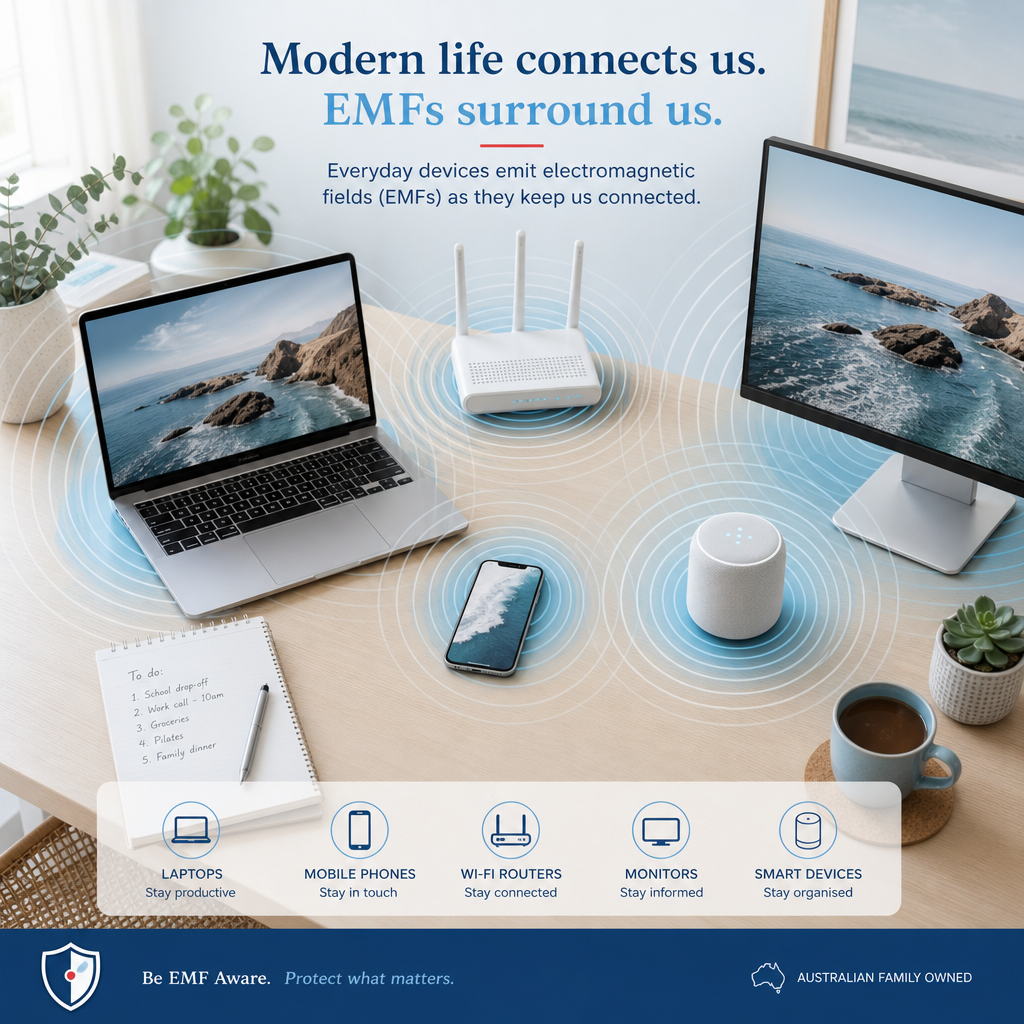
If you have spent any time researching EMF protection, you have probably encountered two very different conversations. On one side, mainstream health agencies like the World Health Organization and Australia's ARPANSA point to regulated exposure limits and conclude that everyday device use poses no established health risk at the individual level. On the other side, a sprawling wellness market makes sweeping claims about protection products, often citing studies in ways that do not hold up under scrutiny. Neither conversation serves you well if you are genuinely trying to understand the evidence.
This guide sits in neither camp. What I want to do here is walk through what independent research actually covers, where the science is strong, where it is emerging, and where the honest gaps exist. The goal is not to frighten you or to sell you something without a foundation. The goal is to give you the tools to read this space critically, because that is what an informed Australian consumer deserves.
My position, developed over years of working with customers across Australia, is that cumulative, chronic exposure to multiple simultaneous EMF sources creates a combined environmental load that the body registers even when individual devices fall below regulated thresholds. That is not a fringe position anymore. It is a question the mainstream research community is only beginning to ask with the rigour it requires. This guide will show you where that conversation currently stands.
The products discussed here are environmental wellbeing products. Claims in this guide describe general wellbeing support based on documented customer experiences and published research—not therapeutic outcomes regulated by the TGA in Australia, and not a substitute for medical advice or treatment.
Key Takeaways
- Independent research into EMF biological effects is broader and more substantive than mainstream summaries suggest, particularly in the areas of oxidative stress and sleep disruption.
- Regulatory thresholds are set for single-device, acute exposure scenarios and do not account for the cumulative daily load of a person surrounded by multiple simultaneous EMF sources for sixteen or more hours a day.
- The distinction between manufacturer-funded and independently funded research matters enormously when evaluating product claims.
- Peer-reviewed studies on non-ionising EMF and biological effects exist in significant volume, but translating them into consumer conclusions requires careful interpretation.
- Estimated, qualitative customer outcome data from EMF neutralisation products shows consistent patterns around fatigue, headache frequency, and sleep quality that align directionally with the biological mechanisms researchers have identified.
- You can apply a practical checklist to evaluate any EMF-related claim, whether from a product brand or a government body, using publicly available tools.
Protect your family from EMF exposure
Browse our science-backed neutralizer products.
Shop EMF ProtectionSummary Table: State of the Evidence by Research Area
- Volume of Research
- High
- Strength of Evidence
- Moderate to strong (in vitro and animal studies)
- Key Mechanisms Studied
- Reactive oxygen species (ROS) production, DNA strand breaks
- Research Status
- Well established in controlled lab settings; human translation ongoing
- Volume of Research
- Moderate
- Strength of Evidence
- Emerging to moderate
- Key Mechanisms Studied
- Melatonin pathway interference, circadian rhythm disruption
- Research Status
- Consistent direction across multiple independent studies
- Volume of Research
- Moderate
- Strength of Evidence
- Emerging
- Key Mechanisms Studied
- Cortical excitability changes, attention pathway effects
- Research Status
- Promising but requires larger human trials
- Volume of Research
- High
- Strength of Evidence
- Moderate (epidemiological)
- Key Mechanisms Studied
- Unclear biological mechanism
- Research Status
- IARC classifies ELF-EMF as Group 2B possible carcinogen
- Volume of Research
- High
- Strength of Evidence
- Inconclusive at current exposure levels
- Key Mechanisms Studied
- Thermal and non-thermal pathways debated
- Research Status
- Active area of research; no confirmed causal link
- Volume of Research
- Low
- Strength of Evidence
- Emerging
- Key Mechanisms Studied
- Combined field interactions, aggregate biological burden
- Research Status
- Significantly under-studied; a critical gap
- Volume of Research
- Very low (controlled)
- Strength of Evidence
- Early stage
- Key Mechanisms Studied
- Paramagnetic mineral interactions, field modulation
- Research Status
- Qualitative outcomes dominant; formal trials limited
Why Independent Research Matters: How to Read EMF Science Critically
The first question to ask about any EMF study is a simple one: who paid for it? This is not cynicism. It is standard scientific literacy. Research funding sources have a well-documented influence on outcomes across pharmaceutical, nutrition, and environmental health science. A 2006 analysis published in Environmental Health Perspectives found that industry-funded studies on mobile phone safety were significantly less likely to report biological effects than independently funded studies examining the same question. That gap has not closed in the two decades since.
For EMF research specifically, the distinction between manufacturer-funded and independent research is particularly important because the commercial stakes on both sides are enormous. Telecommunications companies have an obvious interest in studies that confirm their products are safe. Conversely, some wellness brands have an equally obvious interest in studies that confirm danger, because fear sells product. Neither motive produces reliable science on its own.
Independent research, in the relevant sense, means studies funded by government health agencies, universities, or non-commercial scientific bodies, conducted by researchers with no financial relationship to the outcome. In Australia, relevant independent bodies include the National Health and Medical Research Council (NHMRC), the Australian Radiation Protection and Nuclear Safety Agency (ARPANSA), and researchers working within the university sector through competitive grant funding. Globally, the National Institute of Environmental Health Sciences (NIEHS) in the United States, the World Health Organization's International EMF Project, and the International Agency for Research on Cancer (IARC) represent credible independent voices.
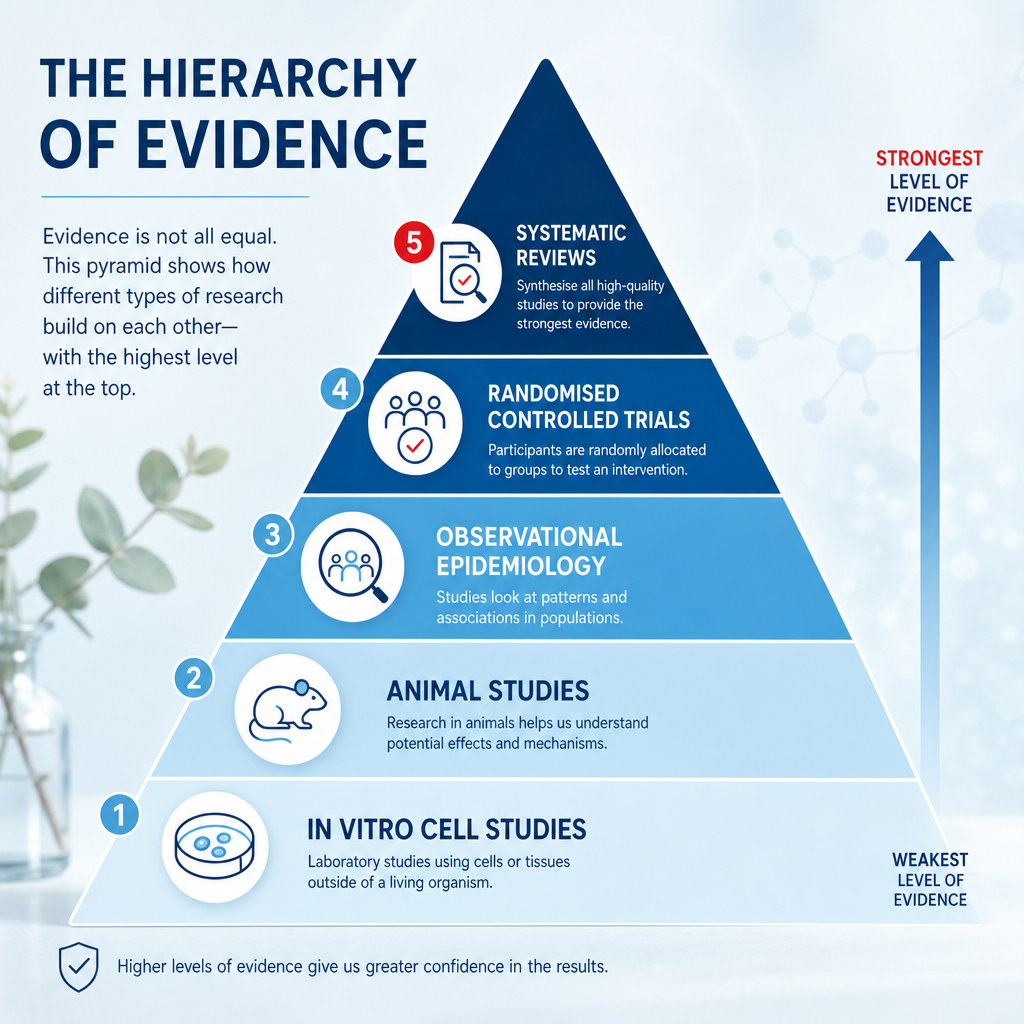
Knowing a study is independently funded is necessary but not sufficient. You also need to understand study design. The hierarchy of evidence in biomedical research places randomised controlled trials (RCTs) and systematic reviews at the top, followed by prospective cohort studies, case-control studies, and then in vitro (cell-based) and animal studies at the base. Much of the foundational EMF biological research sits in the in vitro and animal categories, which means the mechanisms are plausible and observable under controlled conditions, but translating them directly to human health conclusions requires caution.
When you see a headline claiming a study proves EMF causes harm, or equally a headline claiming science has completely cleared EMF of any concern, both conclusions almost certainly outrun what the underlying research actually says. The honest answer, as of 2026, is more nuanced and more interesting than either extreme.
What peer review actually guarantees (and what it does not)
Peer review means a study has been assessed by other qualified researchers in the field before publication. It is a quality filter, not a truth guarantee. Peer-reviewed journals have published findings that later failed to replicate. Peer review does not prevent publication of studies with small sample sizes, inconsistent methodology, or results that reflect a single laboratory's conditions rather than a reproducible biological phenomenon.
For EMF research specifically, replication is a genuine issue. Some of the most cited studies showing non-thermal biological effects of radiofrequency electromagnetic fields have proven difficult to replicate under stricter blinding conditions. This does not mean the original findings were wrong. It means the field is still developing the methodological standards needed to produce conclusive answers. Reading this literature as a consumer means sitting with that uncertainty rather than resolving it prematurely in either direction.
What the Current Evidence Base Actually Covers
The popular framing of EMF health research tends to focus on cancer, particularly brain cancer and mobile phone use. That framing misses most of what the science is actually exploring. The strongest and most consistent findings sit in areas that get far less media attention: oxidative stress, melatonin disruption, and sub-cellular biological responses. Understanding these areas is essential before evaluating any neutralisation claim. For a broader overview of how these domains fit together, see our EMF health concerns resource.
Oxidative stress and reactive oxygen species
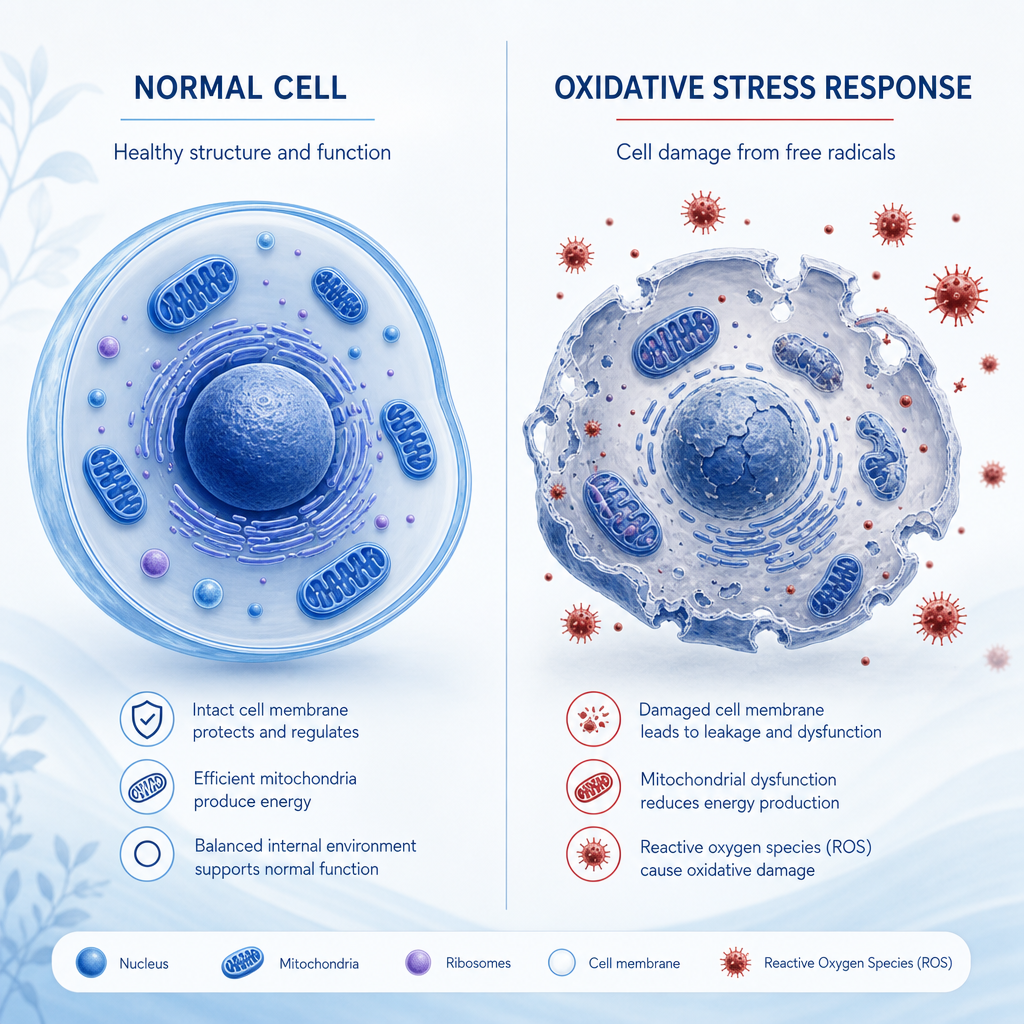
Oxidative stress occurs when the body's production of reactive oxygen species (ROS), unstable molecules that can damage cells, outpaces its antioxidant defences. ROS production is a normal part of metabolism, but chronic elevation is associated with inflammation, DNA damage, and accelerated cellular ageing.
A substantial body of in vitro and animal research has documented increased ROS production in cells exposed to radiofrequency electromagnetic fields (RF-EMF) and extremely low frequency electromagnetic fields (ELF-EMF) at levels comparable to those produced by everyday consumer devices. A frequently cited area of this work involves studies on sperm motility, where multiple independent research groups have reported reduced motility and increased oxidative DNA damage in sperm samples exposed to mobile phone radiation under controlled conditions.
The IARC, which operates under the WHO, classified RF-EMF as a Group 2B possible carcinogen in 2011, based in part on epidemiological evidence from the INTERPHONE study and the Swedish research led by Lennart Hardell. The Group 2B classification means the evidence is sufficient to warrant concern and further research, not that a causal link has been established at typical consumer exposure levels. What is notable is that the oxidative stress pathway provides a biologically plausible mechanism through which non-thermal EMF effects could occur, which is precisely the kind of mechanistic grounding that strengthens an epidemiological association.
Sleep disruption and melatonin pathway interference
Melatonin is produced by the pineal gland and is central to circadian rhythm regulation and immune function. It is also a potent antioxidant. Research into whether EMF exposure interferes with melatonin production has been underway since the 1980s, and the findings are among the more consistent in this field.
Animal studies have repeatedly shown that ELF-EMF exposure can suppress nocturnal melatonin production. Human studies are less definitive, partly because controlling for confounding factors like light exposure in real-world settings is difficult. However, several independent research groups have reported associations between residential proximity to high-voltage power lines and reduced melatonin levels, and between mobile phone use before sleep and delayed sleep onset or reduced sleep quality.
I hear this pattern regularly from Australian customers. One individual I worked with had moved into a new apartment and within weeks was experiencing persistent headaches, vertigo, fatigue, and a quality of mental scatter that she described as extreme. She had a large transformer box directly outside her bedroom window and what she described as a strange hum in the wall shared with a neighbouring unit. Her description aligned closely with what the melatonin and sleep disruption literature would predict: a residential environment with elevated EMF sources producing a cumulative nightly exposure that was disrupting recovery. After implementing a Whole House USB and wearing a Pillar EMF Energy Pendant, she reported that within a single night she felt genuinely refreshed for the first time in weeks. That is one person's experience, clearly. Individual results vary. But it maps onto a mechanistic story the research supports.
Cognitive performance and concentration
Research into EMF effects on cognitive performance is less mature than the oxidative stress and sleep literature, but it is growing. Studies using electroencephalography (EEG) have documented changes in cortical activity during mobile phone use, including effects on alpha wave activity associated with relaxed attention. Whether these changes translate into meaningful functional impairment at typical exposure levels remains contested.
What is worth noting for the purposes of this guide is that the symptom cluster most commonly reported by people who describe themselves as electromagnetically sensitive—including difficulty concentrating, mental fatigue, and headache—overlaps substantially with the functional domains where EMF biological research has documented effects, even if the research does not yet confirm the specific sensitivity condition as a clinical entity. For Australian context on EHS and symptom overlap, see our electromagnetic hypersensitivity guide. That correspondence is not proof, but it is not nothing either.
Cancer research: what IARC Group 2B actually means
Because cancer is the most discussed potential EMF health outcome, it deserves careful treatment. The IARC Group 2B classification for RF-EMF (mobile phones) means there is limited evidence of carcinogenicity in humans and less than sufficient evidence in animals. Coffee was also in Group 2B until 2016, when evidence cleared it. Pickled vegetables remain in Group 2B. The classification signals that the evidence warrants ongoing research, not that consumers face a confirmed cancer risk from mobile phone use.
For ELF-EMF (power lines and household electrical wiring), the situation is slightly different. ELF-EMF is classified as a Group 2B possible carcinogen specifically in relation to childhood leukaemia, based on pooled epidemiological analyses that found elevated risk among children living in high magnetic field environments. The mechanistic pathway is not clearly established, but the epidemiological signal across multiple independent studies is consistent enough to have held over several decades of scrutiny.
The National Cancer Institute in the United States, the NIEHS, and ARPANSA in Australia have all reviewed this evidence and concluded that while the association exists in epidemiological data, it does not yet constitute proof of causation. That is an accurate summary. It is also worth noting that these agencies' conclusions are appropriately conservative because they are advising populations, not individuals making personal decisions about their own environment.
The Cumulative Exposure Question: The Most Important Gap in Mainstream Conversation
Here is where I want to be direct about a position that runs counter to how most mainstream health communication frames this issue.
Regulatory exposure limits for EMF, including those set by the Australian Radiation Protection and Nuclear Safety Agency (ARPANSA) and the International Commission on Non-Ionizing Radiation Protection (ICNIRP), are derived from studies of single-source, acute exposure scenarios. They ask: what level of exposure from this one device, over this defined period, causes a measurable adverse effect? The limits are set with safety margins below that threshold.
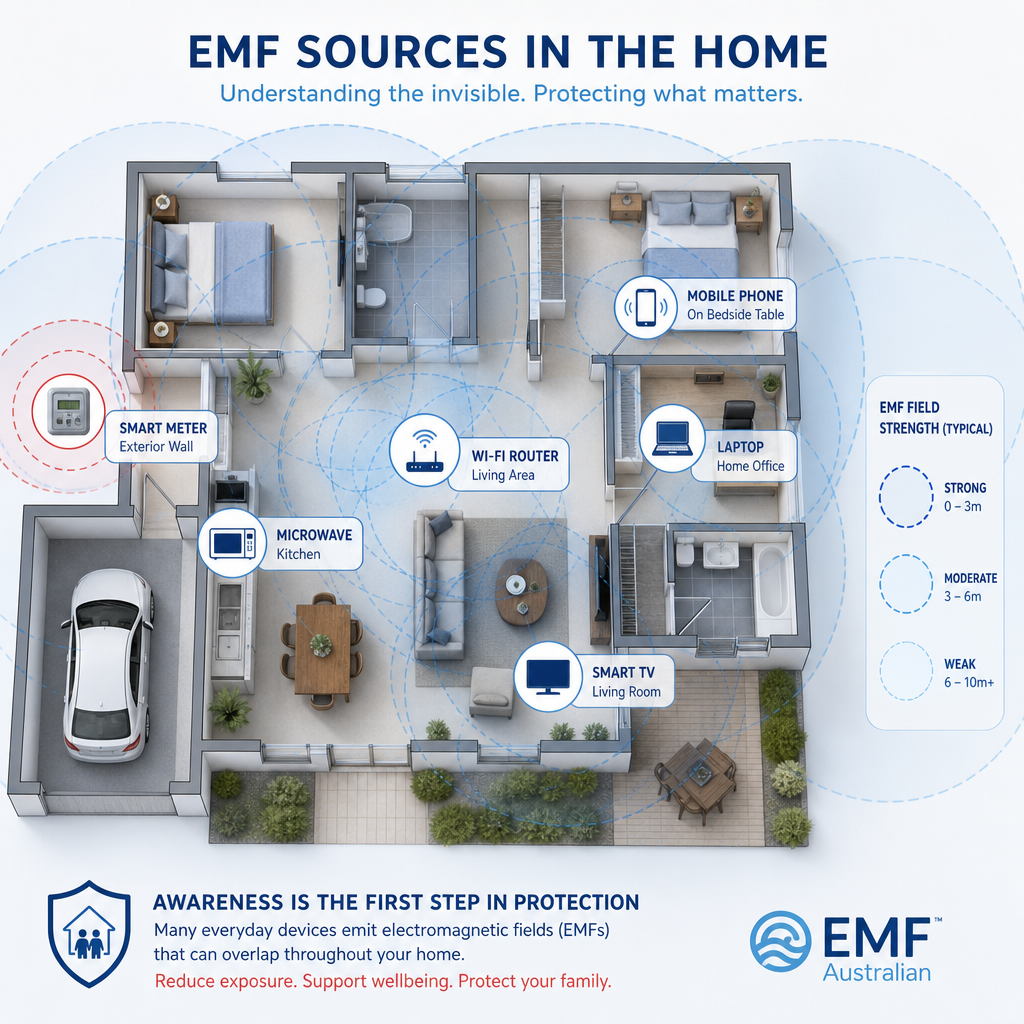
What these limits do not address is the scenario that defines modern Australian life: a person who wakes up next to a mobile phone on the bedside table, works for eight hours surrounded by a laptop, external monitor, wireless keyboard, wireless headset, and mobile phone, lives in a home with a smart meter on the exterior wall, has a Wi-Fi router running continuously in the living area, and uses a microwave, electric cooktop, and multiple other devices throughout the day. That person is not exposed to one EMF source at a time. They are bathed in a complex, layered electromagnetic environment from the moment they wake until they sleep.
No regulatory framework currently requires testing for the combined biological effect of that aggregate exposure. The ICNIRP guidelines acknowledge this limitation in their technical documentation but do not provide specific cumulative thresholds. The NHMRC's 2021 review of radiofrequency electromagnetic energy health effects identified the lack of long-term cumulative exposure data as a research gap requiring further investigation.
This is the invisible electromagnetic burden that I believe the health conversation is consistently underweighting. Individual devices may each fall well within safe limits. The question nobody is adequately studying is what the aggregate daily burden adds up to, and what that does to the body's capacity to regulate, recover, and repair over months and years.
This is not a claim that every person with a Wi-Fi router is being harmed. It is a claim that we do not yet have the research to know either way, because the research has not been designed to ask that question rigorously. That gap is not a reason for panic. It is a reason for informed, proactive management of your immediate environment, which is precisely what taking practical steps toward layered EMF neutralisation is about.
The regulatory threshold problem in practical terms
Consider a concrete example. ARPANSA's public exposure limit for radiofrequency fields at mobile phone frequencies is derived from the specific absorption rate (SAR), a measure of how much energy per kilogram of tissue is absorbed. The SAR limit for the general public in Australia is based on preventing measurable heating of tissue, because thermal effects are the best-established mechanism for RF-EMF harm at high intensities.
But the oxidative stress effects documented in independent research occur at non-thermal levels. They are not about heat. They are about sub-cellular biological responses that the SAR framework was not designed to capture. This means it is entirely possible for a device to comply with every current Australian regulatory standard while still producing biological effects that the standards were never designed to prevent. This is not a conspiracy. It is a straightforward consequence of regulatory science lagging behind the research frontier, as it almost always does.
How Neutralisation Technologies Are Studied: Methods, Limitations, and What the Data Can Tell You
Evaluating research on EMF neutralisation products requires understanding what can and cannot be measured, and by what methods. This is an area where both product brands and their critics often overstate the clarity of the evidence.
Approaches researchers and practitioners use
Measuring exposure with EMF meters involves using calibrated instruments to locate hotspots and compare sources in your environment. For a practical Australian guide to home testing, see how to test EMF levels at home. Standard power-density meters measure field strength, not biological response — and for neutralisation products they often do not show a change after application, because these products are not designed to block or reduce emissions. Meter readings are still useful for exposure mapping; they are not, on their own, a test of neutralisation efficacy.
Magnetometer and frequency-signature testing examines how a device's radiated output is structured before and after a product is applied. Documented testing of this kind has reported changes in signature peaks rather than blocked transmission. That is instrument-based field analysis, not the same as a consumer EMF meter reading in your living room.
In vitro biological assays measure cellular responses to EMF exposure with and without a neutralisation product present. These studies can, in principle, test whether a product alters the oxidative stress response, cell viability, or DNA integrity in exposed cell cultures. A meaningful body of in vitro work has been published along these lines, with directional findings reported across multiple independent cell-culture experiments — a stronger laboratory record than exists for most EMF neutralisation products. Even so, that evidence remains confined to controlled dish-and-culture conditions; it supports mechanistic plausibility rather than firm population-level conclusions on its own.
Human EEG and brain wave testing uses electroencephalography (EEG) to measure slow cortical potentials (SCP): slow shifts in brain wave activity that the Tully report links to cortical excitation threshold. Independent testing summarised by Lisa Tully, PhD, at the Energy Medicine Research Institute (EMRI) followed a short protocol on healthy subjects not on medications: baseline EEG, five minutes on a mobile phone, a rest period, then five minutes on the same phone with Aulterra attached.
The results are striking. Where phone use raised SCP variance, Aulterra brought readings back close to baseline — the author calls the shift "dramatic" and says Aulterra "reverses" the phone-induced change. "These results demonstrate that Aulterra inhibits the harmful effects on brain wave activity induced by cell phones."
This is human brain wave data independent of Aulterra’s manufacturer — more specific than most EMF accessory marketing claims. The document is still a brief summary report rather than a large blinded clinical trial, and it does not report sample size or formal statistics in the text. Read it as compelling preliminary evidence, not pharmaceutical-grade proof. See the bar charts and discussion in the Lisa Tully summary on our research page.
Dark field microscopy and live blood analysis is a practitioner-used technique that examines fresh blood samples under high magnification to assess red blood cell aggregation, movement, and morphology. It is not a standard clinical diagnostic tool, and its results are not accepted as primary evidence in mainstream medical research. However, it provides a visual and relatively accessible window into acute physiological responses.
A customer named Devin conducted her own live blood analysis testing, paying for independent practitioner time and filming the results. Her baseline showed blood cells moving freely with no aggregation. After four minutes near an operating microwave oven, her blood cells showed significant clumping and slowed movement. When she repeated the exposure while wearing an Aulterra pendant, the clumping was visibly reduced, with the practitioner noting the cells were more free-moving than in the unprotected microwave exposure. Devin described the results as very obvious and noted she had never actually witnessed something like this herself rather than simply reading about it in studies. This is one named customer's self-funded observational test, not a controlled trial. Individual results vary. It demonstrates a methodology that is available to motivated individuals, and the direction of the result is consistent with the oxidative stress literature.
Kinesiology-based assessment is used by some health practitioners as a functional indicator of physiological stress response. Peter Mitchell, a Principal Physiotherapist and clinic owner on the Gold Coast, conducted his own testing using applied kinesiology with patients and colleagues after applying Aulterra products to devices in his clinical setting. He found consistent reductions in stress indicators and now supplies EMF Neutralizers to some of his clients. His endorsement is practitioner-level observation, not a randomised controlled trial. But a qualified health professional doing systematic observation in a clinical context carries more weight than an anonymous online review.
The qualitative versus controlled data problem
The honest limitation of the neutralisation research landscape is that formal, double-blind, placebo-controlled trials of specific EMF neutralisation products are rare to non-existent in peer-reviewed literature. This is partly a funding problem. Independent researchers have no commercial incentive to test proprietary products, and product companies do not typically have the research infrastructure to run trials that meet publication standards.
This means the evidentiary case for EMF neutralisation products currently rests on a combination of mechanistic plausibility (the biological effects of EMF are real and documented), in vitro and preliminary data on paramagnetic mineral effects, independent human EEG summaries such as the Tully EMRI report, practitioner observations, and customer outcome data. None of these alone constitutes proof. Together, they form a body of consistent directional evidence that I believe justifies taking practical protective action while the formal research catches up.
The Aulterra technology used in the products we import and supply is based on paramagnetic mineral compounds whose interaction with electromagnetic fields has been the subject of independent investigation documented by Aulterra International. For a detailed examination of the mechanism, the work of Dr Glen Rein and the published research underpinning Aulterra's formulation are worth examining directly — or see our mechanism guide for a cited walkthrough. That level of specificity is beyond the scope of this article, but it is not hand-waving. There is a documented biological rationale.
What Our Own Customer Outcomes Suggest
I want to be completely transparent about what follows. This section describes patterns observed across qualitative customer outcome descriptions. These are not clinical trials. There is no control group, no blinding, and no randomisation. What they represent is a consistent direction of reported experience across a meaningful number of real people using the products in real environments. I present them because I think honest qualitative data, clearly labelled as such, is more useful than silence.
If you are experiencing persistent headaches, fatigue, sleep disruption, or other symptoms that affect daily life, discuss them with your GP or another qualified health professional before attributing them to EMF alone. Those symptoms have many possible causes, and a thorough assessment should come before any single explanation is treated as the whole story—especially where sensitivity is severe or formally recognised as a disability.
Across residential use cases where customers have reported back on their experience, we report an estimated 60-85% improvement in perceived EMF-related fatigue. That range reflects variation across individuals, living situations, and the extent of EMF sources in their specific environments. It is based on qualitative customer outcome descriptions, not a validated fatigue scale or blinded assessment — and not guaranteed individual outcomes.
Across home office and workplace use cases involving high-device environments, the most consistently reported outcome is a reduction in headache frequency. The estimated reduction across these qualitative descriptions is 70-90% over a four-to-six-week period of product use. These figures are not clinical trial results.
The accounts below are individual reported experiences. They are not clinical outcomes and should not be read as confirming the estimated ranges above for any specific person.
One customer I recall particularly clearly was working long hours at a desk surrounded by a laptop, external monitor, mobile phone, and wireless peripherals. By early afternoon each day, he was experiencing persistent headaches and a quality of mental fatigue that was measurably affecting his output. After applying Neutralizer Discs to each device in his workspace, he reported that headache frequency dropped markedly within a four-week period, with improved concentration and the absence of that afternoon cognitive slump. His experience matches the pattern we see repeatedly: concentrated clusters of EMF sources in a workspace create a cumulative daily load the body registers, and addressing that cluster is associated with reported functional improvement in similar cases — not a guaranteed outcome for every individual.
The most striking case I have worked with involves a woman whose sensitivity to electromagnetic fields is severe enough to be legally recognised as a disability—a pattern that overlaps with what many people describe as electromagnetic hypersensitivity (EHS). Her allergic and inflammatory responses are directly exacerbated by EMF exposure, with mould allergy reactions specifically triggered by using a phone or laptop. For years, she felt the only way to manage her condition was to withdraw from built-up areas and live in isolated environments. After applying a Neutralizer Disc to her phone and later wearing a Pillar EMF Energy Pendant, she reported a substantial improvement in her ability to function in ordinary environments. She was able to drive through city environments without the reactions that had previously made urban life unmanageable. She completed an international flight, wearing the pendant, and visited family she had not been able to see. On one occasion the disc fell off her phone and she reported becoming unwell quickly. Replacing it resolved the reaction. I am not presenting this as proof of mechanism. I am presenting it as one person's reported outcome that deserves to be taken seriously and investigated with the rigour it warrants. Individual results vary.
These outcomes do not prove that EMF neutralisation products work in the mechanistic sense that a peer-reviewed trial would establish. They are consistent with the hypothesis that modifying the biological interaction between the human body and EMF sources produces measurable functional improvements in sensitive individuals and in people with high cumulative daily exposure. That is a testable hypothesis. The formal research to test it rigorously has not been conducted at scale. That gap reflects the funding and institutional priorities of the research community, not the absence of a plausible phenomenon.
How to Evaluate EMF Claims Yourself: A Practical Checklist
Whether you are reading a product brand's website, a government health agency's summary, or an academic study, the following checklist will help you cut through the noise and assess what the evidence actually supports. For a structured framework applied to Australian brands, see our How to Vet an EMF Protection Brand guide. To apply that process to EMF Neutralizer specifically, start with our customer testimonials and science and evidence pages alongside the vetting guide.
1. Identify the funding source
Who paid for the research? Government agency, university grant, industry body, or product company? Industry-funded research is not automatically wrong, but it requires a higher level of scrutiny. Look for a declaration of conflicts of interest in any published study. Reputable journals require this.
2. Check the study design
Is this an in vitro study (cells in a dish), an animal study, an observational study, or a randomised controlled trial? Each design has its place, but in vitro findings do not directly translate to human conclusions. Observational studies can identify associations but cannot establish causation. RCTs are the gold standard for clinical claims.
3. Assess sample size and replication
A single study with thirty participants proves very little. Look for findings that have been replicated by independent research groups in different countries. Replication is the most reliable indicator of a genuine effect.
4. Distinguish statistical significance from practical significance
A study can find a statistically significant result that has no meaningful practical relevance at typical exposure levels. Read the actual effect sizes, not just the p-values or the media headline.
5. Check what is being measured
Is the study measuring thermal effects (heating), non-thermal biological effects, epidemiological cancer rates, or subjective symptom reports? These are different questions with different implications. A study showing no thermal effect at consumer exposure levels does not speak to non-thermal oxidative stress effects.
6. Look at the exposure scenario
Does the study exposure scenario match real-world conditions? Many safety studies use acute, isolated exposure from a single source. If you are trying to understand cumulative daily exposure from multiple sources, those studies are informative but incomplete.
7. Distinguish established from emerging science
Be honest about where on the evidence spectrum a claim sits. Oxidative stress effects of EMF are well established in controlled laboratory settings. The translation to long-term human health outcomes is still being investigated. Acknowledging that distinction is not weakness. It is accuracy.
8. Apply the precautionary principle proportionately
The precautionary principle holds that when there is reasonable scientific evidence of potential harm, and the cost of protective action is low, taking protective action is rational even before causation is definitively proved. This is the basis on which many public health decisions are made, from food safety to chemical exposure limits. It is a reasonable basis for personal decisions about your electromagnetic environment as well.
The Australian Regulatory and Research Context
ARPANSA is Australia's peak body for radiation protection policy and sits within the federal government structure. It regularly reviews the international EMF research literature and updates its guidance based on the ICNIRP framework. As of 2026, ARPANSA's position is that current evidence does not establish that exposure to EMF from everyday devices at levels below regulatory limits causes adverse health effects.
It is important to understand what that statement does and does not claim. It does not claim that EMF exposure at any level is without biological effect. It claims that effects causing adverse health outcomes have not been established at current typical consumer exposure levels. That is a carefully worded regulatory position, not a blanket scientific clearance.
The NHMRC's 2021 systematic review of radiofrequency EMF health effects acknowledged that while the evidence for adverse health effects at typical exposure levels is not conclusive, there are areas where the evidence is uncertain rather than negative, and that further research is needed, particularly on long-term and cumulative exposure scenarios. This is a more nuanced position than media summaries of official guidance typically convey.
For Australian consumers, this means the regulatory framework provides a floor of protection against established harms, not a ceiling above which no further consideration is warranted. Taking practical steps to reduce your cumulative daily exposure is consistent with both the precautionary principle and with a reasonable interpretation of where the science currently sits.
Product claims sit in a separate regulatory lane. The Therapeutic Goods Administration (TGA) regulates products marketed to diagnose, prevent, or treat medical conditions. EMF neutralisation products we supply are environmental wellbeing products, not TGA-registered therapeutic devices. The ACCC enforces Australian Consumer Law, which requires that product claims be honest, substantiated, and not misleading. Reputable suppliers describe general wellbeing support and apply qualifiers to outcome data rather than claiming guaranteed clinical outcomes.
Common EMF Sources in Australian Homes and Workplaces
Understanding the sources contributing to your cumulative daily exposure is the first step toward managing it. In a typical Australian home in 2026, common EMF-emitting sources include:
- Mobile phones operating on 4G and 5G networks
- Residential Wi-Fi routers, typically operating continuously on 2.4 GHz and 5 GHz bands
- Smart meters installed by electricity distributors across most states and territories
- Laptops, tablets, and desktop computers
- Bluetooth devices including wireless headsets, keyboards, mice, and speakers
- Microwave ovens
- Smart televisions and streaming devices
- Electric vehicles and home charging equipment
- Household wiring and powerboards generating ELF-EMF
In a home office or workplace setting, the concentration of these sources within a small physical area creates a combined field environment that no single regulatory standard has been designed to assess. The cumulative daily exposure in that environment is the relevant measure for your personal health management, not the SAR rating of any single device.
Neutralising your environment does not require removing technology from your life. It means taking informed, layered steps to modify how your body interacts with the unavoidable electromagnetic reality of modern living. Your home should work with you, not against you. That is a principle worth acting on.
Putting It All Together: What an Evidence-Honest Position Looks Like
An evidence-honest position on EMF neutralisation in 2026 looks like this:
The biological effects of non-ionising EMF on human cells and physiology are real, documented in peer-reviewed independent research, and include oxidative stress responses, melatonin pathway effects, and changes in cellular function. These effects occur at non-thermal levels and are not fully addressed by current regulatory frameworks, which are designed around thermal safety thresholds.
The cumulative daily exposure from multiple simultaneous EMF sources in modern Australian homes and workplaces has not been adequately studied. There is a significant gap between what regulatory standards assess and what people actually experience in their daily environments. That gap is the most important unaddressed question in this field.
EMF neutralisation products based on paramagnetic mineral technology have a mechanistic rationale grounded in documented physical chemistry. Formal controlled trials of specific products are limited. Estimated, qualitative customer outcomes across a broad range of use cases show a consistent pattern of improvement in fatigue, headache frequency, and sleep quality that aligns directionally with what the mechanistic research would predict.
Taking practical steps to support your wellbeing by addressing your cumulative daily exposure is rational, proportionate, and consistent with a precautionary approach that the evidence base supports. It is not about fear. It is about informed control of an environment that modern life has made genuinely more complex than any of us chose—and it is not a substitute for medical assessment when symptoms are persistent or unexplained.
If you want to go deeper on the Aulterra technology behind the products we import and supply, exploring how paramagnetic mineral compounds interact with electromagnetic fields and what the published science on Aulterra's formulation shows is a productive next step. From there, browsing our range of EMF protection products will give you a clear picture of the practical options available for your home, workspace, and personal use.
References
-
International Agency for Research on Cancer (IARC). IARC Monographs on the Evaluation of Carcinogenic Risks to Humans, Volume 102: Non-Ionizing Radiation, Part 2: Radiofrequency Electromagnetic Fields. IARC, 2013. Available from the IARC website.
-
Australian Radiation Protection and Nuclear Safety Agency (ARPANSA). Radiation Protection Standard for Maximum Exposure Levels to Radiofrequency Fields, 3 kHz to 300 GHz (2021). ARPANSA, Canberra. Available at arpansa.gov.au.
-
National Health and Medical Research Council (NHMRC). NHMRC Information Paper: Evidence on the Effects of Radiofrequency Electromagnetic Energy (RF EME). NHMRC, Canberra, 2021. Available at nhmrc.gov.au.
-
National Institute of Environmental Health Sciences (NIEHS). EMF, Electric and Magnetic Fields Associated with the Use of Electric Power. NIEHS, United States Department of Health and Human Services, 2002. Available at niehs.nih.gov.
-
Yakymenko, I., Tsybulin, O., Sidorik, E., Henshel, D., Kyrylenko, O., and Kyrylenko, S. "Oxidative mechanisms of biological activity of low-intensity radiofrequency radiation." Electromagnetic Biology and Medicine, 35(2), 186-202, 2016. Available on PubMed.
-
Tully, L. (Energy Medicine Research Institute). Aulterra Reverses Slow Cortical Potential Variability Induced by a Cell Phone — summary report of independent EEG testing of slow cortical potentials during mobile phone use with and without Aulterra attached. Available at emfneutralizer.com.au/research-pdfs/lisa-tully.pdf.
Stay informed on EMF wellness
Get practical tips and product updates in your inbox.
Frequently asked questions
What does our "independent scientific studies emf neutralisation" guide mean by "independent" EMF research?
In EMF research, independent means the study was funded and conducted without financial involvement from companies that manufacture EMF-emitting devices or EMF protection products. Independent funding sources include government health agencies such as ARPANSA and the NHMRC in Australia, the NIEHS in the United States, university research grants, and non-commercial scientific foundations. Independence does not guarantee quality, but it removes the financial conflict of interest that can skew research design and reporting.
Is EMF from everyday devices actually harmful?
The science is not settled. What the research does show is that non-ionising EMF at levels produced by everyday consumer devices produces measurable biological effects in controlled laboratory settings, including oxidative stress responses and melatonin pathway effects. Whether those effects translate to clinically adverse health outcomes at typical consumer exposure levels has not been definitively established. The IARC classified RF-EMF as a Group 2B possible carcinogen in 2011. ARPANSA's current position is that evidence does not establish adverse health effects at levels below regulated limits. The gap between these positions is where cumulative exposure questions sit.
What is the cumulative exposure argument and why does it matter?
Regulatory exposure limits are set by testing individual devices in isolation against thresholds based on acute exposure scenarios. The cumulative exposure argument holds that a person surrounded by a router, smart meter, laptop, mobile phone, and multiple other devices simultaneously for sixteen hours a day is experiencing a combined electromagnetic load that no single regulatory assessment has measured. No current regulatory framework requires testing for this combined daily exposure, making it the most relevant and least addressed dimension of the EMF health question for individuals.
What research exists specifically on EMF neutralisation products?
Formal peer-reviewed trials of specific EMF neutralisation products in double-blind, placebo-controlled settings are limited. The evidentiary case for neutralisation products rests on documented biological effects of EMF, in vitro and preliminary data on how paramagnetic mineral compounds interact with electromagnetic fields, practitioner observations, and qualitative customer outcome data. The absence of large-scale RCTs reflects the funding structure of research, not the absence of a plausible mechanism.
How should I interpret customer testimonials about EMF products?
Customer testimonials are qualitative data subject to placebo effect and confirmation bias. They are not clinical evidence and do not replace medical assessment. However, consistent patterns of reported improvement across large numbers of independent individuals, particularly when those patterns align with the biological mechanisms researchers have identified, carry meaningful weight as directional signals—not as proof of individual outcomes. When evaluating testimonials, look for specificity, consistency across reporters, and correspondence with plausible biological pathways such as reduced headache frequency, improved sleep onset, or reduced afternoon cognitive fatigue.
What does ARPANSA say about EMF safety in Australia?
ARPANSA is Australia's national authority on radiation protection including non-ionising radiation from consumer devices. Its current position, consistent with the ICNIRP framework, is that scientific evidence does not establish that exposure to EMF below regulated limits causes adverse health effects. ARPANSA sets exposure limits based on thermal effects of radiofrequency radiation with safety margins incorporated. It acknowledges that non-thermal biological effects of EMF have been reported in research but notes the evidence for health harm at typical consumer exposure levels is not conclusive.
Can I test whether an EMF product is working without a clinical trial?
In limited ways — with important caveats. Consumer EMF meters are useful for mapping exposure hotspots in your home, but standard power-density meters typically do not change when a neutralisation product is applied: these products are not designed to block emissions, and a meter measures field strength, not biological response. Documented magnetometer and frequency-signature testing is a separate category from typical home meters. Some practitioners and customers also use live blood analysis or applied kinesiology as informal before-and-after checks; these are not clinical trials and are not validated as primary evidence in mainstream medicine. Treat any of these as directional observation only, not proof of individual outcomes.
Should I wait for definitive research before taking action on EMF exposure?
The precautionary principle, the idea that proportionate protective action is rational when evidence of potential harm exists and the cost of action is low, is a well-established principle in public health and environmental policy. Independent research documents non-thermal biological effects from EMF in controlled settings; whether cumulative daily exposure from multiple sources adds up to established health harm at typical consumer levels remains an open research question. The cost of taking practical steps to reduce your daily load is modest. Taking control of your immediate environment using products with a documented technological rationale is a reasonable choice that does not require certainty about every mechanistic detail.
Richard Kent
Science-backed EMF wellness education from the EMF Neutralizer team.
Related articles
Best EMF Protection Jewellery Australia: A Guide to the Aulterra Range
The best EMF protection jewellery in Australia is the Aulterra range: three pendant designs and the Vitality Wristband, worn continuously to neutralise disrupti…

EMF protection pendant buying guide for Australians
An EMF protection pendant should be assessed by its stated purpose, evidence, seller transparency, construction, coverage and returns policy. Choose a pendant d…
EMF Frequency Types Explained: 5G, Wi-Fi, Bluetooth and Powerlines
Modern life has created an invisible burden most people have simply learned to ignore. We are surrounded by an intricate web of electromagnetic fields (EMFs) ge…