How to Vet an EMF Protection Brand in Australia: Certifications, Science and Trust Signals That Matter (2026)

The EMF protection market in Australia has grown significantly over the past few years. Walk into any wellness expo, scroll through any health-focused Facebook group, or search for answers about persistent fatigue and unexplained headaches, and you will find dozens of brands competing for your attention with confident claims, glowing testimonials, and product descriptions that sound compelling but are difficult to interrogate. Some of those brands are doing honest, rigorous work. Others are selling anxiety dressed up as science.
As someone who has imported and supplied Aulterra EMF protection products in Australia since 2007, I want to give you the tools to tell the difference. Not just so you choose us with confidence, but so you can apply the same scrutiny to every brand you consider. Healthy scepticism is the right starting point. The question is what you do with it.
This guide covers the five trust signals that genuinely matter when assessing an EMF protection brand, how to read science explanations without a physics degree, what honest outcome data looks like, the red flags that should stop you mid-scroll, and how EMF Neutralizer measures up against every standard I am about to outline. I will not ask you to take our word for any of it.
Key Takeaways
- Scepticism is healthy and warranted in the EMF protection space. Use it systematically, not selectively.
- Regulatory thresholds for EMF are set for single-device, acute exposure scenarios. They do not account for the cumulative daily exposure of a modern Australian household or home office.
- Five trust signals separate credible EMF brands from gimmicks: independent testing, transparent science explanations, clear outcome data, honest qualifiers, and verifiable customer outcomes.
- Legitimate mechanism explanations describe a specific interaction between the product and electromagnetic fields. Vague claims about "energy harmonisation" with no stated mechanism are a red flag.
- Honest outcome data includes qualitative caveats. At EMF Neutralizer, we report an estimated 60-85% improvement in perceived EMF-related fatigue and an estimated 70-90% reduction in headache frequency in high-device environments, both framed explicitly as qualitative customer outcome descriptions.
- Red flags include absolute cure claims, no testing references, no qualifiers, and appeals to fear without practical guidance.
Protect your family from EMF exposure
Browse our science-backed neutralizer products.
Shop EMF ProtectionSummary Table: Trust Signal Checklist for Any EMF Protection Brand
- What to Look For
- Third-party lab results, named testing facilities
- Red Flag
- "Tested in-house" only, no documentation
- What to Look For
- Named mechanism, referenced research, honest limitations
- Red Flag
- "Quantum harmonisation" with no mechanism stated
- What to Look For
- Qualitative basis stated, sample context described
- Red Flag
- "100% effective", no caveats, no context
- What to Look For
- Acknowledges product does not block EMF, explains what it does instead
- Red Flag
- Implies complete elimination of all EMF
- What to Look For
- Detailed, specific, plausible accounts with context
- Red Flag
- Generic five-star reviews, no specifics
- What to Look For
- Deep-dive pages explaining the underlying technology
- Red Flag
- Single product page with no supporting content
- What to Look For
- References ARPANSA, Australian compliance context
- Red Flag
- No mention of Australian standards, imported claims only
- What to Look For
- Clear terms, accessible support
- Red Flag
- Vague or absent returns policy
Why Scepticism Is the Right Starting Point (And Why the Science Is More Nuanced Than Either Side Admits)
If you have researched EMF protection online, you have probably encountered two loudly held positions. The first is that non-ionising electromagnetic radiation from consumer devices is entirely harmless, all regulatory bodies have confirmed this, and anyone selling you EMF protection is exploiting your anxiety. The second is that 5G is a biological weapon, every wireless device is silently destroying your DNA, and only a specific pendant or sticker can save you.
Both of these positions are wrong, and both make it harder for genuinely cautious, research-driven consumers to find useful information.
The nuanced position, which I hold and which is increasingly supported by emerging research, is this: regulatory thresholds for electromagnetic field exposure were designed for single-device, acute exposure scenarios. They were not designed to evaluate the cumulative daily exposure of a person living in a modern Australian home or working in a contemporary office environment. The Australian Radiation Protection and Nuclear Safety Agency (ARPANSA) sets exposure limits based on known thermal and acute biological effects. What those limits do not address is the lived reality of sixteen-plus hours of simultaneous exposure to a router, a smart meter, a laptop, a mobile phone, a television, a smart speaker, and a collection of wireless peripherals, all operating at once, day after day, year after year.
This is not a fringe position. The BioInitiative Report, a working group of independent scientists and researchers, has documented peer-reviewed evidence of biological effects from non-ionising radiation at levels well below regulatory thresholds. The International Agency for Research on Cancer (IARC), a body of the World Health Organisation, classified radiofrequency electromagnetic fields as a Group 2B possible carcinogen back in 2011. That classification has not been reversed, and subsequent research has continued to add nuance rather than resolution to the debate.
The contrarian premise I operate from at EMF Neutralizer is straightforward: the aggregate, cumulative daily exposure is the relevant measure, not the individual device output. A single cup of coffee does not dehydrate you. Twelve cups a day, every day, for a decade, produces measurable physiological effects. The cumulative electromagnetic burden of modern life works on a similar logic. Addressing that burden proactively, using products with a transparent mechanism and honest outcome data, is a practical, informed choice. It is not a fear response.
Scepticism is the right starting point. Use it as a tool, not a conclusion.
The Five Trust Signals That Actually Matter When Assessing an EMF Protection Brand
Once you accept that rigorous evaluation is warranted, the next question is what you are actually evaluating. Most buyers focus on price and aesthetics. The research-driven buyer should focus on these five signals.
1. Independent Testing With Named Facilities
Any credible EMF protection brand should be able to point to independent third-party testing. This means testing conducted by a laboratory that is not owned, operated, or commercially entangled with the brand itself. The testing facility should be named. The methodology should be described. The results should be accessible.
In the Australian context, look for named laboratories or research programmes, described methodology, and results you can trace — not vague "laboratory tested" or "scientifically tested" claims without detail. Vague references should be treated as an absence of evidence, not evidence of absence.
The Aulterra products we supply incorporate Aulterra technology, which has been examined in independent research programmes in the United States. Those products have not been assessed under NATA. The science behind Aulterra is documented and referenced, and we maintain a dedicated explainer on our science pages for readers who want to go deeper into the mechanism and the research that supports it.
What independent testing tells you is not just whether a product does something. It tells you whether the brand trusts its own product enough to have it evaluated by parties with no financial stake in the outcome.
2. Transparent Science Explanations With Named Mechanisms
A credible EMF protection product has a stated mechanism. That mechanism describes, in terms that can be interrogated, how the product interacts with electromagnetic fields or modifies their biological impact. The mechanism does not need to be expressible in a single sentence, but it needs to exist.
Contrast that with claims like "resonates with your body's natural energy field" or "quantum harmonisation technology" offered without any explanation of what the quantum effect is, how it is produced, or what interaction it creates. These are not science explanations. They are science-flavoured language deployed to create an impression of credibility without the substance that credibility requires.
Aulterra, the paramagnetic mineral complex in the products we distribute, neutralises EMF by retransmitting a more coherent field — it does not block EMF or create a physical shield. The mechanism is about modifying how ambient fields interact with biological systems, not changing the user's body chemistry. That is a specific, statable claim. It can be agreed with, disagreed with, and investigated. That is what legitimate science communication looks like.
When you encounter a brand's science page or product description, ask yourself: is there a specific mechanism stated here? Can I identify a claim that could, in principle, be tested? If the answer to both questions is no, proceed cautiously.
3. Clear Outcome Data With Qualitative Caveats
Outcome data from EMF protection products exists on a spectrum. At one end, you have randomised controlled trials with large sample sizes, blinded assessment, and published results. That level of evidence does not exist in abundance for any EMF protection product, including ours, and any brand claiming it almost certainly does not have it.
At the other end, you have zero outcome data: no reported customer results, no indication of what users experienced, no attempt to quantify the product's real-world effect. This is also a problem, because it means the brand is either not gathering customer outcomes or is not willing to share them.
Honest outcome data sits between these extremes. It reports what customers described experiencing, frames it as qualitative and experiential rather than clinical, describes the context in which those outcomes occurred, and applies clear caveats about individual variation.
At EMF Neutralizer, we report an estimated 60-85% improvement in perceived EMF-related fatigue following product application. We also report an estimated 70-90% reduction in headache frequency among users in high-device environments. Both figures are derived from qualitative customer outcome descriptions across residential and home office use cases. They are not clinical trial results. They are not guaranteed individual outcomes. They describe what our customers have told us they experienced, and we frame them precisely that way because we think consumers deserve accuracy, not inflated claims.
A typical home-office pattern from customer feedback — presented here as a composite illustration, not one verified individual case — looks like this: long hours at a desk with a laptop, external monitor, mobile phone, and wireless peripherals; persistent headaches and difficulty concentrating; each device individually below regulatory thresholds, but the combined load sustained across the day. After applying Neutralizer Discs to each device, some customers in similar setups report meaningful improvement in headaches and afternoon fatigue over several weeks. That aligns with the broader estimated ranges we report above; it is not a guaranteed individual outcome.
That is what honest outcome data looks like when you separate aggregate patterns from single-case certainty: specific, contextualised, and caveated.
4. Honest Qualifiers About What the Product Does and Does Not Do
No EMF protection product eliminates all electromagnetic fields. Any brand claiming otherwise is either misrepresenting its product or does not understand electromagnetic physics. EMF is produced by electrical current. As long as your devices are powered on, they are producing fields. The goal of EMF neutralisation is not to produce a zero-EMF environment. The goal is to reduce the biological impact of unavoidable cumulative exposure.
A brand that applies honest qualifiers to its claims is a brand that understands what it is selling. Look for language that acknowledges the product's specific scope: what it addresses, what it does not address, and what individual outcomes may vary.
At EMF Neutralizer, we are clear that the Aulterra products we supply work by supporting the body's response to EMF exposure, not by blocking or eliminating the fields themselves. We do not claim that wearing a pendant will protect you from all harm. We describe what the products do, the mechanism Aulterra documents, and the outcomes customers have reported. The honest qualifier is not a weakness. It is a sign that we trust the actual merit of the range enough to describe it accurately.
5. Verifiable Customer Outcomes With Context and Specificity
A five-star review that says "great product, love it!" tells you almost nothing. A detailed account describing a specific problem, a specific intervention, a specific change in symptoms over a defined period, and a context that makes the outcome plausible tells you a great deal.
Look at the customer accounts on any EMF protection brand's website, testimonials page, on-site product reviews, and any third-party profiles where the brand appears. Are they specific? Do they describe a real situation? Do they include context about the person's environment, the products used, and the timeline? Vague positive reviews in bulk are easy to manufacture. Specific, detailed accounts with plausible context are much harder to fabricate at scale and much more useful to evaluate.
Where a brand has them, independent platforms such as Google Reviews can add a layer you cannot edit away. If on-site stories are detailed but independent feedback is thin, that asymmetry is worth noticing.
Reading Science Backing Without a Physics Degree
One of the most effective ways EMF protection brands obscure the quality of their science is by deploying technical language at a level of abstraction that sounds authoritative but resists interrogation. If you cannot understand the claim, you cannot evaluate it. That serves bad actors, not consumers.
Here is a practical framework for reading EMF science claims that does not require a background in physics or biology.
Look for the Named Mechanism
As outlined above, every legitimate claim about how a product works contains a named mechanism. That mechanism describes a causal pathway: X happens because of Y, and the result is Z. For EMF protection products, the mechanism might describe how a paramagnetic material alters the resonant properties of the electromagnetic field, or how a particular mineral complex supports cellular resilience to non-ionising radiation.
If the science description on a brand's website cannot be paraphrased into a simple causal sentence, it probably does not contain a real mechanism. "Our technology works with your body's energy" is not a mechanism. "Paramagnetic minerals in the product interact with the electromagnetic field from nearby devices, altering the field's coherence so its interaction with biological tissue is less disruptive — without blocking the signal the device needs" is a mechanism. You do not need to fully understand the second statement to recognise that it contains specific, interrogable components.
Check Whether the Claims Reference Specific Research
Legitimate science backing cites specific research. That research might be peer-reviewed journal articles, independent laboratory reports, or documented testing programmes. The citations should be traceable: a journal name, a lead researcher, a study title, a year of publication. "Studies show" and "research confirms" without any of these details are not citations. They are appeals to an imagined authority.
Aulterra technology, which underpins EMF Neutralizer products, has been the subject of documented research examining its effect on the biological impact of electromagnetic radiation. Our science pages link to and describe that research in specific terms, including the researchers involved and the methodology used. That is what verifiable science backing looks like.
A concrete example you can check yourself: Lisa Tully, PhD, at the Energy Medicine Research Institute published a summary report of EEG brain wave testing during mobile phone use with and without Aulterra attached — a named researcher, a described protocol, and a PDF you can read. That is traceable in a way that "laboratory tested" without detail never is. We discuss the limits of that study in our independent scientific studies guide.
Spot the Difference Between Plausible and Possible
Some EMF protection claims are physically impossible. A sticker that "blocks" or "absorbs" all electromagnetic radiation from a mobile phone would need to either absorb the radio signal the phone requires to function (at which point the phone stops working) or violate the laws of electromagnetism. If a product claims to block all EMF from your phone while your phone continues to receive calls and connect to the internet, the claim is physically impossible.
Other claims are physically plausible but unproven at the required scale. The hypothesis that paramagnetic minerals can modify the biological impact of EMF exposure is scientifically plausible: paramagnetic materials interact with electromagnetic fields, and the biological effects of those interactions at the cellular level are an active area of research. "Plausible and being investigated" is a different category from "proven beyond doubt" and a very different category from "physically impossible."
Understanding which category a claim sits in does not require a physics degree. It requires asking: could this claim be true under the laws of physics as we understand them? If the answer is no, walk away. If the answer is "possibly, under these conditions," read the mechanism explanation carefully.
Apply the Qualifier Test
Legitimate science communication includes qualifiers. It says "evidence suggests" rather than "it is proven." It says "in the populations studied" rather than "for all people." It says "results varied based on individual circumstances" rather than "guaranteed outcome for every user."
If a brand's science claims read more like marketing copy than scientific communication, with absolute language, no qualifiers, and no acknowledgement of uncertainty, that is a signal about the quality of the underlying evidence, not just the quality of the writing.
What the Australian Regulatory Context Actually Tells You (And What It Does Not)
Australia has a robust regulatory framework for electromagnetic field exposure. ARPANSA sets the national standard for radiofrequency exposure limits, currently based on the International Commission on Non-Ionizing Radiation Protection (ICNIRP) guidelines. The Australian Communications and Media Authority (ACMA) regulates devices that operate in the radiofrequency spectrum and enforces compliance with relevant emission standards.
Here is what compliance with these standards tells you: a device that meets ARPANSA and ACMA standards does not exceed the acute thermal exposure limits established for single-device use in standard scenarios. That is meaningful and important. It means your phone is not burning tissue.
Here is what compliance with these standards does not tell you: it does not confirm that chronic, cumulative, simultaneous exposure from multiple devices in a real household or office environment produces no biological effects below the thermal threshold. The standards were not designed to make that assessment. They were designed to prevent acute harm from individual devices, and they do that job.
This distinction matters enormously when evaluating EMF protection brands. A brand that cites ARPANSA compliance for its devices as evidence that no protection is needed is conflating two different questions. A brand that claims its products restore compliance with ARPANSA standards is also misusing the regulatory framework, because that is not what EMF neutralisation addresses.
The honest framing is this: regulatory compliance standards establish a floor for single-device safety. The question of cumulative, long-term, multi-source exposure remains an area of active scientific investigation, and the evidence base supporting biological effects below the thermal threshold continues to grow. EMF protection products are a practical response to a real gap in regulatory coverage, not a response to regulatory failure.
The ACCC, which enforces Australian Consumer Law, does set clear standards for product claims. Any claim that a product prevents, treats, or cures a health condition is regulated under the Therapeutic Goods Administration (TGA) framework. Reputable EMF protection brands in Australia operate carefully within these boundaries, making claims about general wellbeing support rather than therapeutic outcomes. If a brand is making claims that clearly cross into therapeutic territory without TGA registration, that is a regulatory red flag as well as a scientific one.
Red Flags: The Claims That Should Stop You Mid-Scroll
Having supplied Aulterra products in Australia since 2007, I can give you a clear list of the claims and practices that should prompt you to close the tab.
Absolute Cure or Elimination Claims
"Completely eliminates all harmful EMF." "Guaranteed to prevent EMF-related illness." "100% protection from electromagnetic radiation."
None of these claims are accurate, and none of them are physically possible for a passive wearable or adhesive product. EMF neutralisation works by retuning incoherent man-made fields into a more coherent waveform, reducing their disruptive effect on biology — not by blocking or eliminating the field. Any brand making absolute elimination or cure claims is either scientifically illiterate or deliberately misleading you.
No Testing References of Any Kind
If a brand's product pages, science pages, and about pages contain no reference to any form of independent testing, no documentation of research, no named laboratory, and no described methodology, the brand is asking you to trust it on faith alone. In a market where trust is the central question, the complete absence of testing evidence is a structural red flag.
No Qualifiers on Outcome Claims
Claims like "all our customers experience significant relief" or "proven to reduce symptoms in 100% of users" without qualification, context, or methodology are not credible. Individual outcomes vary. Any brand that does not acknowledge this either has not gathered enough outcome data to know it is true, or is not reporting its data accurately.
Fear-Based Marketing Without Practical Guidance
Some brands build their entire marketing strategy on amplifying anxiety about EMF without providing genuine practical guidance on what to do about it. The hallmark of this approach is content that catalogues EMF dangers in alarming detail but offers only a single product as the solution, with no education about layered EMF protection strategies, environmental assessment, or complementary lifestyle adjustments.
A brand that educates you is a brand that is confident in its products. A brand that frightens you and then sells you something is a brand that is confident in your fear.
Testimonials Without Specificity
As discussed in the trust signals section, generic five-star reviews are almost worthless as evidence. A testimonial section composed entirely of brief, non-specific positive statements is not evidence of a product working. It is evidence of a brand that has collected positive sentiment without the detail that would make that sentiment verifiable.
No Refund or Trial Policy
A brand confident in its product offers a genuine trial period and a clear refund policy. The absence of these, or the presence of terms that make returns practically impossible, signals that the brand does not expect its products to perform as described.
Imported Claims Without Australian Context
The regulatory landscape, the frequency bands in use, the household electronics environment, and the consumer protection framework in Australia are all specific. A brand that imports claims wholesale from US or European sources without any localisation or reference to Australian standards is not engaging seriously with the Australian market context. This matters because compliance claims, in particular, need to reference the relevant Australian authority (ARPANSA, ACMA) rather than overseas equivalents.
How EMF Neutralizer Applies These Standards
I have outlined the framework. Now I want to demonstrate explicitly how EMF Neutralizer measures up against each signal, because I think the most persuasive thing I can do is apply the same rigour to ourselves that I am asking you to apply to every brand.
Our role in plain terms: EMF Neutralizer is an authorised Australian distributor of Aulterra products. Aulterra International develops and manufactures in the United States; we import, supply, and support customers here under Australian Consumer Law. We do not develop, test, or certify the products ourselves. What we can stand behind is accurate representation of Aulterra's published science, honest reporting of Australian customer feedback, and local service since 2007.
The Technology Behind the Products We Sell: Aulterra and the Paramagnetic Mineral Mechanism
The Aulterra products we supply incorporate a paramagnetic mineral complex developed and refined by Aulterra International in the United States through documented research programmes. The mechanism by which Aulterra operates is stated and specific: the paramagnetic properties of the mineral complex interact with the electromagnetic field produced by electronic devices, altering the coherence of the field in a way that reduces its disruptive effect on biological systems.
This is not a claim that the product blocks EMF, eliminates the field, or creates a protective bubble. The phone still works. The router still broadcasts. The smart meter still operates. What changes is the quality of the field's interaction with the human body. Our science and evidence page explains what Aulterra is and how it functions in considerably more depth than this summary, and I encourage sceptical readers to start there.
Independent Research Behind the Products We Sell
Aulterra technology has been examined in named independent research programmes in the United States. Those products have not been assessed under NATA in Australia. That research is documented, named, and accessible via our science pages — we point to Aulterra's published work rather than claiming our own laboratory programme.
We gather and document Australian customer feedback as ongoing real-world context. That feedback informs how we advise customers and what we report qualitatively; it does not constitute product development or independent lab testing on our part.
Our Outcome Data: Reported Honestly
As stated earlier in this guide, we report an estimated 60-85% improvement in perceived EMF-related fatigue following product application, and an estimated 70-90% reduction in headache frequency among users in high-device environments. Both figures are derived from qualitative customer outcome descriptions. They are not clinical trial results. They describe what our customers experienced, in the environments they described, using the products they applied.
We frame it this way because the alternative is inflating these numbers into a clinical certainty they do not have, or suppressing them entirely because they lack the formality of a controlled trial. Neither option serves you. The honest middle ground is to report what we know, describe how we know it, and let you decide what weight to give it.
The Aulterra Range We Supply: Layered EMF Protection for Real Australian Environments
Modern Australian homes are saturated with wireless signals. The average Australian household now operates a Wi-Fi router, one or more smart meters (depending on your state and provider), multiple mobile phones, laptops, tablets, smart televisions, wireless speakers, and an expanding ecosystem of smart home devices. Many of those devices are active simultaneously for most of the waking day. The cumulative electromagnetic load in that environment is substantially higher than it was even a decade ago.
The Aulterra range we import and supply is intended for layered protection rather than a single-point intervention. Phone discs address the device most people carry closest to their body for the longest period each day. Home products address the broader field environment created by household electronics. Car products address a commonly overlooked exposure environment: the combination of the vehicle's own electrical systems, the phone in your pocket, and the RF environment of urban driving. Pendants provide personal protection that travels with you beyond any single environment.
The logic of layered EMF protection is the same logic that applies to any cumulative burden. If the problem is aggregate exposure across multiple simultaneous sources, the solution needs to address multiple simultaneous sources. A single product applied to a single device in a home containing twenty active wireless emitters is a partial response to a whole-of-environment problem.
This is why we consistently encourage customers to think about their complete electromagnetic environment, not just the device they are most concerned about. Your home should work with you, not against you. Getting there often means taking a systematic approach rather than a reactive one.
Our Qualifiers
We do not claim the products we supply eliminate all EMF. We do not claim they guarantee specific health outcomes. We do not claim they substitute for medical advice or treatment. We describe what Aulterra products do, how Aulterra explains the mechanism, and what Australian customers have reported experiencing. We apply qualifiers consistently because they reflect what we actually know, and because we think Australian consumers are sophisticated enough to engage with accurate information.
Comparing the Aulterra Products We Supply: What Each Category Addresses
Understanding which product addresses which aspect of your electromagnetic environment helps you build a layered protection strategy that reflects your actual exposure profile.
The phone disc is the entry point for most customers, and for good reason. The mobile phone is typically the device held closest to the body for the longest periods each day. A disc applied directly to the device works at the source of that proximate exposure.
The pendant offers personal protection that is not device-dependent. For people who move between environments, including offices, cars, public transport, and social settings, the pendant provides continuity of support that a device-specific application cannot.
Home products address the ambient field environment created by routers, smart meters, and the general household electronics cluster. For families or individuals spending significant time in a consistent home environment, addressing the ambient field is an important complement to device-specific applications.
Car products address a specific exposure scenario that many customers overlook. The combination of the vehicle's own electrical and wireless systems, the phone in the driver's pocket or on the dashboard, and the RF density of urban environments creates an exposure context with its own characteristics. Addressing it specifically is part of a complete approach.
Taken together, these product categories allow customers to neutralise their environment systematically rather than addressing one source while leaving others unaddressed.
The Cumulative Exposure Problem: Why the Regulatory Threshold Argument Misses the Point
I want to revisit the regulatory threshold argument in more depth, because it is the most common objection to EMF protection and the most commonly misunderstood.
The standard argument goes like this: ARPANSA has set safe exposure limits for all common consumer devices. Every phone, router, and smart meter sold in Australia must comply with those limits. Therefore, EMF from consumer devices is safe, and no protection is needed.
This argument is correct about what it addresses and incorrect about what it claims to resolve.
ARPANSA's exposure limits are based on established effects of radiofrequency energy: specifically, thermal effects (the heating of tissue) and contact currents. The limits are set with substantial safety margins relative to these effects. That is good science and good policy for its stated purpose.
What the limits do not address is the following scenario. An Australian worker spends the day at a desk with a laptop ten centimetres from their torso, a phone on the desk surface, an external monitor generating its own electrical field, a wireless keyboard and mouse, a Wi-Fi router three metres away, a smart meter on the external wall behind them, and a smart speaker on the windowsill. Every single one of those devices is individually compliant with ARPANSA limits. The aggregate field environment they create simultaneously, sustained over an eight-hour working day, was not the scenario the exposure limits were designed to evaluate.
Regulatory standards are designed to protect against the worst-case individual device scenario. They are not designed to confirm that any combination of compliant devices produces no cumulative biological effect. That is a different scientific question, and the evidence base around it is actively developing.
Bioelectromagnetic research from multiple independent groups has identified biological effects from non-ionising radiation at levels below ARPANSA thresholds, including effects on cell membrane permeability, oxidative stress markers, and sleep architecture. None of this research is conclusive, and none of it has produced a regulatory response from ARPANSA to date. But the absence of a regulatory response is not the same as the absence of evidence. Regulatory bodies move slowly and conservatively by design. The science moves faster.
At EMF Neutralizer, our position is that waiting for regulatory frameworks to fully resolve the cumulative exposure question before taking any protective action is not a rational risk management strategy for a person spending twelve to sixteen hours a day in a high-device environment. Taking practical, informed steps to neutralise your environment now, using products with a transparent mechanism and honest outcome data, is a more proportionate response to the current state of evidence.
Practical Steps: How to Conduct Your Own EMF Brand Audit
Armed with the framework above, here is a practical process for auditing any EMF protection brand before you spend money.
Step one: find the science page. Does the brand have one? Is it substantive, or is it a single paragraph with vague language? Does it name the mechanism, cite specific research, and describe testing methodology?
Step two: search for the product claims and apply the qualifier test. Does the brand use absolute language like "eliminates all EMF" or "guaranteed protection"? Do the product descriptions acknowledge what the product does not do as well as what it does?
Step three: look at the outcome data. Are customer outcomes reported with qualitative caveats and contextual specifics? Is the basis for any quantified claims described?
Step four: check verifiable customer feedback. Read the brand's testimonials page, on-site product reviews, and any third-party profiles (such as Google Reviews) where available. Look for specific, detailed accounts. Compare the tone and specificity of independent feedback with stories on the brand's own website.
Step five: look for Australian market engagement. Does the brand reference ARPANSA, ACCC, or the Australian regulatory context? Does it speak to the Australian household and office environment specifically, or does it import claims from overseas without localisation?
Step six: check the returns policy. Is it clear, accessible, and genuinely fair? A brand confident in its products backs them with a real trial opportunity.
Apply that process to EMF Neutralizer — you can start with our testimonials page and science and evidence page. Apply it to every other brand you consider. The brands that hold up under systematic scrutiny are the ones worth your attention.
References
-
ARPANSA Radiofrequency EME Standard (ARPANSA, Australian Government): The primary Australian regulatory standard for radiofrequency electromagnetic energy exposure, setting limits based on ICNIRP guidelines. Available through the Australian Radiation Protection and Nuclear Safety Agency's official publications.
-
BioInitiative Report 2012 (updated 2020): A working group report compiled by independent scientists and researchers documenting peer-reviewed evidence of biological effects from non-ionising radiation at levels below established regulatory thresholds. Widely cited in academic literature on sub-threshold EMF effects.
-
IARC Monographs on the Evaluation of Carcinogenic Risks to Humans, Volume 102 (International Agency for Research on Cancer, WHO, 2013): The publication formalising the IARC Group 2B classification of radiofrequency electromagnetic fields as a possible carcinogen, based on evidence from human epidemiological studies.
-
Lai, H. and Singh, N.P. (1996), "Single- and Double-Strand DNA Breaks in Rat Brain Cells After Acute Exposure to Radiofrequency Electromagnetic Radiation," International Journal of Radiation Biology: A foundational peer-reviewed study documenting DNA strand break effects from RF exposure at sub-thermal levels, referenced in discussions of mechanism plausibility for biological EMF effects.
-
Australian Competition and Consumer Commission (ACCC), Consumer Product Safety: The ACCC's product safety and truth-in-advertising guidance provides the regulatory framework within which EMF protection product claims must operate in the Australian market, including standards for evidence-based claims and the prohibition of misleading representations.
Stay informed on EMF wellness
Get practical tips and product updates in your inbox.
Frequently asked questions
Which trust checks does our "emf protection brand trust signals certifications science australia" guide walk through before you buy?
This guide walks through documented independent testing, transparent methodology, ARPANSA compliance context and named research — not a single certification badge. Look instead for documented independent testing from a named laboratory or research programme, with a transparent description of the methodology used. References to ARPANSA compliance context demonstrate Australian market awareness. The absence of any named testing facility, researcher, or methodology is a material gap in a brand's credibility. The Aulterra products we sell have not been assessed under NATA; the documented science comes from named independent research programmes in the United States.
Is there scientific evidence that EMF protection products work?
The scientific literature on EMF and biological effects is larger and more nuanced than mainstream coverage suggests. Research associated with Aulterra technology, the basis for EMF Neutralizer products, documents specific effects on the biological impact of electromagnetic exposure. The BioInitiative Report and IARC's Group 2B classification both reflect a genuine scientific literature on sub-threshold effects. The evidence base does not yet include large-scale randomised controlled trials for EMF protection products, but the mechanism is scientifically plausible and supported by documented independent research.
How do I know if my home's EMF load is high enough to warrant protection?
Inventory the active wireless and electrical devices in your home that are on for most of the day. A standard Australian home in 2026 typically includes a Wi-Fi router, one or more smart meters, multiple mobile phones, laptops, tablets, smart televisions, wireless peripherals, and smart home devices. If you spend eight or more hours per day in proximity to three or more of these devices simultaneously, your cumulative daily exposure is meaningfully higher than single-device regulatory scenarios. Persistent unexplained fatigue, difficulty concentrating, or disrupted sleep in a high-device environment are worth taking seriously.
What is the difference between blocking EMF and neutralising it?
Blocking EMF means physically preventing the electromagnetic field from reaching you. For a passive adhesive product or wearable, this is not physically possible without also blocking the signal the device needs to function. Neutralising EMF, as the Aulterra products we distribute do, means modifying the quality of the field's interaction with biological systems using Aulterra's paramagnetic mineral mechanism. The field still exists, the device still works, but the effect of the field at the cellular level is addressed.
How should I assess customer testimonials for an EMF protection brand?
Look for specificity, context, and plausibility. A genuine outcome account describes a specific problem, a specific product applied, a specific change noticed over a defined period, and enough contextual detail to make the account plausible. Generic positive statements without specifics provide almost no useful signal. Check the brand's testimonials page, on-site product reviews, and any third-party review profiles where available.
Are EMF Neutralizer products compliant with Australian Consumer Law?
Yes. EMF Neutralizer products are marketed in accordance with Australian Consumer Law as enforced by the ACCC. Product claims describe general wellbeing support outcomes based on documented customer experiences, not therapeutic claims regulated by the TGA. All outcome data is presented with qualifiers that accurately reflect the *qualitative* basis of the evidence.
Why do some people report strong results with EMF protection products while others notice little difference?
Individual sensitivity to electromagnetic fields varies significantly. Research on electromagnetic hypersensitivity documents a wide spectrum of individual response. People who report strong responses typically describe pre-existing sensitivities, high baseline exposure environments, or specific symptom clusters such as headaches, fatigue, and sleep disruption. People who notice subtler effects may have lower baseline sensitivity, lower ambient exposure, or may benefit from a more layered approach to their environment. Individual results vary, and outcome data is reported with that caveat explicitly stated.
How does EMF Neutralizer's approach differ from brands selling Faraday cage pouches or EMF-blocking phone cases?
Faraday cage pouches and EMF-blocking phone cases use conductive materials to attenuate the electromagnetic signal. The practical limitation is significant: an effective Faraday pouch blocks the signal the phone needs to function, rendering the device unusable. Some partial-attenuation products reduce signal from one direction while the device compensates by increasing transmission power. EMF Neutralizer products do not block the signal. They work at the level of the biological interaction with the field, allowing the device to function normally while addressing the effect of the field on the user.
Richard Kent
Science-backed EMF wellness education from the EMF Neutralizer team.
Related articles
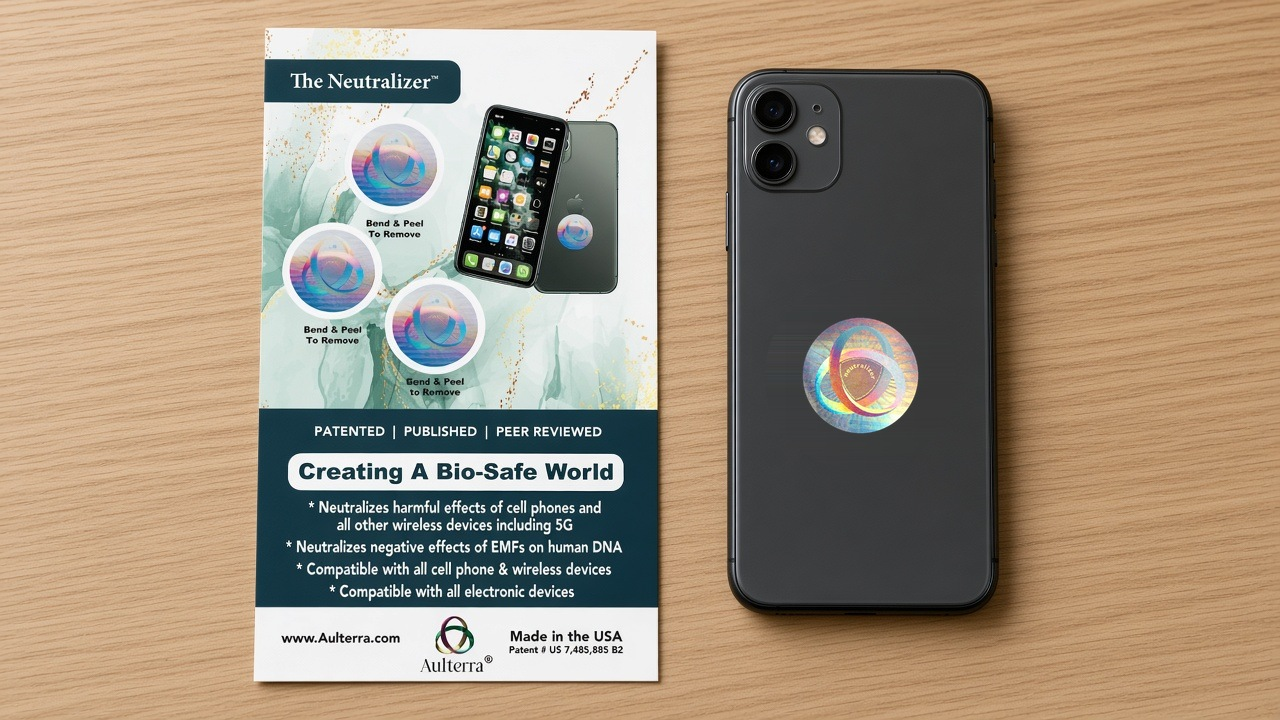
How to Apply EMF Neutraliser Disc: A Step-by-Step Guide for Phones and Home Devices
To apply an Aulterra EMF neutraliser disc, clean and dry the back of your phone, peel the disc, and press it on firmly, clear of camera lenses and ports, then f…
Does Phone EMF Protection Actually Work? An Evidence-Based Look for Australians
Phone EMF protection products such as the Aulterra neutraliser disc do not block or reduce mobile radiation, and they are not designed to. Genuine harmonising d…
iPhone vs Android EMF Output: Which Phone Is Actually Safer in Australia?
Direct Answer: Neither iPhone nor Android phones are meaningfully safer by SAR rating. Both must meet Australia's 2.0 W/kg limit, a standard enforced by ACMA an…