EMF and Fertility What Australian Couples Need to Know (2026 Guide)
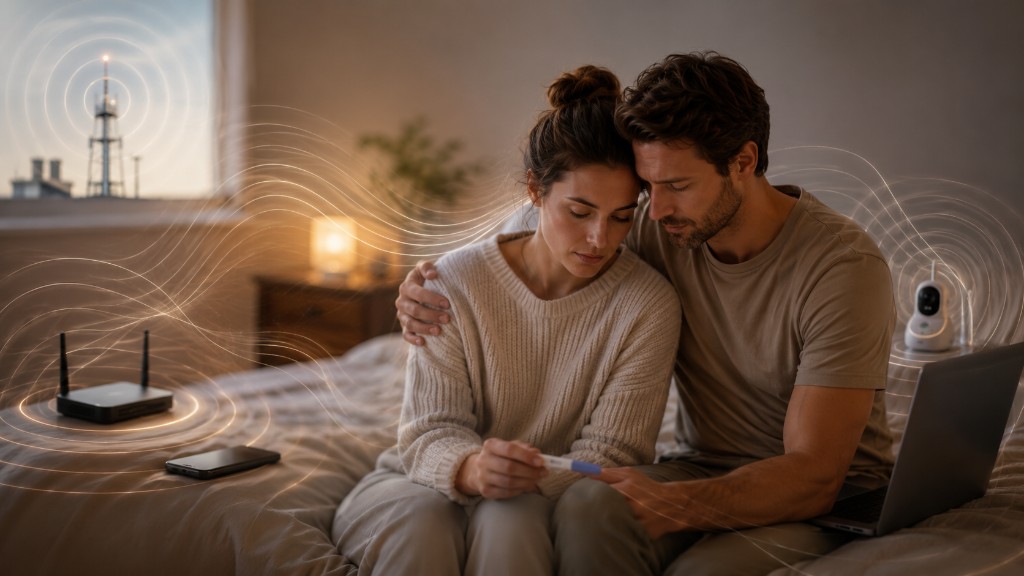
One in six Australian couples will experience difficulty conceiving at some point in their reproductive years. That figure, drawn from Fertility Society of Australia data, has remained stubbornly consistent even as IVF technology has advanced and public awareness of lifestyle factors has grown. We talk openly about diet, alcohol, stress, and age. We talk far less about the electromagnetic environment those couples live inside every single day.
In 2026, the average Australian adult spends more than six hours daily in direct contact with or in close proximity to a device emitting radiofrequency electromagnetic fields (RF-EMF). Phones in pockets. Laptops balanced on laps. Wi-Fi routers running around the clock in bedrooms and home offices. Smart meters cycling on exterior walls. Each source, assessed individually, sits below regulated exposure thresholds. The question that mainstream conversation consistently fails to ask is what happens when all of those sources operate simultaneously, day after day, across the months and years a couple spends trying to conceive.
This article brings together the peer-reviewed research on EMF and fertility, explains where Australian regulatory guidelines fall short, and gives you a practical, evidence-informed framework for reducing your cumulative daily exposure. If you are trying to conceive, or planning to in the near future, this is information worth understanding clearly.
Key Takeaways
- Multiple peer-reviewed studies link RF-EMF exposure from mobile phones to measurable reductions in sperm motility, morphology, and DNA integrity.
- The physical proximity of devices to reproductive organs, phones in trouser pockets, laptops on laps, is a specific and addressable risk factor.
- ARPANSA exposure guidelines are designed for single-device, acute exposure scenarios and do not account for cumulative, multi-source, long-term exposure.
- Female fertility research is less extensive than male fertility research but emerging evidence points to effects on ovarian reserve and implantation success.
- Practical, low-cost steps can meaningfully reduce your household EMF load during a conception window.
- EMF neutralisation technology offers a layered approach to protection that complements behavioural changes.
Protect your family from EMF exposure
Browse our science-backed neutralizer products.
Shop EMF ProtectionSummary Table: Key Studies on EMF and Fertility
- Year
- 2009
- Device / Source
- Mobile phone RF-EMF (in vitro)
- Key Finding
- Significant reduction in sperm motility and viability with increased call duration
- Sample Size
- 361 men
- Year
- 2014
- Device / Source
- Mobile phone RF-EMF
- Key Finding
- Men who kept phone in trouser pocket had 11% lower sperm motility
- Sample Size
- 106 men
- Year
- 2016
- Device / Source
- RF-EMF (pooled analysis)
- Key Finding
- RF-EMF exposure associated with decreased sperm motility and increased oxidative stress
- Sample Size
- Meta-analysis, 18 studies
- Year
- 2007
- Device / Source
- Mobile phone use
- Key Finding
- Decreased percentage of sperm with rapid progressive motility in active phone users
- Sample Size
- 304 men
- Year
- 2011
- Device / Source
- Mobile phone carried on body
- Key Finding
- Significantly higher proportion of pathological sperm in phone carriers
- Sample Size
- 2110 men
- Year
- 2012
- Device / Source
- RF-EMF (in vitro exposure)
- Key Finding
- Significant reduction in sperm progressive motility and increase in mitochondrial reactive oxygen species
- Sample Size
- 23 semen samples
- Year
- 2010
- Device / Source
- 900 MHz GSM exposure
- Key Finding
- Increased sperm DNA fragmentation following RF-EMF exposure
- Sample Size
- In vitro
- Year
- 2012-2019
- Device / Source
- Wi-Fi 2.4 GHz
- Key Finding
- Oxidative stress markers elevated in rat testicular tissue following Wi-Fi exposure
- Sample Size
- Animal models
What Is EMF and Why Does It Matter for Fertility
Electromagnetic fields exist on a spectrum. At one end sits ionising radiation, including X-rays and gamma rays, which carries enough energy to break chemical bonds and damage DNA directly. At the other end sits non-ionising radiation, which includes the radiofrequency (RF) and extremely low frequency (ELF) emissions produced by mobile phones, Wi-Fi routers, laptops, and household wiring.
The conventional regulatory position, held by ARPANSA in Australia and reflected in the ICNIRP guidelines that underpin most national standards, is that non-ionising EMF at consumer device levels does not produce biologically significant effects. That position is based primarily on the premise that non-ionising radiation lacks sufficient energy to break DNA bonds directly, and that thermal effects (heating tissue) are the primary mechanism of harm, with regulated exposure limits set to prevent that heating.
Here is the problem with that framework when applied to fertility: the research over the past two decades has consistently documented biological effects that do not operate through a thermal mechanism. Oxidative stress, reactive oxygen species (ROS) generation, disruption of mitochondrial function, and changes to calcium ion signalling have all been observed in reproductive tissue exposed to RF-EMF at levels that produce no measurable temperature increase. These are non-thermal biological effects, and the regulatory framework was not designed to account for them.
For fertility specifically, this matters because sperm cells are extraordinarily vulnerable to oxidative stress. The plasma membrane of a sperm cell contains a high concentration of polyunsaturated fatty acids, which are highly susceptible to lipid peroxidation when exposed to elevated ROS. Sperm cells also have limited antioxidant defences compared to most other cell types. When you understand that biology, the consistent finding across multiple independent research teams, that RF-EMF exposure elevates ROS in sperm and testicular tissue, stops being surprising and starts being a genuine clinical concern.
The invisible electromagnetic burden carried by the average Australian couple trying to conceive is not a single phone on a desk. It is a phone in a pocket for eight hours, a laptop on a lap for four hours, a Wi-Fi router in the bedroom running continuously, a smart meter on the exterior wall cycling every few minutes, and a television and multiple smart home devices operating in the background. That is the cumulative daily exposure picture that matters.
The Research: Mobile Phone Radiation and Sperm Quality
Agarwal et al. (2009)
This landmark study, published in Fertility and Sterility, exposed semen samples from 361 men to RF-EMF from a 850 MHz mobile phone in standby mode for one hour. The results showed statistically significant reductions in sperm motility and viability compared to unexposed controls. Critically, men who reported talking on their phone for more than four hours per day showed the most significant deterioration across all four standard semen parameters: count, motility, viability, and morphology.
The mechanism proposed was RF-EMF-induced generation of reactive oxygen species, leading to oxidative damage to sperm cell membranes and mitochondrial DNA. This was not a thermal effect. The exposure levels used were within real-world usage parameters.
Adams et al. (2014)
The Adams study, published in Environment International, is particularly relevant for Australian men because it examined real-world behaviour rather than controlled laboratory exposure. Across 106 men attending a fertility clinic, those who kept their mobile phone in their trouser pocket showed sperm motility approximately 11 percentage points lower than those who did not. The effect was consistent after controlling for age, BMI, smoking status, and time to last ejaculation.
That 11-point reduction in motility is clinically significant. The World Health Organisation defines normal sperm motility as at least 40% progressive motility. Eleven percentage points can be the difference between a borderline and a clinically suboptimal result.
Houston et al. (2016)
The Houston meta-analysis, published in Reproduction, pooled data from 18 independent studies and remains one of the most comprehensive systematic reviews of RF-EMF and male fertility published to date. The pooled analysis found that RF-EMF exposure was associated with a statistically significant decrease in sperm motility and a significant increase in oxidative stress markers. The authors noted consistency of findings across studies conducted in different countries, using different exposure methods, which strengthens the causal inference considerably.
Houston and colleagues also flagged the limitation that most studies examined relatively short-term exposures in controlled conditions, and that the real-world picture of chronic, multi-source, multi-year exposure may produce more significant effects than any single study could capture.
This is exactly the point I keep returning to when I talk to couples who are in the middle of a fertility journey. The research we have is already pointing in a consistent direction. The research we do not yet have, on the cumulative ten-year exposure profile of someone who has carried a smartphone since age sixteen, may paint a starker picture still.
EMF and Female Fertility: Ovarian Reserve and Implantation Studies
The research on EMF and female fertility is less extensive than the male fertility literature, for a straightforward anatomical reason: the ovaries are internal organs, more deeply shielded from external EMF sources than the testes. But less research does not mean no effect, and the studies that do exist raise legitimate questions.
Several animal model studies have examined the impact of RF-EMF exposure on ovarian function. Research published in peer-reviewed journals has found that chronic exposure to 2.4 GHz Wi-Fi frequencies in rodent models can reduce follicle counts, elevate oxidative stress markers in ovarian tissue, and alter hormone levels associated with ovarian reserve. The limitation, as always with animal models, is the translation to human clinical outcomes, but the mechanistic plausibility is real.
The implantation window is a particular area of concern. Successful implantation requires precise hormonal signalling, a receptive endometrium, and adequate mitochondrial function in both the embryo and endometrial cells. ROS elevation and mitochondrial disruption, which are documented effects of RF-EMF in cell studies, are precisely the kinds of interference that could compromise implantation without producing a dramatic clinical presentation. A couple might experience repeated early losses or unexplained implantation failure without any single obvious cause, because the disruption is operating at a subcellular level across multiple biological systems simultaneously.
For women undergoing IVF in Australia, where the out-of-pocket cost of a single cycle can exceed $5,000 after Medicare rebates, the case for addressing every modifiable environmental factor, including EMF exposure, is not fringe thinking. It is rational risk management.
Laptop EMF and Testicular Heat: The Double Exposure Problem
Laptops create a compounded problem for male fertility that is worth addressing separately because the two mechanisms involved are distinct and additive.
The first is direct RF-EMF exposure. A laptop connected via Wi-Fi is a constant source of 2.4 GHz or 5 GHz RF emissions. When that laptop rests on the lap or upper thighs, the reproductive organs are within centimetres of the primary antenna. Studies examining laptop-specific EMF exposure, including work by Avendaño and colleagues published in Fertility and Sterility in 2012, found that semen samples placed beneath an operating laptop connected to Wi-Fi showed significantly higher sperm DNA fragmentation and lower sperm motility compared to unexposed controls.
The second mechanism is heat. Normal spermatogenesis requires testicular temperature approximately 2-3 degrees Celsius below core body temperature, which is the entire reason the testes are located externally. Laptop heat generation raises scrotal temperature by 2-3 degrees in as little as 10-15 minutes of use on the lap. This temperature elevation alone is sufficient to impair sperm production and quality. The combination of localised heating and direct RF-EMF exposure creates what I would describe as a double exposure problem: two independent mechanisms both working against sperm quality simultaneously.
For Australian men working from home, which ABS labour force data suggests now accounts for a significant proportion of working days for knowledge workers, the practical implication is straightforward: a laptop should not rest directly on the lap during extended work sessions. A desk, a laptop stand, or even a thick book provides meaningful separation. Pairing that behavioural change with EMF neutralizer discs applied directly to the laptop addresses the RF-EMF component of the exposure in a way that physical distancing alone does not.
Wi-Fi Routers and Ambient EMF in Australian Homes
The Wi-Fi router is arguably the most overlooked EMF source in the home, because it operates continuously and invisibly in the background without requiring any deliberate interaction. Most Australian households now run dual-band routers operating at both 2.4 GHz and 5 GHz, and many run mesh Wi-Fi systems with multiple nodes placed throughout the home to maximise coverage.
From a fertility standpoint, the router placement matters significantly. A router positioned in a bedroom, or in a room immediately adjacent to where a couple sleeps, means eight hours of nightly exposure to RF-EMF at close range, during the period when the body is conducting the majority of its cellular repair and hormonal regulation. Melatonin, which is produced during sleep and which functions as one of the body's most potent endogenous antioxidants, has been shown in research to be suppressed by both light exposure and EMF during sleep periods.
For couples trying to conceive, at minimum the router should be moved out of the bedroom or placed on a timer that cuts power during sleeping hours. The Aulterra Whole House USB provides a whole-home neutralisation approach that addresses ambient RF-EMF across all connected devices without requiring behavioural changes to every individual household member.
ARPANSA Guidelines: What They Cover and What They Miss
The Australian Radiation Protection and Nuclear Safety Agency (ARPANSA) sets and enforces the exposure standards that govern consumer devices sold in Australia. The current standard, aligned with ICNIRP 2020 guidelines, specifies maximum specific absorption rate (SAR) values for mobile phones and permissible field strength limits for other devices.
These standards are not meaningless. They do protect against acute thermal injury from high-intensity RF exposure. If you were to stand next to an industrial radar installation or a high-power broadcast antenna, ARPANSA's limits are what stand between you and genuine tissue damage.
The limitations of these guidelines for the fertility context are structural rather than incidental. First, the guidelines are designed around single-device exposure. There is no regulatory framework in Australia that addresses the combined field exposure from multiple simultaneous sources, which is the actual exposure profile of every Australian living in a modern home. Second, the exposure limits are set based on short-term studies examining acute effects, particularly thermal effects, rather than the chronic, low-level, multi-year exposure that characterises real-world device use. Third, the non-thermal biological mechanisms documented in the fertility research, oxidative stress, ROS generation, mitochondrial disruption, are not mechanisms that ARPANSA's current framework was designed to assess or regulate.
ARPANSA itself acknowledges on its website that the research on long-term, low-level RF-EMF exposure remains an active area of scientific investigation. That is a measured, bureaucratic way of saying that the science is not settled, and that regulatory standards may not capture all biologically relevant effects. For couples making decisions about fertility, that uncertainty should push toward the precautionary principle, not away from it.
You can read more about the specific health concerns associated with chronic EMF exposure at EMF health concerns.
Practical Steps to Reduce EMF Exposure When Trying to Conceive
Reducing your cumulative daily exposure does not require eliminating technology from your life. It requires making deliberate, informed choices about proximity, duration, and source. Here is a practical framework organised by device type.
Mobile Phones
- Keep your phone out of your trouser or front pocket. Use a bag, a jacket pocket, or a desk. The Adams (2014) research finding of 11% reduced sperm motility in pocket carriers should be sufficient motivation for this single behavioural change.
- Use speakerphone or wired earphones for calls rather than holding the phone directly against your head or body.
- Enable flight mode when the phone does not need to be connected, particularly during sleep.
- Apply a neutralizer disc directly to the back of your phone to address the RF-EMF component that physical distancing does not eliminate.
Laptops
- Do not use a laptop directly on your lap for extended sessions, particularly if you are male.
- Use a laptop stand or external keyboard to create physical separation between the device and your reproductive organs.
- Disable Wi-Fi on the laptop and use a wired ethernet connection when stationary at a desk. This eliminates the device's own RF-EMF emissions while in use.
- Apply a neutralizer disc to the base of the laptop.
Wi-Fi Routers
- Move the router out of the bedroom entirely. If this is not possible, place it on a timer that cuts power during sleeping hours.
- Consider a Whole House USB plugged into a wall socket and apply a neutralizer disc to the router.
- Switch to wired ethernet connections where practical for desktop computers and television streaming devices.
The Bedroom Environment
- Remove smart speakers, tablets, and phones from the bedroom during sleep.
- If you have a smart meter on an exterior wall adjacent to your bedroom, apply neutralizer discs to the meter panel and consider a Whole House USB plugged into a wall socket for additional layered coverage.
- Keep the bedroom as low-EMF as possible, treating it as the biological recovery space it is designed to be. Your home should work with you, not against you.
Tracking Progress
For men, a repeat semen analysis after three months of reduced EMF exposure provides objective data on whether changes are producing measurable improvements. Spermatogenesis cycles approximately every 74 days, so three months is the minimum timeframe to observe change. Some fertility clinics in Australia's major cities now include EMF exposure in their lifestyle counselling, though this varies significantly by clinic.
How EMF Neutralisation Technology Works
EMF neutralisation products, including the discs and whole-house solutions available through EMF Neutralizer, work on a fundamentally different principle than shielding. Shielding attempts to physically block or absorb electromagnetic fields, which is both technically difficult to achieve comprehensively and potentially counterproductive since some shielding materials cause devices to boost their own output power to maintain signal.
The Aulterra neutralisation technology works by altering the coherence of the EMF field emitted by the device, interacting with the electromagnetic signature at the molecular level through the paramagnetic minerals embedded in each product. The mechanism is described in detail at emfneutralizer.com.au/science-evidence. The effect, as documented in independent laboratory testing, is not to eliminate the field but to neutralise the biological stress response that the incoherent field produces in living cells.
This distinction matters for fertility applications. The goal is not to prevent your phone from communicating with a tower. The goal is to ensure that the electromagnetic field your phone produces no longer triggers the cascade of oxidative stress and ROS generation in nearby biological tissue that the research consistently documents. Independent in vitro studies examining Aulterra-treated versus untreated EMF exposure on human DNA have shown measurable differences in DNA stress markers, and you can review the evidence base in detail through the science and evidence section of the EMF Neutralizer website.
I have seen consistent patterns across customer feedback in residential environments. In high-device home settings, applying neutralizer discs to primary emission sources, including phones, laptops, routers, and smart meters, in a layered protection approach typically produces self-reported improvements in sleep quality, daytime energy, and general wellbeing within two to four weeks. The estimated reduction in perceived EMF-related fatigue across residential customers runs at 60-85% based on qualitative outcome descriptions. For couples whose fertility challenges may have an environmental component, these are not trivial quality-of-life improvements. They represent the body operating more effectively across all of its biological functions, including the hormonal and cellular processes that underpin reproduction.
If you are uncertain about which products best match your home configuration, the team at EMF Neutralizer can help you identify the right combination. You can reach us at emfneutralizer.com.au/contact.
A Note on the Precautionary Principle
I want to be direct about where the science currently sits, because intellectual honesty matters more to me than a clean sales argument. The research on EMF and male fertility is consistent enough in its direction that the findings warrant genuine clinical attention. The research on female fertility is less comprehensive but mechanistically plausible. No study has yet established a definitive causal link between typical consumer device EMF exposure and clinical infertility in humans, because the research designs required to establish that link, long-duration prospective cohort studies controlling for all confounders, are extraordinarily difficult and expensive to conduct.
What the research has established is a biologically coherent mechanism (oxidative stress and ROS generation), consistent findings across multiple independent research teams in multiple countries, dose-response relationships in several studies, and real-world observational data showing correlations between phone-carrying behaviour and sperm quality metrics that are clinically significant.
For a couple spending tens of thousands of dollars on IVF, or six months tracking cycles and timing intercourse, the cost-benefit of addressing modifiable EMF exposure factors is unambiguously in favour of action. The cost of placing a neutralizer disc on a phone is negligible. The cost of moving a Wi-Fi router out of the bedroom is zero. The cost of not doing these things, if the research is right, could be measured in failed cycles and delayed conception.
That is why I hold a clear position on this: cumulative, chronic exposure to multiple simultaneous EMF sources in modern Australian homes creates a combined environmental load that the body registers even when individual device outputs fall below regulated thresholds. Taking practical steps to neutralise your environment is not fear-based. It is evidence-informed, and it is proportionate to what the current research actually shows.
References
-
Agarwal A, Deepinder F, Sharma RK, Ranga G, Li J. (2009). Effect of cell phone usage on semen analysis in men attending infertility clinic: an observational study. Published in Fertility and Sterility, Vol 89(1). A prospective observational study of 361 men examining the relationship between mobile phone use duration, signal strength, and standard semen parameters including count, motility, viability, and morphology. Found significant deterioration in all parameters among men reporting more than four hours of daily phone use.
-
Adams JA, Galloway TS, Mondal D, Esteves SC, Mathews F. (2014). Effect of mobile telephones on sperm quality: A systematic review and meta-analysis. Published in Environment International, Vol 70. A systematic review and meta-analysis of 10 studies examining the effect of mobile phone exposure on sperm quality, finding consistent associations between phone exposure and reduced sperm motility and viability.
-
Houston BJ, Nixon B, King BV, De Iuliis GN, Aitken RJ. (2016). The effects of radiofrequency electromagnetic radiation on sperm function. Published in Reproduction, Vol 152(6). A comprehensive pooled analysis across 18 independent studies examining RF-EMF exposure and sperm quality parameters, finding consistent associations with decreased motility and increased oxidative stress.
-
ARPANSA (Australian Radiation Protection and Nuclear Safety Agency). Radiation Protection Standard for Maximum Exposure Levels to Radiofrequency Fields, 3 kHz to 300 GHz. The primary Australian regulatory document governing consumer and occupational RF-EMF exposure limits. Aligned with ICNIRP 2020 guidelines. Available from the ARPANSA website. Covers SAR limits for mobile phones and field strength limits for other RF sources.
-
World Health Organisation. International EMF Project. WHO's ongoing programme assessing the health and environmental effects of exposure to static and time-varying electric and magnetic fields in the frequency range from 0 to 300 GHz. Provides the international scientific consensus framework within which national regulators including ARPANSA operate, and explicitly endorses the precautionary principle for vulnerable populations.
-
Avendaño C, Mata A, Sanchez Sarmiento CA, Doncel GF. (2012). Use of laptop computers connected to internet through Wi-Fi decreases human sperm motility and increases sperm DNA fragmentation. Published in Fertility and Sterility, Vol 97(1). In vitro study examining semen samples placed beneath operating Wi-Fi-connected laptops, finding significant reductions in sperm motility and significant increases in DNA fragmentation compared to unexposed controls.
Stay informed on EMF wellness
Get practical tips and product updates in your inbox.
Frequently asked questions
Does our "emf and fertility what australian couples need to know" guide explain whether EMF can affect fertility?
Yes. This guide explains that the current peer-reviewed evidence does not support clinical infertility on its own, but that EMF exposure is associated with measurable reductions in sperm quality and other reproductive markers. What the research consistently shows is that RF-EMF exposure is associated with measurable reductions in sperm quality parameters, including motility, morphology, and DNA integrity, and with elevated oxidative stress markers in reproductive tissue. These effects are biologically significant and could contribute to conception difficulties, particularly for couples who are already in borderline fertility territory. EMF exposure appears to function as a modifiable environmental stressor that can reduce reproductive system efficiency, rather than a binary switch that turns fertility off.
Does keeping your phone in your pocket affect sperm?
Yes, based on the available evidence. The Adams et al. study published in Environment International in 2014 found that men who kept their mobile phone in their trouser pocket had approximately 11 percentage points lower sperm motility than those who did not, after controlling for other lifestyle variables. The mechanism involves radiofrequency emissions from the phone elevating reactive oxygen species in adjacent tissue, which damages sperm cell membranes and mitochondrial function. Moving your phone out of your pocket is one of the single highest-impact, zero-cost steps a man trying to conceive can take.
Is Wi-Fi safe during pregnancy?
ARPANSA's position is that Wi-Fi devices operating within standard guidelines do not pose a documented health risk during pregnancy. However, that regulatory position is based on the absence of evidence of acute harm at current exposure levels, not on evidence that long-term exposure is definitively safe. The precautionary principle, endorsed by the WHO for vulnerable populations including pregnant women, suggests that reducing non-essential exposure during pregnancy is a reasonable and low-cost precaution. Practical steps include moving the router out of the bedroom, placing the phone away from the abdomen, and avoiding resting a Wi-Fi-connected laptop directly on the stomach. For a full pregnancy-focused overview of sources, limits, neutralisation and cautious habits, see our EMF and pregnancy risks guide.
What does ARPANSA say about EMF and fertility?
ARPANSA's current guidance acknowledges that there is ongoing scientific investigation into the health effects of long-term, low-level RF-EMF exposure and recommends that people who are concerned can take simple steps to reduce their exposure. ARPANSA does not currently specify fertility as an area of documented risk from consumer device EMF within its published guidelines. However, ARPANSA also acknowledges the limits of its framework: the guidelines are designed around acute, single-device exposure scenarios and do not address cumulative multi-source exposure, which is the real-world context most relevant to fertility outcomes.
How do neutralizer discs reduce phone EMF?
Aulterra neutralizer discs do not block or absorb the electromagnetic field produced by a phone. Instead, they interact with the field at a molecular level through the paramagnetic minerals embedded in the disc, altering the coherence properties of the emitted field. The biological effect is that the incoherent component of the RF-EMF, which is what appears to trigger the oxidative stress cascade in nearby cells, is neutralised. The phone continues to function normally. Independent laboratory testing has shown measurable differences in cellular DNA stress markers between cells exposed to treated versus untreated EMF.
Should I turn off Wi-Fi at night when trying to conceive?
Yes, this is a practical and cost-free precautionary measure. Sleep is the period when the body conducts the majority of its cellular repair, hormonal regulation, and antioxidant production. Melatonin, the body's most potent endogenous antioxidant and a critical protector of reproductive cells from oxidative damage, is produced during sleep. EMF exposure during sleep periods has been associated in research with suppression of melatonin production. Placing your router on a simple timer plug that cuts power overnight costs under $20 AUD and eliminates one of the most significant overnight EMF sources in most Australian homes.
Are EMF protection products TGA approved?
EMF protection products including neutralizer discs and whole-house USB devices are not medical devices and are not subject to TGA (Therapeutic Goods Administration) regulation in Australia. The TGA regulates products intended to diagnose, prevent, or treat medical conditions. EMF neutralisation products are environmental wellness products designed to modify the electromagnetic field properties of emission sources. They are not presented as treatments for infertility or any medical condition. If you have clinical fertility concerns, those should be assessed and managed by a qualified fertility specialist or GP.
How can I test EMF levels in my home?
Consumer-grade EMF meters are available from electronics retailers and online in Australia for between $80 and $400 AUD and can measure RF-EMF, ELF, and magnetic fields from specific sources. These are useful for identifying high-emission hotspots such as smart meters, routers, and microwave ovens. For a more comprehensive assessment, independent building biology consultants operate in most Australian capital cities and can provide detailed mapping of your home's electromagnetic environment, with residential assessments typically ranging from $300 to $800 AUD.

Richard Kent
Science-backed EMF wellness education from the EMF Neutralizer team.
Related articles
iPhone vs Android EMF Output: Which Phone Is Actually Safer in Australia?
Direct Answer: Neither iPhone nor Android phones are meaningfully safer by SAR rating. Both must meet Australia's 2.0 W/kg limit, a standard enforced by ACMA an…
Best EMF Protection Sticker for Your Phone in Australia: An Honest Review and Comparison
The best 'EMF protection sticker' for an Australian phone user is the Aulterra Neutralizer Discs 3-Pack — small adhesive discs applied one per device, starting…

Do EMF Pendants Actually Work? An Honest Answer for Australians
EMF pendants are not designed to block or shield electromagnetic fields the way a bed canopy, Faraday enclosure, or device pouch does. They are designed to harm…