Electromagnetic Hypersensitivity EHS Australia: Symptoms, Causes and What Actually Helps (2026)
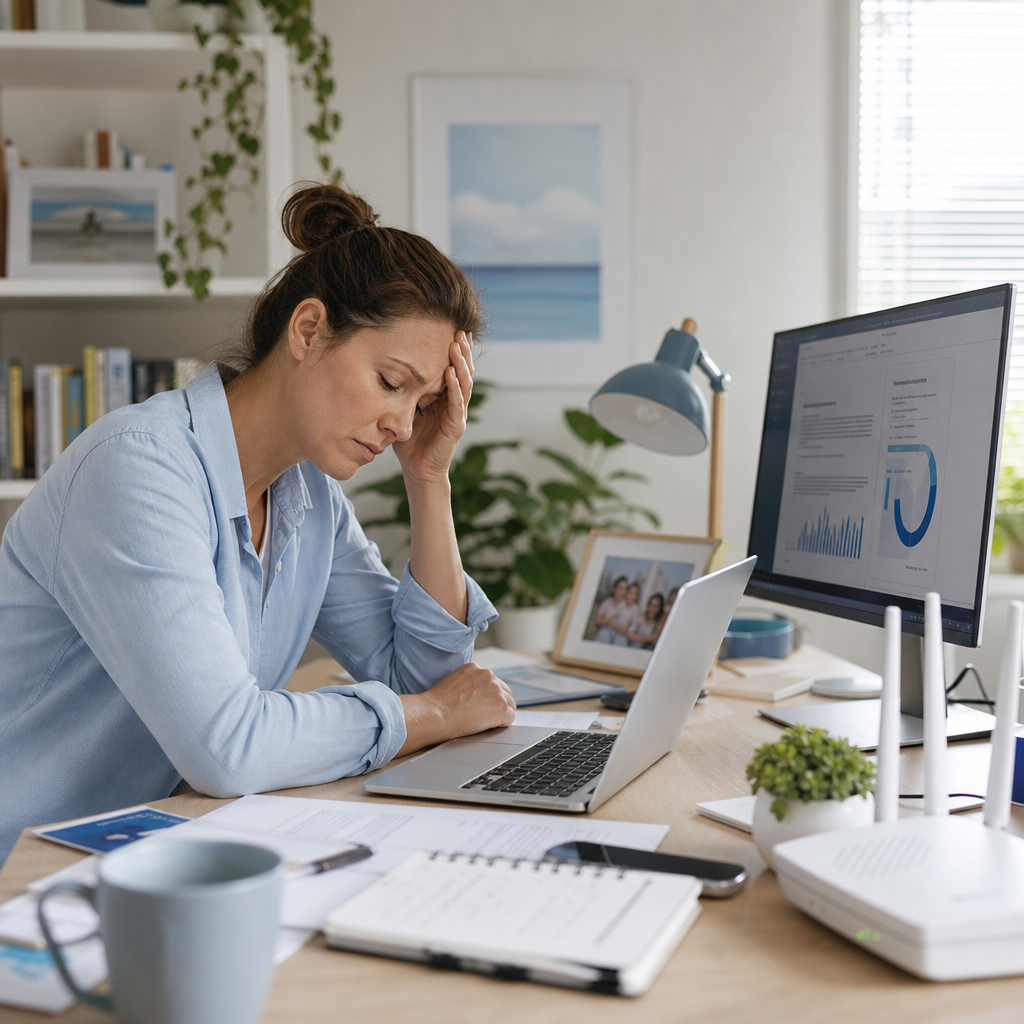
If you have ever walked into a room full of running electronics and felt your head start to pound, your concentration dissolve, or a creeping fatigue that no amount of sleep seems to fix, you are not imagining things. Thousands of Australians report exactly these experiences, and the growing density of wireless infrastructure in our homes, offices, and public spaces makes the conversation more relevant than ever.
Electromagnetic hypersensitivity, known as EHS, sits in an uncomfortable place. Mainstream medicine does not yet classify it as a formal diagnosis. Yet the World Health Organisation acknowledges that sufferers experience genuine, often debilitating symptoms. In Australia, ARPANSA receives regular enquiries about EMF-related health concerns, and the rollout of 5G networks plus mandatory smart meter upgrades in several states has pushed the topic into mainstream conversation. The lived experience of EHS is real, even where the mechanism is still being studied.
This guide is written for Australians who suspect they may be sensitive to EMF, want to understand what the evidence actually says without spin in either direction, and are looking for practical, grounded steps they can take right now. I will cover what EHS is, how to assess whether it matches your experience, what the current science and regulators say, and how to reduce your cumulative daily exposure in a way that supports your biology rather than works against it.
Key Takeaways
- EHS is a self-reported condition in which individuals experience physical symptoms they attribute to electromagnetic field exposure. It is not a formal medical diagnosis, but the symptoms are real and can be severe.
- Common reported symptoms include headaches, fatigue, sleep disruption, brain fog, tingling sensations, and heart palpitations.
- The WHO and ARPANSA acknowledge EHS reports but note that controlled studies have not consistently established a causal link between EMF exposure and symptoms under blinded conditions.
- Regulatory exposure limits are set for single-device, acute scenarios, not for the cumulative daily burden of a person surrounded by multiple wireless devices simultaneously for 12-16 hours a day.
- Practical reduction strategies including device management, environmental changes, and products such as Aulterra neutralisers can form a meaningful layered EMF protection plan — see compare EMF protection products for where to start by setting.
- Managing sensitivity holistically — understanding your triggers, keeping up with general health, and supporting sleep and stress — often works best alongside environmental changes.
- Seeking a personalised approach matters. What works depends heavily on your environment, lifestyle, and the specific sources driving your exposure.
Protect your family from EMF exposure
Browse our science-backed neutralizer products.
Shop EMF ProtectionSummary Table: EHS at a Glance
- What You Need to Know
- Not a formal medical diagnosis (WHO, 2026)
- What You Need to Know
- 1.5-13.5% of the population in various studies
- What You Need to Know
- WiFi routers, 5G towers, smart meters, mobile phones, laptops
- What You Need to Know
- Monitors evidence; current limits based on acute single-source exposure
- What You Need to Know
- Can be immediate or cumulative over hours
- What You Need to Know
- No single medical protocol; symptom management and exposure reduction most commonly reported to help
- What You Need to Know
- Designed to neutralise EMF fields at the source; most effective as part of a broader plan
- What You Need to Know
- Contact EMF Neutralizer for a personalised environment assessment
What Is Electromagnetic Hypersensitivity?
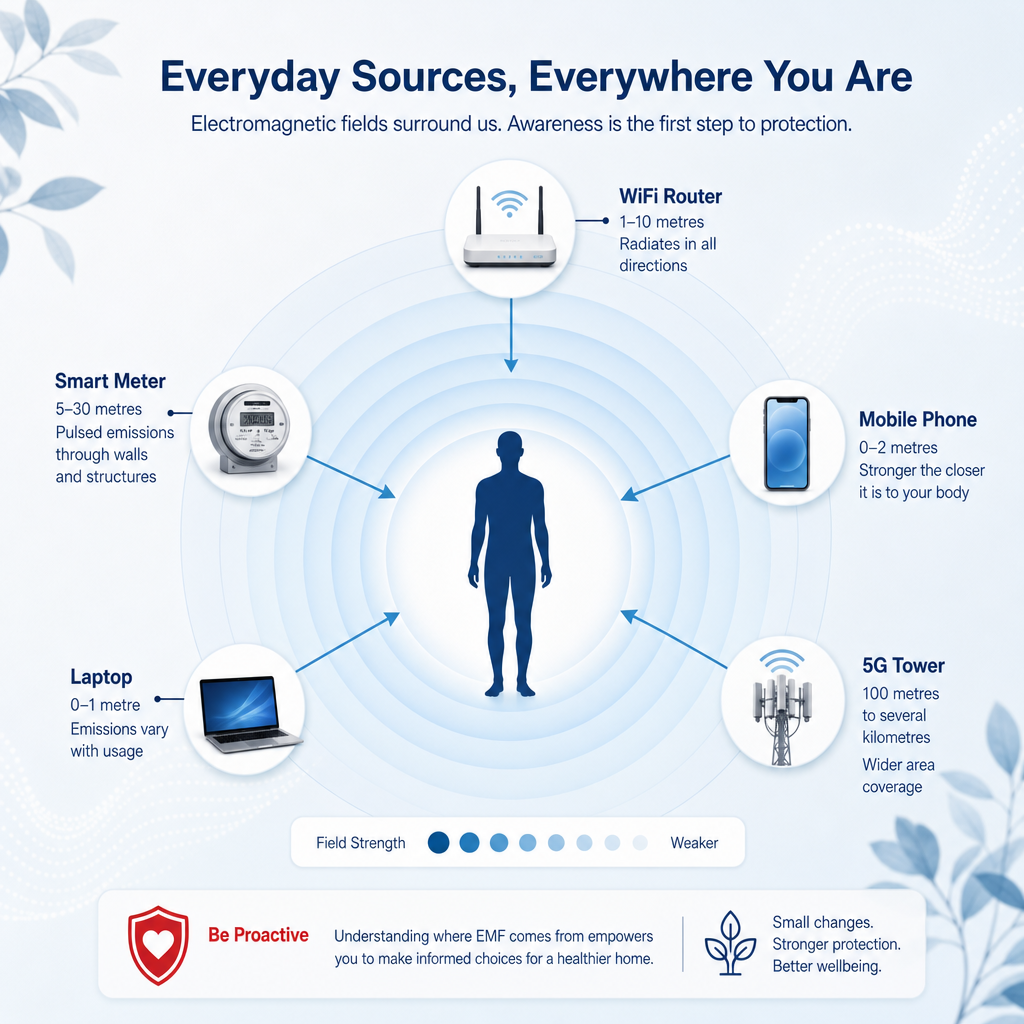
Electromagnetic hypersensitivity is a condition in which a person experiences adverse physical symptoms that they attribute to exposure to electromagnetic fields produced by everyday devices and infrastructure. These fields include radiofrequency (RF) radiation from WiFi, mobile phones, and 5G towers, as well as extremely low frequency (ELF) fields from power lines, wiring, and household appliances.
The World Health Organisation formally reviewed EHS in its 2005 fact sheet (updated periodically since) and uses the term to describe a phenomenon where individuals experience symptoms in the presence of EMF sources. Critically, the WHO notes that the symptoms are genuine and can be disabling, even as it concludes that current evidence does not establish a consistent causal relationship under blinded experimental conditions. In plain terms: the symptoms are real; the precise mechanism connecting them to EMF exposure has not been confirmed to the satisfaction of mainstream scientific consensus.
This creates a difficult space for sufferers. They are not being told they are fine. They are being told that science has not yet fully explained what they experience. For many people, that distinction matters enormously, because it opens the door to practical management rather than dismissal.
In Australia, ARPANSA (the Australian Radiation Protection and Nuclear Safety Agency) is the national authority on radiation safety standards. ARPANSA's position mirrors the WHO's: it does not classify EHS as a medically established condition, but it takes public concern seriously and sets exposure limits under the ARPANSA Radiation Protection Standard for Maximum Exposure Levels to Radiofrequency Fields. Those limits, however, are designed around acute, single-source exposure scenarios. They do not account for the reality of a person sitting in a home office surrounded by a router, a smart meter, two mobile phones, a laptop, an external monitor, and a smart television, running simultaneously for eight to twelve hours a day.
That gap between regulatory framing and lived reality is where the most important conversation about EHS in Australia actually sits.
Common EHS Symptoms: What Sufferers Actually Report
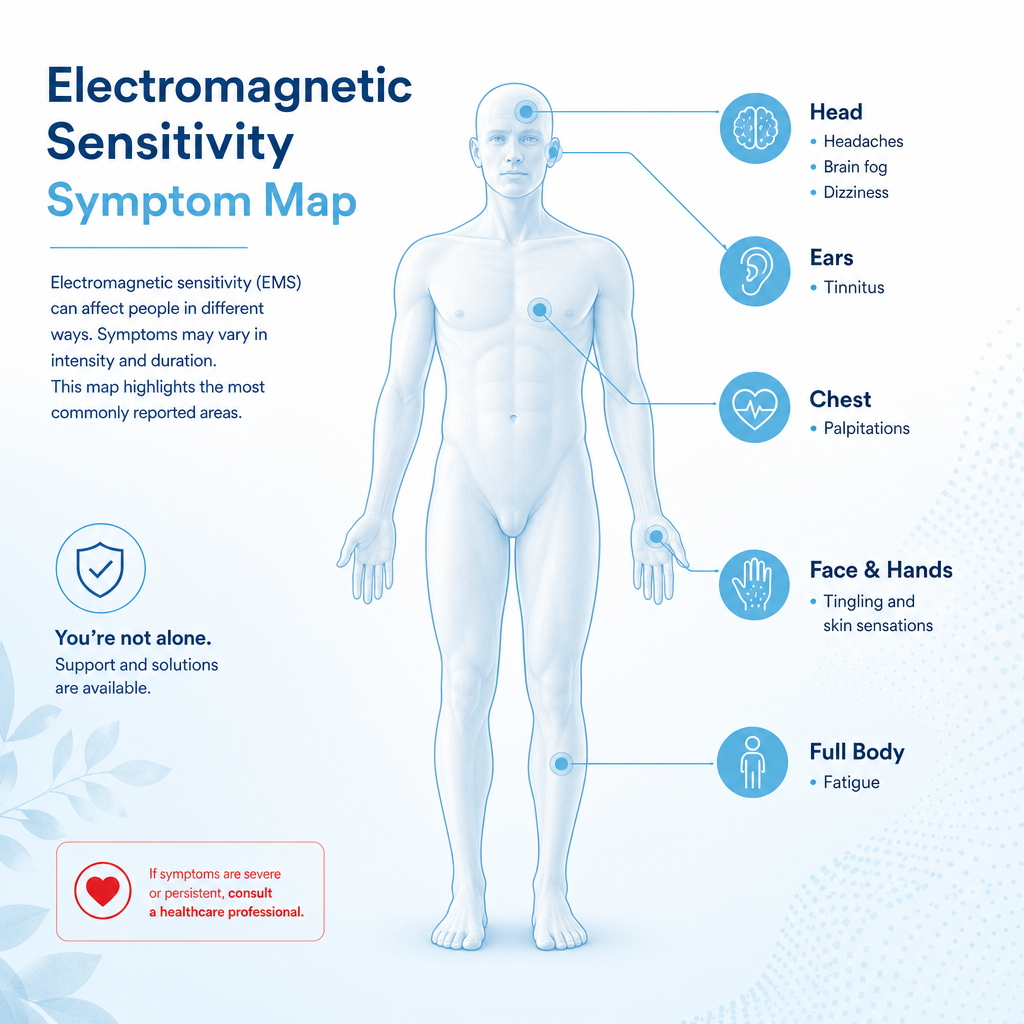
Symptoms attributed to EHS vary significantly between individuals, which is one reason the condition is difficult to study under controlled conditions. Some people report immediate reactions to specific devices. Others describe a slow accumulation of symptoms over the course of a day spent in a high-device environment.
The most commonly reported symptoms, drawn from both international EHS research and from the experiences of Australians who contact us directly, include:
Neurological and Cognitive Symptoms
- Headaches and migraines. Often described as a pressure-type pain, typically frontal or temporal, that worsens with prolonged device use and eases when the person moves away from devices or into a lower-EMF environment.
- Brain fog and difficulty concentrating. A sense that thinking feels slow or effortful, often described as similar to jet lag but without any travel.
- Memory difficulties. Short-term recall problems, difficulty following conversations, or a feeling of mental disorganisation.
- Dizziness and balance issues. Reported less frequently, but some individuals describe a low-grade vertigo associated with dense wireless environments such as shopping centres or office buildings.
Physical Symptoms
- Fatigue. Persistent tiredness that is disproportionate to activity levels and does not resolve with rest. Many sufferers describe this as the most disabling symptom, particularly in workplace settings.
- Sleep disruption. Difficulty falling asleep, staying asleep, or waking unrefreshed, particularly when wireless devices such as routers and phones are left on in or near the bedroom overnight.
- Skin sensations. Tingling, burning, prickling, or a sense of warmth on the face, hands, or scalp, often reported in relation to mobile phone use or laptop proximity.
- Heart palpitations. Some individuals report an irregular or rapid heartbeat that they associate with certain EMF environments.
- Tinnitus. A ringing or buzzing in the ears that some sufferers connect to wireless device exposure.
- Muscle tension and pain. Particularly in the neck, shoulders, and jaw, often co-occurring with headache reports.
When Symptoms Are Severe
For most people who report EHS, symptoms are manageable with environmental adjustments. For a smaller group, however, the condition is genuinely disabling. I have worked with customers whose EHS symptoms were severe enough to affect their capacity to live and work in urban environments. One woman I assisted had spent years seeking relief by limiting her time in built-up areas and had seriously considered moving to a rural property to escape the cumulative load of suburban wireless infrastructure. Her story is covered in more detail in the case studies below.
Am I Sensitive to EMF? A Self-Assessment Checklist
The following questions are not a clinical diagnostic tool. They are designed to help you identify patterns in your experience that may be worth discussing with a health professional and worth addressing through practical environmental changes.
Answer yes or no to each question:
- Do you experience headaches that worsen over the course of a workday and ease on weekends or during holidays away from your usual devices?
- Do you feel more fatigued than your activity and sleep levels would suggest is normal?
- Do you notice that your sleep quality is worse when your mobile phone or WiFi router is on in or near your bedroom?
- Do you experience skin tingling, warmth, or a prickling sensation when using a mobile phone against your face or working with a laptop on your lap?
- Do you feel noticeably worse in environments with high wireless device density, such as open-plan offices, shopping centres, or airports?
- Have you noticed brain fog or difficulty concentrating that eases when you spend time outdoors away from devices?
- Do you experience heart palpitations or a racing pulse that you cannot attribute to physical exertion, caffeine, or anxiety?
- Have symptoms appeared or worsened following a change in your environment, such as the installation of a smart meter, a 5G tower nearby, or a move to a denser urban area?
- Do you feel better in environments with less wireless infrastructure, such as rural areas or older buildings without smart technology?
- Have multiple health practitioners been unable to identify a physical cause for your ongoing fatigue, headaches, or sleep disruption?
Interpreting your answers: If you answered yes to five or more of these questions, your symptom pattern is consistent with what EHS sufferers commonly report. This does not constitute a diagnosis, and I would always recommend discussing persistent symptoms with a general practitioner to rule out other causes first. What it does suggest is that your environment deserves serious attention, and that reducing your cumulative daily exposure is a practical, low-risk step worth taking.
Reach out to us directly if you want help working through what your specific environment looks like and what changes are likely to make the most difference.
What the Research and Regulators Actually Say
The scientific literature on EHS is more nuanced than either the dismissive or the alarmist camps typically acknowledge. Here is an honest summary.
The WHO Position
The WHO reviewed the available evidence comprehensively and concluded that controlled provocation studies, where participants are exposed to EMF fields without knowing whether the field is active, have not produced consistent results. Most double-blind studies show that EHS sufferers cannot reliably detect when they are being exposed to EMF at levels typical of everyday environments. The WHO interprets this as indicating that the symptoms are real but may not be triggered directly by EMF in a simple cause-and-effect relationship.
Importantly, the WHO does not say that EHS sufferers are imagining their symptoms. It recommends that people with EHS receive medical assessment, support, and attention to the psychological and environmental factors that may be contributing.
ARPANSA and Australian Standards
ARPANSA sets and reviews Australia's radiofrequency EMF exposure standards in line with the International Commission on Non-Ionizing Radiation Protection (ICNIRP) guidelines. The current Australian standard specifies maximum exposure levels based on the established biological effects of acute, high-level exposure. Thermal effects, meaning tissue heating from radiofrequency radiation, are the primary basis for the limits.
The standard does not address non-thermal effects from chronic, low-level, multi-source exposure, because the evidence for those effects has not reached the threshold required for regulatory action. This is not the same as saying they do not exist. It means the evidence is not yet strong enough for ARPANSA to act on.
The Cumulative Exposure Argument
Here is where I part ways with the mainstream regulatory framing, and where I think the most important practical insight lies.
Regulatory limits are engineered around a single device and a specific exposure duration. They do not model the electromagnetic environment of a typical Australian home in 2026, which includes a WiFi 6 router, multiple 5G-capable smartphones, a smart electricity meter, a smart television, perhaps a mesh network of wireless nodes, wireless earbuds, smart speakers, and a range of wireless peripherals. Every one of these devices may operate within its individual regulatory limit. But the person living in that environment is not experiencing one device at a time for a defined short period. They are bathed in an invisible electromagnetic burden from the moment they wake up to the moment they fall asleep, and often while they sleep.
I believe the aggregate daily burden is the relevant measure, not any individual device's rated output. This is the lens through which I approach EHS, and it is the reason that even modest, consistent reductions across multiple sources in your environment can produce meaningful improvements in how you feel.
Common EMF Triggers for Australians in 2026
Understanding what is actually generating your exposure is the first step to addressing it.
WiFi Routers
Most Australian households now run WiFi 6 or WiFi 6E routers, which operate at both 2.4 GHz and 5 GHz frequencies and transmit continuously, even when no device is actively connected. The router is typically positioned in a central location in the home, meaning it is rarely more than a few metres from where people eat, work, or sleep.
5G Networks
Australia's three major carriers have now deployed extensive 5G coverage across metropolitan areas, with ongoing rollout into regional centres. 5G operates at a range of frequencies, including sub-6 GHz bands and, in denser urban deployments, millimetre wave (mmWave) bands. The infrastructure density required for mmWave coverage means small cells are installed at street level, often directly outside residential buildings.
Smart Meters
Smart electricity meters have been rolled out progressively across Australian states, with Victoria leading the way and other states following. Smart meters communicate via wireless signals at regular intervals to transmit usage data. They are typically mounted on the exterior wall of a home, often adjacent to a bedroom or living area wall.
Mobile Phones
Australians are among the highest mobile phone users in the world by connection-to-population ratio. A smartphone held against the head during a call, or carried in a pocket throughout the day, represents one of the most direct and sustained EMF exposures most people experience.
Home Office Environments
The shift to remote and hybrid work has concentrated EMF sources in residential environments. A typical home office setup includes a laptop, an external monitor, a wireless keyboard and mouse, a mobile phone, a desktop speaker, and a WiFi router, all operating simultaneously within a few square metres. This is the environment most likely to drive cumulative exposure fatigue in people who have not previously considered EMF as a factor.
Practical Steps to Reduce Your EMF Sensitivity
If you suspect you are EMF-sensitive, it helps to work on two tracks at once: supporting your own resilience, and reducing the load in your environment. The steps below focus on the first track — understanding what affects you, staying on top of general health, and building daily habits that make symptoms easier to manage. The section that follows covers specific changes to your home, devices, and neutralising products.
Understand Your Triggers
The first useful step is noticing when symptoms flare. EMF fields come from the electrical and wireless devices around you — mobile phones, WiFi routers, laptops, smart meters, and the rest of the infrastructure described earlier in this guide. You cannot see those fields, but many people who report EHS describe clear patterns once they start paying attention.
Ask yourself practical questions: do you feel worse after a long phone call, in a room full of active WiFi devices, or when you sit near a router or smart meter for hours? A simple log can help — note the time, where you were, which devices were on, and what you felt. Even a week of notes is often enough to spot patterns and prioritise where to act first.
If you have not already worked through it, the self-assessment checklist earlier in this guide is a useful companion to symptom tracking. It will not give you a diagnosis, but it can clarify whether your experience fits the profile many EHS sufferers describe.
Treat Other Conditions
EHS symptoms overlap with many other health issues — migraines, anxiety, thyroid problems, allergies, sleep disorders, and more. EMF may be one factor in how you feel, but it is rarely the whole picture.
If symptoms are persistent or affecting your daily life, it is worth mentioning them to your GP. A doctor can help rule out other causes and suggest tests or referrals if needed. That does not mean your EMF-related symptoms are imaginary; it means you deserve a thorough look at your health, not a single explanation forced to fit everything.
Stress and mood matter too. Anxiety, poor sleep, and chronic tension can all make environmental sensitivity feel worse. Meditation, journaling, counselling, or other support that works for you can improve overall resilience — alongside, not instead of, changes to your EMF environment. I return to the relationship between EHS, anxiety, and the nocebo effect later in this guide; the short version is that psychological factors and real physical symptoms are not mutually exclusive.
Take Care of Your Body
How you eat, move, and sleep affects how you cope with any environmental stressor, EMF included. None of this replaces reducing exposure where you can, but it does give your body a better baseline to work from.
A balanced, nutrient-dense diet and regular hydration support general wellbeing. Regular movement — a daily walk, yoga, or whatever you can sustain — helps circulation, sleep, and stress management. Quality sleep is particularly important: a consistent schedule, a calm wind-down routine, and a bedroom that supports rest rather than disruption. When you are ready to address devices in the bedroom specifically, the exposure-reduction steps below cover router timers, phone placement, and related changes in detail.
Practical Steps to Reduce Your EMF Exposure
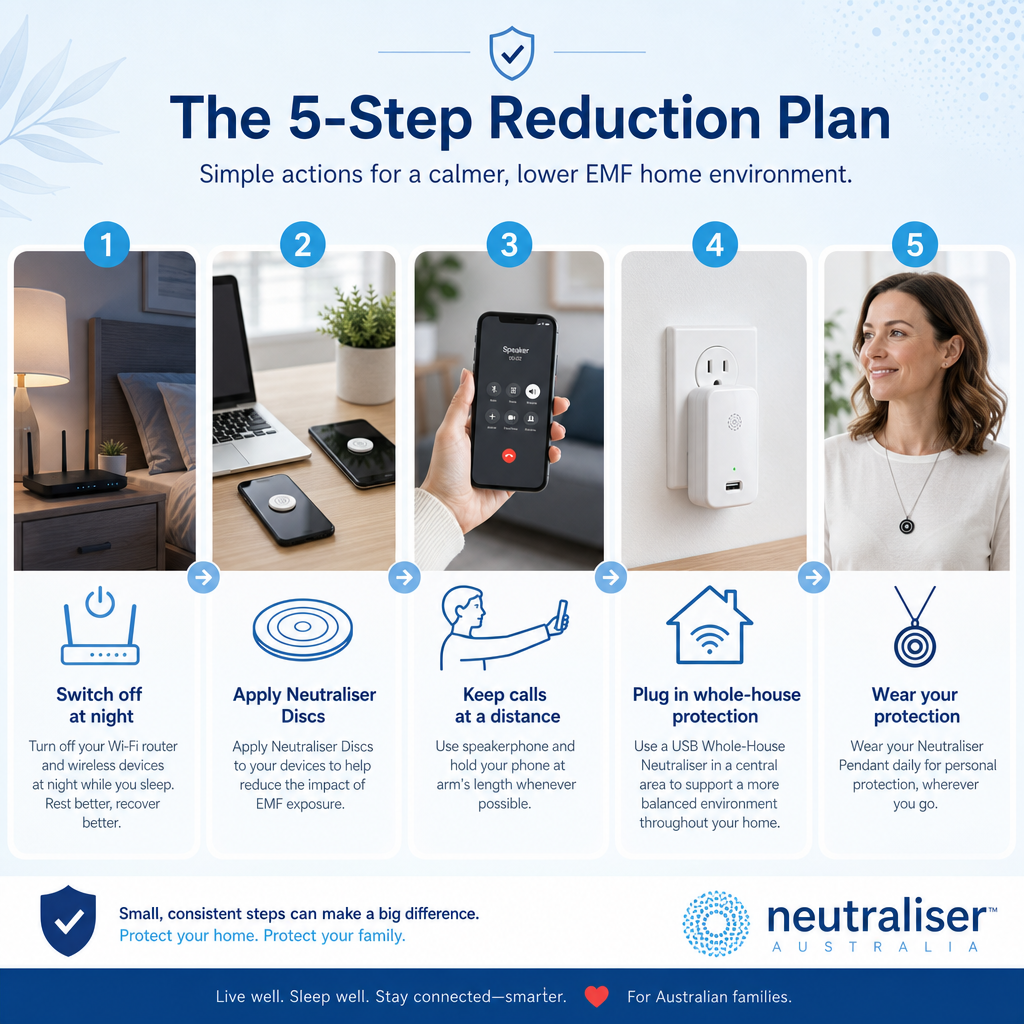
Reducing your cumulative daily exposure does not require living off-grid. It requires a series of deliberate, layered decisions about your immediate environment.
Step 1: Address Your Bedroom First
Sleep is when your body repairs and consolidates. Disrupting that process with overnight wireless exposure is one of the highest-impact issues to address. Practical steps:
- Turn your WiFi router off at night or connect it to a timer switch.
- Move your mobile phone out of the bedroom, or switch it to aeroplane mode before sleep.
- If you have a smart meter on a wall adjacent to your bedroom, consider whether repositioning your bed to create more distance is practical.
Step 2: Audit Your Home Office or Workspace
For anyone working from home or in a device-dense office, the workspace is often the primary exposure environment. Wired connections where possible, disciplined phone placement (on a desk at arm's length rather than in a pocket), and the application of neutralising products to each device can all contribute to a meaningful reduction in what you experience across an eight-hour day.
I have seen this directly. A customer I worked with had reached a point where persistent headaches and afternoon brain fog were affecting his work performance. His setup, a laptop, external monitor, mobile phone, wireless headset, and a router within two metres, was generating a concentrated cluster of simultaneous EMF sources. After applying EMF Neutralizer Discs to each device in the workspace, he reported that headache frequency dropped by an estimated 70-90% over four weeks, and that the mental fatigue that had previously set in by early afternoon was noticeably reduced. That is a meaningful quality-of-life change from a straightforward environmental intervention.
Step 3: Apply Neutralising Products to High-Use Devices
Aulterra's neutralising technology is designed to alter the coherence of the EMF field produced by a device, rather than blocking or shielding the signal. The distinction matters practically. You cannot block your phone's signal and still use it. What you can do is neutralise the field in a way that appears to reduce its biological impact.
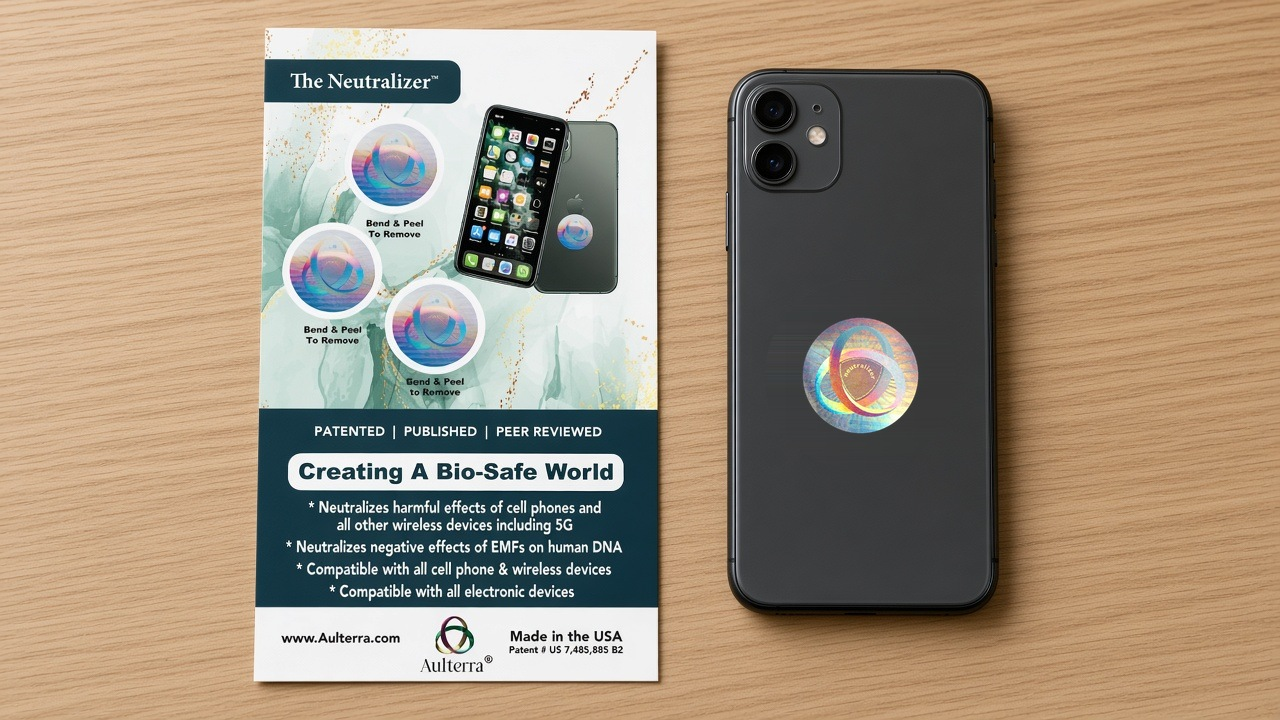
Aulterra Neutralizer Discs are applied directly to individual devices, including phones, tablets, and laptops. They are the logical starting point for anyone addressing device-specific exposure.
For broader whole-home coverage, the Aulterra Whole House USB plugs into any USB power source and works across the electrical wiring of the home, addressing the ambient field generated by your home's electrical infrastructure as well as connected devices.
For personal protection when you are away from home, in a dense urban environment, travelling, or working in a shared office, the Pillar of Energy Pendant provides a layer of personal field support that travels with you.
Step 4: Reduce Proximity Where Possible
Distance reduces field intensity significantly. Specific, low-effort habits that help:
- Use speakerphone or wired earphones instead of holding a phone to your head.
- Place your phone face-down on a desk rather than carrying it in a breast pocket or trouser pocket.
- Increase the distance between yourself and your WiFi router where the layout of your home allows.
- Avoid sleeping with devices on a bedside table at arm's length or less.
Step 5: Build Layered Protection
No single product or behaviour change addresses the full picture. The most effective approach is a layered EMF protection plan that combines device-specific neutralising products, environmental adjustments, and personal wearable protection. This is not unlike the way you might approach sun protection: sunscreen on exposed skin, a hat, UV-protective clothing, and shade at peak times are all part of the same sensible response to a known environmental exposure.
Case Studies: Real Outcomes from the EMF Neutralizer Community
Case Study 1: Severe EHS, Allergic Reactions, and Reclaiming Urban Life
One of the most striking cases I have been involved with involves a woman who has lived with severe EHS her entire adult life. Her EMF sensitivity is so significant that it is legally recognised as a disability. In her case, exposure to EMF, particularly from mobile phones and laptops, directly triggers her allergic reactions, including responses to mould that become acutely severe when she is using a wireless device.
For years, she managed this by limiting her exposure to built-up areas. Living in more isolated, lower-density environments was not a preference; it was a survival strategy. The idea of driving through a city, using a mobile phone regularly, or taking an international flight felt incompatible with her health.
Her experience with our products began with a Neutralizer Disc applied to her phone. The improvement in her symptoms was immediate and significant enough that when the disc later fell off her phone, she became unwell very quickly, which told her clearly that it had been doing meaningful work. She subsequently began wearing a Pillar of Energy Pendant full-time.
The change in her quality of life has been profound. She can now drive through the city without the symptomatic response that previously made it intolerable. She completed an international flight to visit family, confident that the personal protection she was wearing was doing its job. For someone who had structured her entire life around avoiding electromagnetic environments, that is not a minor result.
Case Study 2: Home Office Headaches and Brain Fog Resolved
A second case involves someone working long hours in a home office, surrounded by a laptop, external monitor, mobile phone, and wireless peripherals, a setup that is entirely ordinary for remote workers in Australian cities in 2026. He had been experiencing persistent headaches throughout the workday and significant difficulty concentrating, particularly in the afternoon. He had not connected these symptoms to his environment and had been managing with over-the-counter pain relief.
After applying EMF Neutralizer products to each device in his workspace, he tracked his symptoms over the following four weeks. Headache frequency dropped by an estimated 70-90%. The afternoon brain fog that had been affecting his output, and frankly his enjoyment of his work, reduced noticeably. His description of it was straightforward: "I just feel clearer."
These are not extraordinary cases. They represent outcomes that, in my experience, are achievable when people take their environment seriously and apply a consistent, layered approach to neutralising it.
A Note on EHS, Anxiety, and the Nocebo Effect
I want to address something honestly, because I think it is important and often poorly handled in this space.
Some researchers argue that EHS symptoms are driven primarily or entirely by the nocebo effect, meaning that believing you will feel unwell in the presence of EMF causes you to feel unwell. This is taken by some as evidence that EHS is not "real". That is a misreading. Nocebo effects produce genuine physiological responses. Anxiety, stress, and anticipatory responses all generate real symptoms. Even if a portion of EHS symptomatology involves these pathways, the symptoms require management and the environment still deserves attention.
More importantly, the outcomes I see in practice, including cases where people improved without knowing which specific change had caused it, are not consistent with a purely nocebo-driven picture. When a disc falls off a phone and a person becomes acutely unwell without having noticed the disc was missing, the nocebo framework does not explain the pattern.
I hold to a pragmatic position: if reducing your cumulative daily exposure makes you feel better, that is a real outcome worth pursuing, regardless of the mechanism. The goal is to support your biology, and what supports it is what matters.
EMF Health Concerns: Going Deeper
If you want to understand the broader landscape of how EMF interacts with human health, including the research on sleep disruption, oxidative stress, and cognitive performance, our EMF health concerns resource page covers this in detail. It is written to give you a grounded picture of what the evidence says, without either dismissing genuine concerns or overstating them.
References
-
World Health Organisation, Electromagnetic Hypersensitivity Fact Sheet. The WHO's primary public-facing document on EHS. Acknowledges reported symptoms as genuine and potentially disabling, notes that controlled provocation studies have not consistently established a direct causal relationship, and recommends medical assessment for sufferers. Available from the WHO environment, climate change and health division.
-
ARPANSA, Radiation Protection Standard for Maximum Exposure Levels to Radiofrequency Fields (2002, updated). Australia's national standard for RF EMF exposure, setting maximum levels based on acute thermal effects in line with ICNIRP guidelines. Does not address chronic, low-level, multi-source cumulative exposure scenarios. Available from ARPANSA's official publications.
-
Hedendahl L, Carlberg M, Hardell L. Electromagnetic Hypersensitivity: An Increasing Challenge to the Medical Profession. Reviews on Environmental Health, 2015. Peer-reviewed paper reviewing the prevalence, symptom profile, and research challenges associated with EHS. Discusses limitations of double-blind provocation studies and argues for greater clinical attention to EHS as a functional impairment.
-
Belpomme D, Campagnac C, Irigaray P. Reliable disease biomarkers characterizing and identifying electrohypersensitivity and multiple chemical sensitivity as two etiopathogenic aspects of a unique pathological disorder. Reviews on Environmental Health, 2015. Presents biomarker data from a large clinical EHS cohort, arguing that physiological markers can distinguish EHS sufferers from controls, challenging purely psychosomatic explanations.
-
Australian Bureau of Statistics, Household Use of Information Technology (most recent edition). Provides Australian-specific data on household device ownership, internet connection types, and technology adoption rates, relevant to understanding the ambient EMF environment in Australian homes.
-
ICNIRP Guidelines for Limiting Exposure to Electromagnetic Fields (2020). The international guidelines that underpin both ARPANSA standards and those of most developed nations. Sets reference levels based on acute exposure scenarios and acknowledges that long-term, low-level chronic exposure effects remain an active research area.
Stay informed on EMF wellness
Get practical tips and product updates in your inbox.
Frequently asked questions
Does our "electromagnetic hypersensitivity ehs australia" guide explain that EHS is a recognised medical condition?
No, not as a formal diagnosis. This guide explains that EHS is a self-reported condition, not a formal medical diagnosis in Australia or internationally. The WHO acknowledges that sufferers experience genuine, often debilitating symptoms, and recommends that they receive proper medical assessment and support. The fact that controlled studies have not consistently established a direct causal link between EMF exposure and symptoms does not mean symptoms are not real. It means the mechanism is not yet fully understood. Anyone experiencing persistent, unexplained health symptoms should consult a GP to rule out other causes.
What are the most common EHS symptoms in Australia?
The most commonly reported symptoms include headaches (particularly pressure-type pain that worsens near devices), fatigue disproportionate to activity, sleep disruption, brain fog and difficulty concentrating, skin tingling or burning sensations, heart palpitations, and tinnitus. Symptoms often worsen in high-device environments such as open-plan offices and improve with time away from devices.
What does ARPANSA say about EMF and health?
ARPANSA sets Australia's radiofrequency EMF exposure standards based on ICNIRP guidelines, which are designed around the established biological effects of acute, single-source exposure. ARPANSA does not currently classify EHS as a medically established condition, but takes public concern seriously and reviews emerging evidence on an ongoing basis. Its limits do not address the cumulative exposure from multiple simultaneous sources operating over long periods.
Can 5G cause or worsen EHS symptoms?
Some Australians report that the rollout of 5G infrastructure, particularly the installation of small cells in residential streets, has coincided with a worsening of symptoms they attribute to EMF. 5G operates at a wider range of frequencies than previous generations, and sub-6 GHz 5G uses frequencies similar to existing WiFi and 4G bands. Whether 5G specifically worsens EHS symptoms compared to other sources has not been established in controlled research. From a practical standpoint, the increase in ambient wireless density that 5G rollout represents is relevant to anyone managing cumulative exposure.
How do Aulterra neutraliser products work?
Aulterra neutralising products use a paramagnetic mineral compound to alter the coherence of the electromagnetic field produced by a device. Rather than blocking the signal (which would prevent the device functioning), they work to neutralise the field in a way that is intended to reduce its biological impact. They are available as adhesive discs for individual devices, as a whole-house USB unit, and as a wearable pendant. For best results, they are most effective as part of a broader layered exposure-reduction plan.
What practical steps can I take today to reduce my EMF exposure?
Start with your bedroom. Turn your WiFi router off overnight, move your phone out of the bedroom or switch to aeroplane mode, and increase your distance from smart meters and routers where your layout allows. In your workspace, apply neutralising discs to high-use devices, use wired connections where possible, and use speakerphone or wired earphones rather than holding your phone to your head. For ongoing personal protection in environments you cannot control, consider a wearable pendant. A consistent, layered approach produces the most meaningful results.
How quickly do people typically notice an improvement after reducing EMF exposure?
This varies between individuals and depends on the severity of exposure and the changes made. In cases involving targeted device-level neutralisation in home office settings, customers have reported meaningful reductions in headache frequency and improved concentration within two to four weeks. For people with more severe EHS, changes may be felt more quickly when a high-impact source is addressed directly. Gradual environmental adjustments can take longer to register because the baseline shifts incrementally.
Where can I get a personalised assessment of my EMF environment?
Contact the team at EMF Neutralizer directly through our contact page. We work with Australian customers to understand their specific home and work environments and recommend a practical, targeted plan for reducing cumulative exposure. There is no one-size-fits-all answer, and a personalised approach makes a significant difference to outcomes.
Richard Kent
Science-backed EMF wellness education from the EMF Neutralizer team.
Related articles

Electric Vehicle EMF Exposure Australia: What EV Drivers Should Know About In-Car Fields
Published measurements generally place electric vehicle magnetic fields within ICNIRP and ARPANSA reference levels, so there is no regulatory basis for alarm. F…
How to Apply EMF Neutraliser Disc: A Step-by-Step Guide for Phones and Home Devices
To apply an Aulterra EMF neutraliser disc, clean and dry the back of your phone, peel the disc, and press it on firmly, clear of camera lenses and ports, then f…

Do EMF Pendants Actually Work? An Honest Answer for Australians
EMF pendants are not designed to block or shield electromagnetic fields the way a bed canopy, Faraday enclosure, or device pouch does. They are designed to harm…