Comparison page: pendant vs wristband vs disc for EMF protection
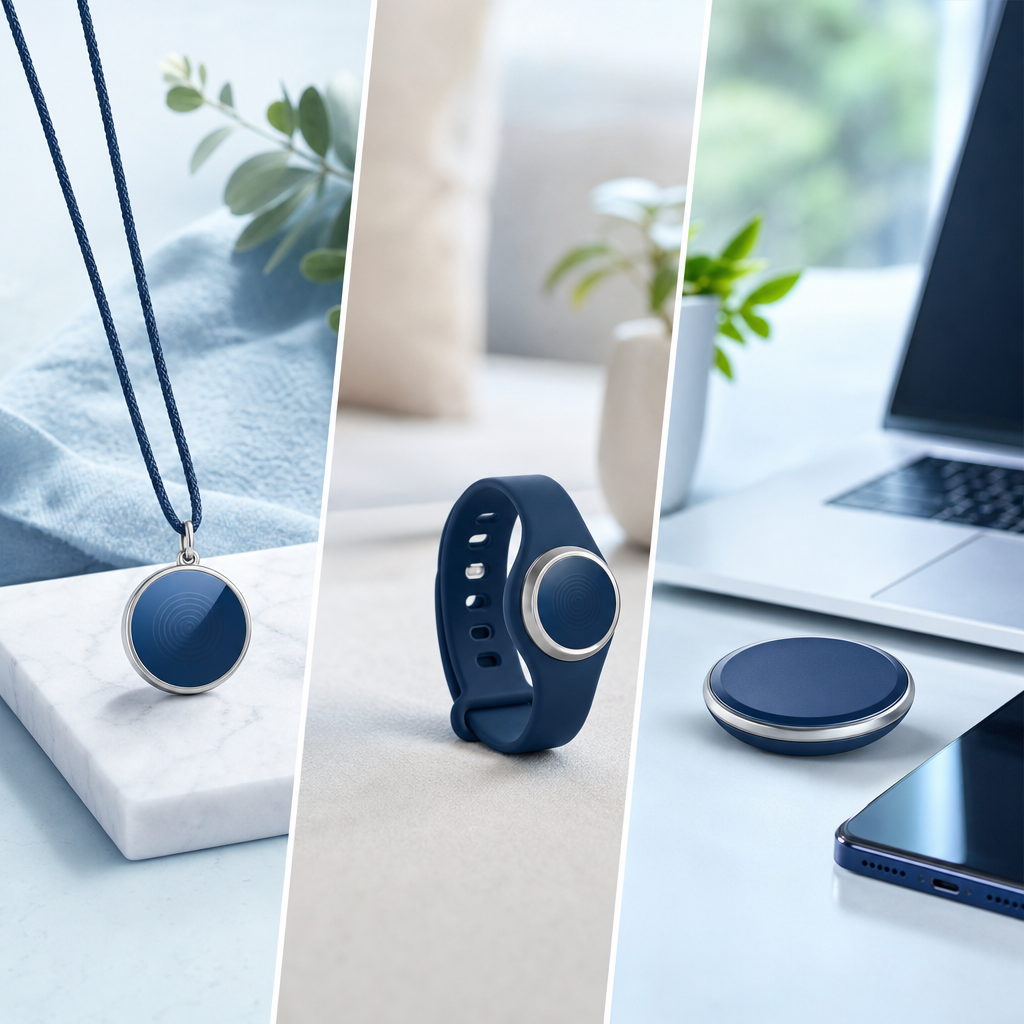
A pendant is the strongest all-purpose choice for personal EMF protection, while a wristband suits people who prefer a wearable away from the neck. A disc is different because it is applied directly to a phone, laptop or other device. For broader coverage, combine personal and device-specific formats rather than treating them as interchangeable.
Choosing between an EMF pendant, wristband and disc comes down to where exposure occurs, what you will consistently use, and whether you need personal or device-specific support. The product format matters because a disc stays with one source, while a wearable moves with you.
This comparison explains the practical differences, best use cases and how each format fits a layered plan. Layered EMF protection works best alongside sensible exposure reduction and appropriate medical care — not instead of either. For wider context, see our EMF protection hub and pendant necklace guide.
Key takeaways
The best format is the one that matches your exposure pattern and daily behaviour. Pendants and wristbands are personal wearables, while discs remain attached to individual devices. People surrounded by several sources often benefit from a layered approach — start by identifying your main sources, then add formats that close real gaps in your routine.
- Choose a pendant for broad, portable personal use across changing environments — see our pendant range.
- Choose a Vitality Wristband if neckwear is impractical or you are more likely to wear something on your wrist consistently.
- Choose a Neutralizer Disc for a specific phone, laptop, tablet, router or other frequently used device.
- EMF products neutralise disruptive field interaction at the source — combine them with distance, wired connections and thoughtful source placement for full layered coverage.
- Product claims should distinguish neutralisation from shielding or reducing the field measured by an RF meter.
- Personal reports can guide product selection, but they do not establish a medical treatment effect.
Protect your family from EMF exposure
Browse our science-backed neutralizer products.
Shop EMF ProtectionSummary table
This table compares the formats by intended placement, portability and practical role. It does not assign a universal winner because each option solves a different problem. Start with the source or situation you encounter most often, then consider whether adding another format would close a genuine gap in your routine.
- Placement
- Worn around the neck
- Best suited to
- People moving between home, work, travel and public spaces
- Main advantage
- Stays with the wearer across environments
- Main limitation
- Must be worn consistently and may not suit every activity or dress requirement — pendant range
- Placement
- Worn on the wrist
- Best suited to
- People who dislike necklaces or already wear wrist accessories
- Main advantage
- Convenient personal format that is easy to include in a routine
- Main limitation
- Can be removed for washing, sport or manual work and then forgotten — Vitality Wristband
- Placement
- Attached to a device
- Best suited to
- A frequently used phone, laptop, tablet, router or appliance
- Main advantage
- Directly addresses a nominated source without requiring a wearable
- Main limitation
- Remains with that device and does not follow the user elsewhere — Neutralizer Discs
- Placement
- Wearable plus selected device discs
- Best suited to
- Homes and workplaces with several regularly used sources
- Main advantage
- Covers both the person and priority devices
- Main limitation
- Requires a deliberate plan rather than attaching products indiscriminately — add Whole House USB where ambient exposure matters
How do pendants, wristbands and discs differ?
Pendants and wristbands are body-worn formats intended to travel with the user. Discs are source-based products attached to individual electronics. That placement difference should drive the decision. A wearable may suit changing environments, while a disc makes more sense when one phone, laptop or workstation dominates your cumulative daily exposure.
Pendant: portable personal coverage
A pendant is usually the most versatile choice for someone who moves between several environments. It remains with the wearer at home, in the office, while commuting and during travel. This makes it practical when no single device accounts for the whole concern.
The neck position also makes a pendant difficult to overlook once it becomes part of a morning routine. That consistency matters more than choosing a format that remains unused in a drawer.
A pendant may be suitable when:
- you move between multiple wireless environments;
- you use several devices throughout the day;
- you travel regularly;
- you cannot apply discs to shared or public equipment; or
- you want one personal product rather than separate products for every source.
Some people prefer not to wear necklaces. Pendants may also need to be removed during contact sport, certain work tasks or activities where jewellery creates a safety issue.
Wristband: personal support with different wearability
A wristband serves a similar personal role but fits a different habit. It can suit people who already wear a watch or bracelet and prefer not to have anything around the neck.
Its effectiveness as a practical choice depends on compliance. If you regularly remove wrist accessories for washing, exercise or manual work, a wristband may spend less time on your body than expected. It may be the better format when neckwear is uncomfortable, but not if it is constantly forgotten on the bathroom bench.
Before buying, check sizing, materials, care instructions and whether the product can tolerate your normal activities. Product construction varies, so do not assume every wristband can be worn while swimming or showering.
Disc: targeted support for a nominated source
A disc is applied directly to a device. Common candidates include a mobile, laptop, tablet, wireless router or other electronic product used for long periods.
This format is particularly logical when one source is easy to identify. Imagine someone who works from the same laptop every weekday. A device-applied disc stays with that laptop, regardless of who uses it or whether the original purchaser remembers to put on a wearable.
The trade-off is limited portability. A disc stays with that nominated device; add a wearable when you move to other environments or spend time beside other electronics.
Which EMF protection format should you choose?
Choose according to your dominant exposure pattern: changing environments favour a pendant, dislike of neckwear favours a wristband, and one heavily used device favours a disc. If your concern involves both personal mobility and a concentrated device cluster, use a wearable with selected discs rather than expecting either format to perform both roles.
Choose a pendant when the environment changes
A pendant is our usual starting point for people who cannot isolate one source. That includes commuters, travellers, field workers and people moving between home and shared workplaces.
One customer described severe lifelong sensitivities consistent with electromagnetic hypersensitivity (EHS), with reactions she felt were aggravated by phone and laptop use. She had previously felt the need to isolate herself from built-up areas. She first applied a Neutralizer Disc to her phone and reported substantial relief. She later added a Pillar EMF Energy Pendant.
Her reported outcome was that the pendant helped her drive through a city and complete an international flight with greater confidence. When the phone disc once detached and without a pendant, she said her symptoms returned quickly. This is a first-hand customer report, not a controlled clinical result, and it should not be interpreted as proof of treatment for allergies or disability. It does, however, illustrate why mobile personal coverage and source-specific coverage are different decisions.
Choose a wristband when consistency favours the wrist
A wristband is the better choice when you genuinely dislike pendants but comfortably wear something on your wrist every day. The key word is "genuinely". Buying a format that seems convenient but conflicts with your routine creates poor compliance.
Consider work requirements too. Healthcare, food handling, trades and machinery operation can restrict wrist jewellery. In those settings, a pendant worn safely under clothing may be more practical, subject to workplace rules. For school-aged children, see our EMF pendant for kids guide — the Vitality Wristband often suits both sexes when a necklace is not the right fit.
Choose a disc when one device dominates
Start with a disc when your concern is tied to a specific device or workstation. Phones are an obvious example because they remain close to the body during calls, browsing and carrying. Laptops are another priority when they are used for long work sessions.
Discs can also suit shared devices. A product attached to a household tablet stays with the source rather than depending on each family member remembering a wearable. Apply Neutralizer Discs to phones, laptops and routers you use most; add a Whole House USB when several fixed sources share one room.
Secure placement matters. Follow the supplied product instructions, avoid covering vents, sensors or controls, and inspect the adhesive periodically. A detached disc cannot fulfil its intended role.
How should you compare comfort, coverage and cost?
Compare these products using five practical factors: where they sit, what they follow, how often you will use them, which sources concern you, and whether the product claims match its intended mechanism. Price matters, but a cheaper product offers poor value if its placement does not address your actual routine or it is rarely used.
Coverage follows placement
A wearable follows the person. A disc follows the device. This distinction is more useful than broad claims about which product is "strongest" because the wrong placement creates an obvious gap.
Map a normal day before purchasing. Note where you sleep, work and relax. List the electronics closest to you for extended periods. Include the mobile in your pocket, the laptop on your desk, the router near a living area and any equipment beside the bed.
This is not about creating fear around every appliance. It is about seeing the invisible electromagnetic burden as an environmental planning issue.
Comfort determines consistent use
Materials, weight, fit and workplace rules influence whether a wearable becomes part of daily life. Check product dimensions and care instructions rather than relying on photographs alone.
A pendant worn beneath clothing may suit someone who wants discretion. A wristband may be easier to see and remember, but it may interfere with a watch or keyboard position. There is no universal answer because comfort is personal.
Cost should follow priority, not product count
Do not attach a disc to every powered object before assessing which sources are closest, most frequently used and hardest to avoid. Start with priority devices. Add coverage only when it solves an identified gap.
A useful order is:
- Identify your longest and closest regular exposures.
- Apply free controls such as distance, placement and switching off unused functions.
- Select a wearable if your exposure changes throughout the day.
- Select discs for priority devices that remain close during regular use.
- Review the arrangement after a consistent trial.
When does layered EMF protection make sense?
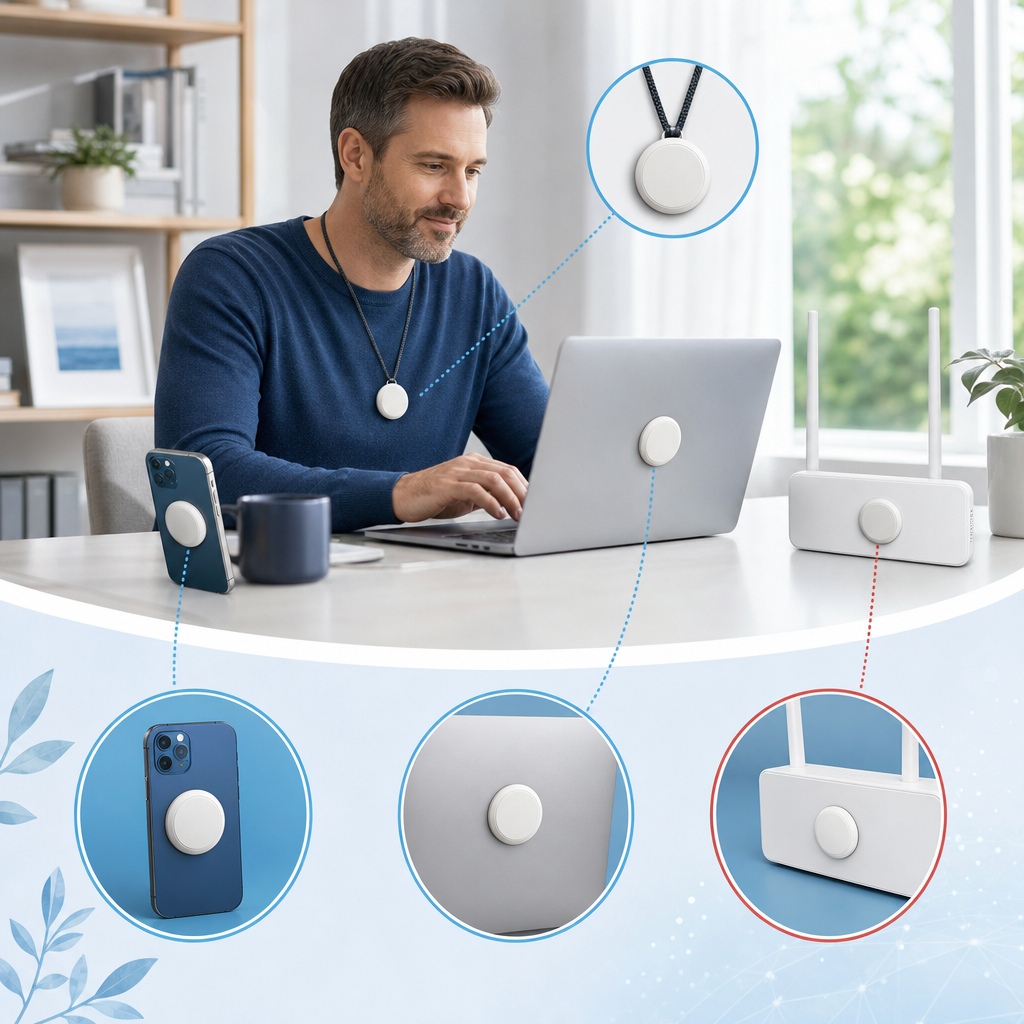
Layered EMF protection makes sense when your day combines mobile personal exposure with fixed, high-use device clusters. A pendant or wristband moves with you, while discs remain on selected devices. The point is not to collect products. It is to close separate coverage gaps after distance, device placement and unnecessary wireless activity have been addressed.
Consider a home office containing a laptop, external monitor, mobile and wireless peripherals. The person also leaves that room, commutes and spends time in public wireless environments. Neutralizer Discs on priority work devices address the fixed cluster. A pendant or wristband addresses mobility.
In one workplace case reported to EMF Neutralizer, an individual working long hours among several devices experienced persistent headaches and difficulty concentrating. EMF products were applied to the concentrated device cluster. Across the following four weeks, the person estimated that headache frequency fell by 70–90% and reported improved concentration. Individual results vary.
The workplace headache estimate and our broader residential summaries (an estimated 60–85% improvement in perceived EMF-related fatigue after EMF products were applied) come from EMF Neutralizer's qualitative, self-reported customer records — not diagnosis, blinded trials or controlled clinical findings. Headaches have many possible causes; persistent, severe or changing headaches require assessment by a qualified health professional.
Layering should also include no-cost controls:
- move routers out of bedrooms and away from prolonged sitting positions;
- use speakerphone for longer calls;
- avoid carrying an actively transmitting phone against the body unnecessarily;
- switch off wireless functions that are not being used;
- keep laptops on a desk rather than directly on the body; and
- follow manufacturer and ARPANSA guidance for safe device use.
Where do Aulterra EMF protection products fit?
Aulterra products are designed for layered EMF neutralisation at personal, device, room and travel levels. Neutralizer Discs, pendants, the Vitality Wristband, whole-house USB and whole-car USB devices retune incoherent fields at the source rather than blocking signals.
The mechanism is field retuning, not shielding — see how Aulterra neutralisation works. The phone continues to function; the aim is to address the incoherent field component linked to oxidative stress in laboratory research, not to block communication.
The practical approach maps formats to exposure:
- Personal layer: pendant or Vitality Wristband for changing environments.
- Device layer: Neutralizer Discs on phones, laptops, tablets and routers — see our EMF protection devices collection for the full stick-on and plug-in range.
- Room layer: Whole House USB for ambient home exposure; move routers out of bedrooms where practical.
- Travel layer: whole-car USB for regular driving.
Keep using speakerphone, sensible distance and wired connections where practical. Neutralisation and distance each address a different part of the setup; neither makes the other unnecessary.
What can the scientific evidence tell us?
Established guidance says everyday radiofrequency exposure below recognised limits has not been conclusively shown to cause adverse health effects. EMF Neutralizer takes a more precautionary view of cumulative exposure, but that view must not be confused with scientific consensus. Product selection should combine transparent claims, practical exposure reduction and realistic expectations.
The Australian Radiation Protection and Nuclear Safety Agency explains that radiofrequency electromagnetic energy is non-ionising radiation. It does not carry enough energy to ionise atoms in the way X-rays can. ARPANSA also advises that Australia's exposure limits are designed to protect people from established health effects (ARPANSA).
The World Health Organization states that no adverse health effects have been established as being caused by mobile phone use, while recognising that research continues (WHO). International exposure guidance is set out in the International Commission on Non-Ionizing Radiation Protection's radiofrequency guidelines (ICNIRP).
For independent laboratory research on biological responses and Aulterra neutralisation studies, see our independent scientific studies guide.
Our position is that regulatory compliance and personal precaution answer different questions. A limit assesses whether exposure remains below a recognised threshold. It does not decide whether an individual wants to reduce cumulative daily exposure from several simultaneous sources.
That does not prove that combined exposure below the limits causes symptoms. It means we believe people can reasonably take control of their immediate environment with thoughtful layering and practical source management.
It is also important to understand what a meter can test. Shielding or distance may reduce a measured field at a location. A product sold as a neutraliser may not claim to reduce the emitted signal itself, so an RF meter may continue to show a similar reading. Customers should ask sellers what is supposedly changing, how it was tested and whether the evidence matches that claim.
Our source-pathway-person method
Most comparison pages rank products before diagnosing the use case. We reverse that order. First identify the source, then the exposure pathway, then the person or device that needs coverage. This source-pathway-person method supports selective layering and produces a clearer decision between a pendant, wristband, disc or combined arrangement.
Source
Identify the device or cluster involved. Is the concern mainly a mobile, a fixed workstation, a router near a bedroom, or changing public environments? If you cannot name one source because your day varies, that points towards a wearable.
Pathway
Look at distance, duration and behaviour. Can the source be moved? Can a wired connection replace an unnecessary wireless one? Can the mobile stay on a desk instead of against the body? Practical controls should come before buying another product.
Person
Finally, consider sensitivity, comfort and routine. Some people want personal coverage because they move constantly. Others are primarily concerned about a particular laptop. The product should fit the real pattern, not an imagined ideal routine.
Selective layering often delivers better day-to-day coverage than buying every format at once. Good layered EMF protection combines sensible source management with products that stay in the right place. Your home should work with you, not against you — and a short exposure plan makes that easier.
How should you test whether your choice suits you?
Assess an EMF product with a written, repeatable routine rather than changing several variables at once. Record product placement, device use, sleep, headaches, fatigue and other relevant factors. Keep medical treatment unchanged unless your clinician advises otherwise. A personal trial can reveal usability and symptom patterns, but it cannot prove medical efficacy.
Start with a baseline record before introducing the product. Then add one format and use it consistently according to its instructions. Avoid simultaneously changing caffeine, sleep times, workstation ergonomics and multiple devices if your goal is to understand what influenced a subjective result.
Useful questions include:
- Did I wear or install the product consistently?
- Did the disc remain securely attached?
- Did my device use change during the trial?
- Were symptoms influenced by sleep, stress, hydration or ergonomics?
- Is the product comfortable enough for long-term use?
- Do I need personal mobility, source-specific coverage or both?
Do not use symptom tracking to delay healthcare. Headaches, vertigo, fatigue, ringing ears, allergic reactions and concentration problems can have causes requiring proper assessment.
If you want help selecting a pendant, wristband, disc or layered arrangement, visit our contact page. Describe the devices you use, where they are positioned and how your routine changes between home, work and travel.
References
These references establish the mainstream framework for non-ionising radiation, mobile phone exposure and recognised radiofrequency limits. They do not independently verify every commercial EMF product. They are included so readers can distinguish established public health guidance from EMF Neutralizer's precautionary position and the qualitative customer experiences discussed above.
- Australian Radiation Protection and Nuclear Safety Agency, Radiation Protection Standard for Limiting Exposure to Radiofrequency Fields (RPS S-1).
- World Health Organization, Radiation: Electromagnetic fields.
- International Commission on Non-Ionizing Radiation Protection, Guidelines for limiting exposure to electromagnetic fields, 100 kHz to 300 GHz.
- EMF Neutralizer internal qualitative customer outcome descriptions, supplied business data covering residential and workplace use cases.
Stay informed on EMF wellness
Get practical tips and product updates in your inbox.
Frequently asked questions
Does our "comparison page pendant vs wristband vs disc for emf protection" guide explain how to choose between formats?
Yes. This guide compares pendant, wristband and disc placement, coverage and use cases, explains layered EMF protection, and shows how to match products to your routine without replacing medical care or sensible exposure reduction.
Is an EMF pendant better than a wristband?
A pendant is usually more versatile across changing environments. A wristband may be better if you dislike necklaces and reliably wear wrist accessories. The practical winner is the format you can use consistently and safely.
Do I need a disc if I already wear an EMF pendant?
Not necessarily. A pendant provides personal coverage while it is worn, but most people do not wear one around the clock — during sleep, sport or when it is removed, that coverage pauses. A disc stays with a nominated device, so consider both when you want portable personal support and targeted coverage for a heavily used phone, laptop or other source.
Where should I place an EMF Neutralizer Disc?
Place the disc according to the product instructions on the priority device. Do not cover ventilation openings, cameras, sensors, controls, charging points or safety labels. Check the adhesive regularly.
Can an EMF pendant or disc replace reducing exposure?
No — and that is not how most customers use them. EMF products are applied so phones, laptops, routers and other equipment can be used as normal while fields are neutralised at the source. Many people rely on a pendant, wristband or disc for day-to-day protection without changing how they live. Simple habits such as distance and speakerphone can add value in a layered plan when they suit your routine.
Will an RF meter prove that a pendant, wristband or disc works?
Not necessarily. An RF meter measures field strength. It can show changes caused by distance, shielding or altered transmission, but a neutralising product may not claim to reduce the emitted signal.
Are EMF protection products medical treatments?
No. EMF protection products should not replace medical diagnosis, treatment or prescribed care. Customer experiences describe perceived changes but do not prove treatment of a health condition.
Richard Kent
Science-backed EMF wellness education from the EMF Neutralizer team.
Related articles
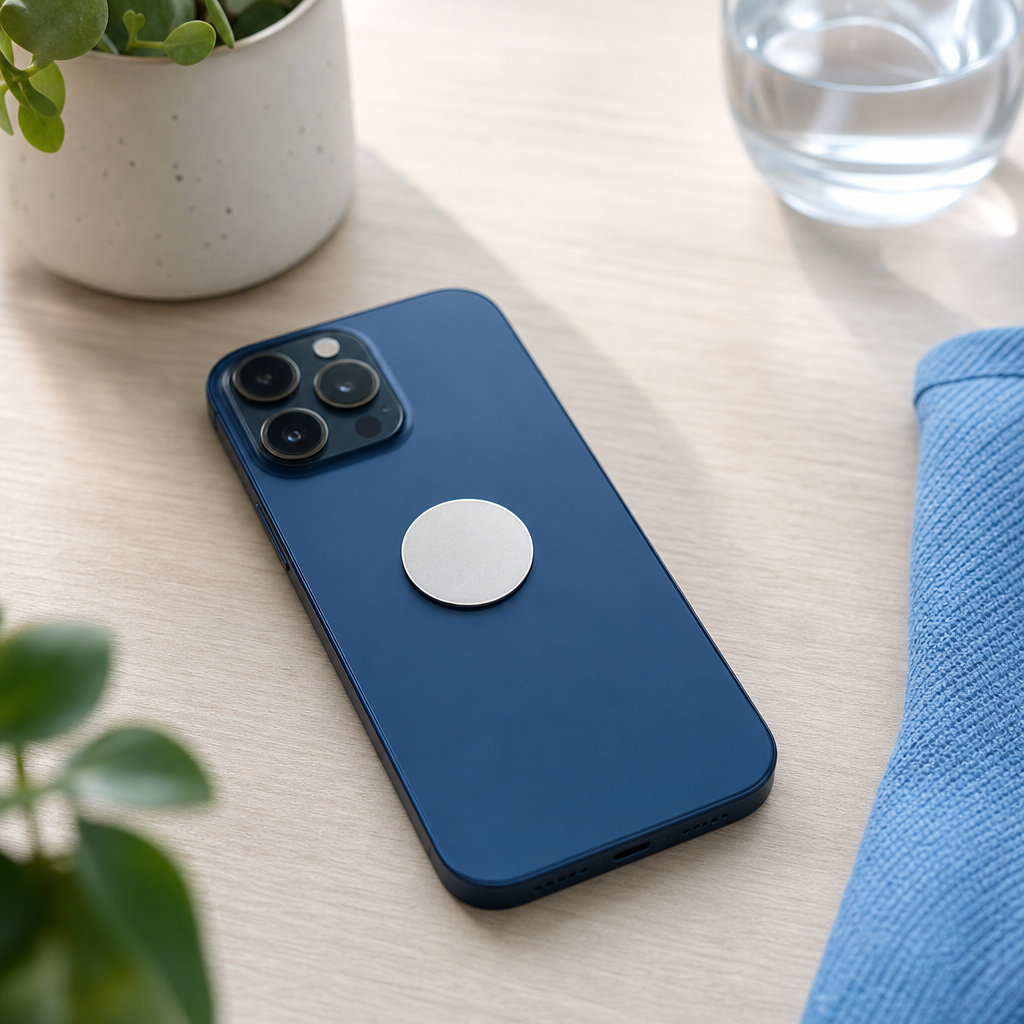
Does Phone EMF Protection Actually Work? An Evidence-Based Look for Australians
Phone EMF protection products such as the Aulterra neutraliser disc do not block or reduce mobile radiation, and they are not designed to. Genuine harmonising d…
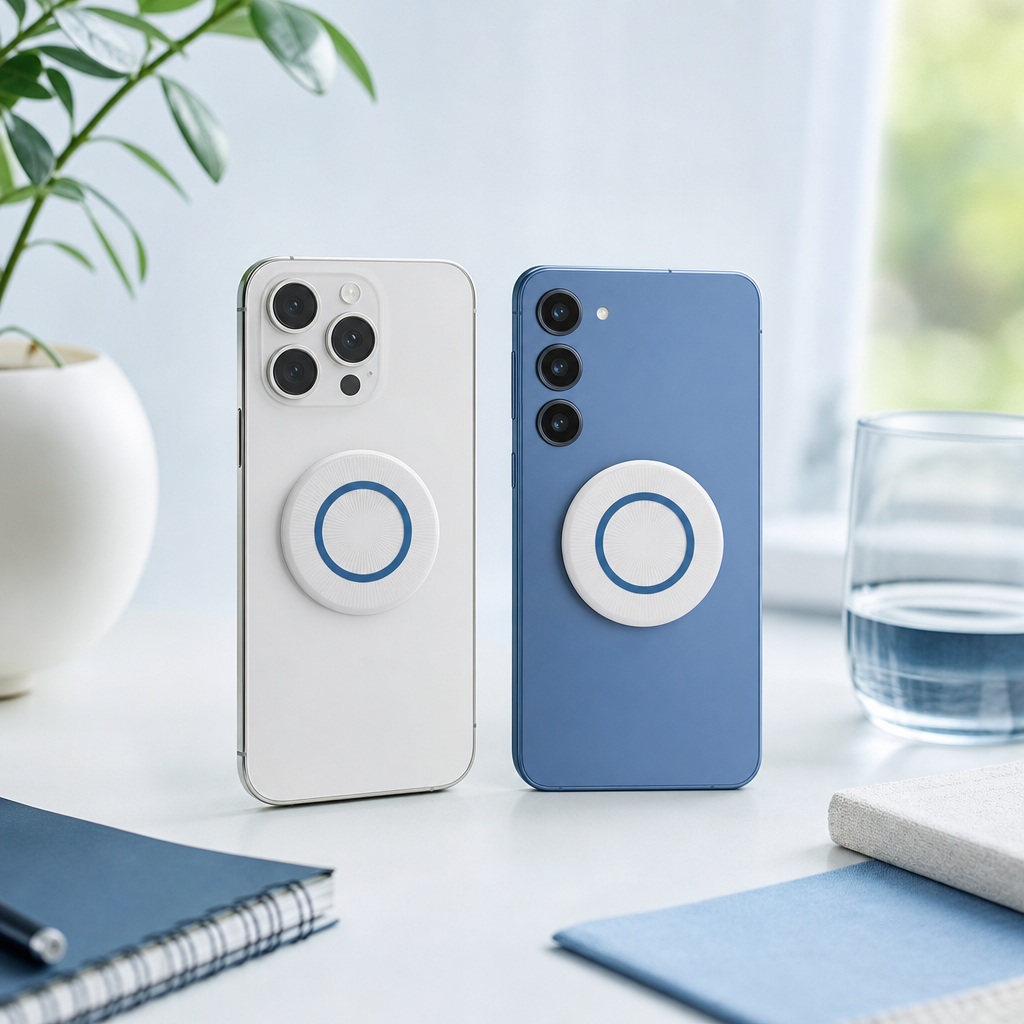
iPhone vs Android EMF Output: Which Phone Is Actually Safer in Australia?
Direct Answer: Neither iPhone nor Android phones are meaningfully safer by SAR rating. Both must meet Australia's 2.0 W/kg limit, a standard enforced by ACMA an…
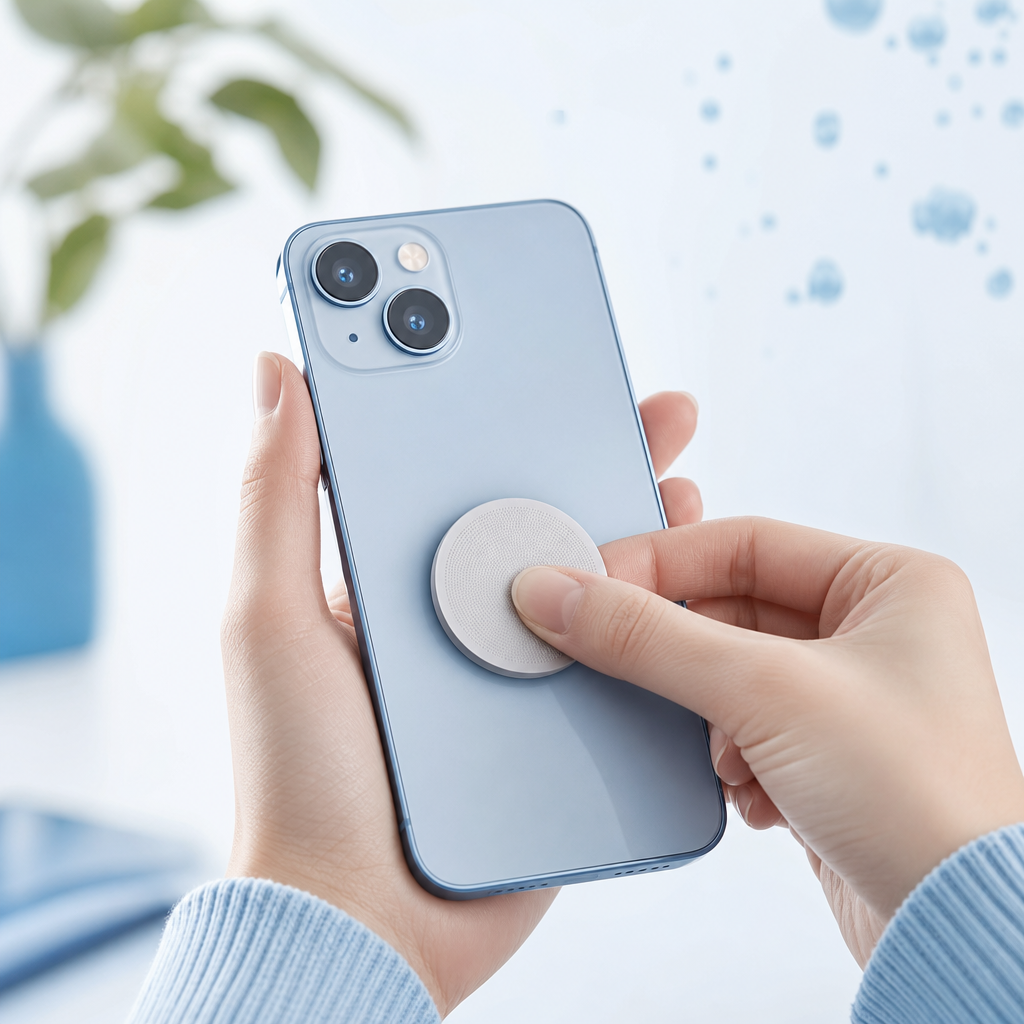
Best EMF Protection Sticker for Your Phone in Australia: An Honest Review and Comparison
The best 'EMF protection sticker' for an Australian phone user is the Aulterra Neutralizer Discs 3-Pack — small adhesive discs applied one per device, starting…