Recognising the Signs: A Guide to EMF Exposure Symptoms Australia
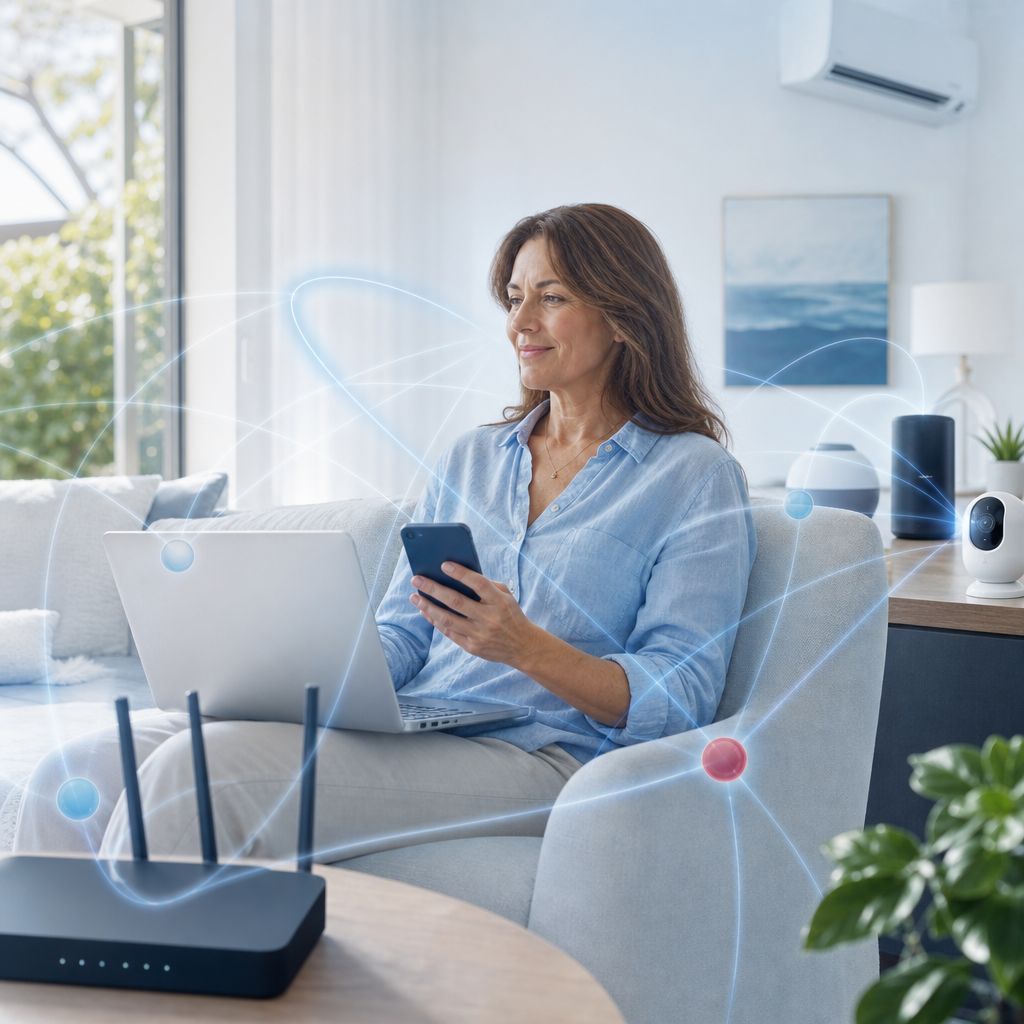
Reported EMF exposure symptoms include headaches, fatigue, sleep disturbance, poor concentration, dizziness, tinnitus and skin discomfort. These symptoms are real but non-specific, so they cannot confirm electromagnetic exposure as the cause. Australians should seek medical assessment, track possible triggers and take practical, low-risk steps to reduce unnecessary exposure.
Introduction
EMF exposure comes from mobile phones, Wi-Fi routers, Bluetooth devices, smart meters, electrical wiring and household appliances. Although these sources produce different electromagnetic fields, concern usually centres on cumulative daily exposure. This guide explains the reported symptoms, the scientific uncertainty and sensible ways to take control of your immediate environment. For wider context, see our EMF health concerns hub.
At EMF Neutralizer, we do not believe fear helps anyone. Awareness does. Your home should work with you, not against you, but symptom awareness must sit alongside proper medical care and an honest assessment of other causes.
Protect your family from EMF exposure
Browse our science-backed neutralizer products.
Shop EMF ProtectionKey takeaways
The most important point is that symptoms attributed to EMF exposure overlap with many common health conditions. A pattern may justify closer investigation, but it is not a diagnosis. Start with medical assessment, document your environment, reduce avoidable exposure and evaluate any product or intervention without assuming that every change proves causation.
- Commonly reported symptoms include headaches, fatigue, disrupted sleep, difficulty concentrating, dizziness, tinnitus and skin sensations.
- The World Health Organization recognises that the symptoms reported by people with electromagnetic hypersensitivity can be severe, but says there is no scientific basis linking them specifically to EMF exposure.
- Sudden, severe or persistent symptoms require medical assessment rather than self-diagnosis.
- Distance, device placement, wired connections and overnight routines can reduce avoidable exposure without abandoning useful technology.
- EMF Neutralizer's reported outcomes are qualitative customer experiences only — not guaranteed treatment results.
- A structured symptom and exposure diary is more useful than changing many parts of your environment at once.
Summary table
Reported symptoms should be treated as signals to investigate, not proof of a single cause. The table separates common complaints from practical checks and appropriate next steps. This avoids the two most common mistakes: dismissing genuine symptoms completely or attributing every unexplained symptom to electromagnetic fields without considering medical and environmental alternatives.
- Other factors worth checking
- Dehydration, eye strain, migraine, posture, stress, medication
- Practical next step
- Seek medical advice if persistent, then compare device-heavy and low-device periods
- Other factors worth checking
- Poor sleep, anaemia, infection, thyroid conditions, mood, workload
- Practical next step
- Discuss ongoing fatigue with a health professional and review sleep habits
- Other factors worth checking
- Noise, light, caffeine, stress, temperature, sleep disorders
- Practical next step
- Move active devices away from the bed and maintain a consistent routine
- Other factors worth checking
- Sleep loss, anxiety, interruptions, workload, vision problems
- Practical next step
- Reduce notifications, take screen breaks and assess the full workspace
- Other factors worth checking
- Inner-ear conditions, migraine, blood pressure, medication
- Practical next step
- Obtain medical assessment, particularly if symptoms recur or affect balance
- Other factors worth checking
- Hearing damage, ear conditions, medication, stress
- Practical next step
- Arrange a hearing or medical assessment rather than assuming an EMF cause
- Other factors worth checking
- Allergy, dermatitis, heat, dry air, cleaning products
- Practical next step
- Check physical irritants and consult a clinician if symptoms continue
What is EMF exposure?
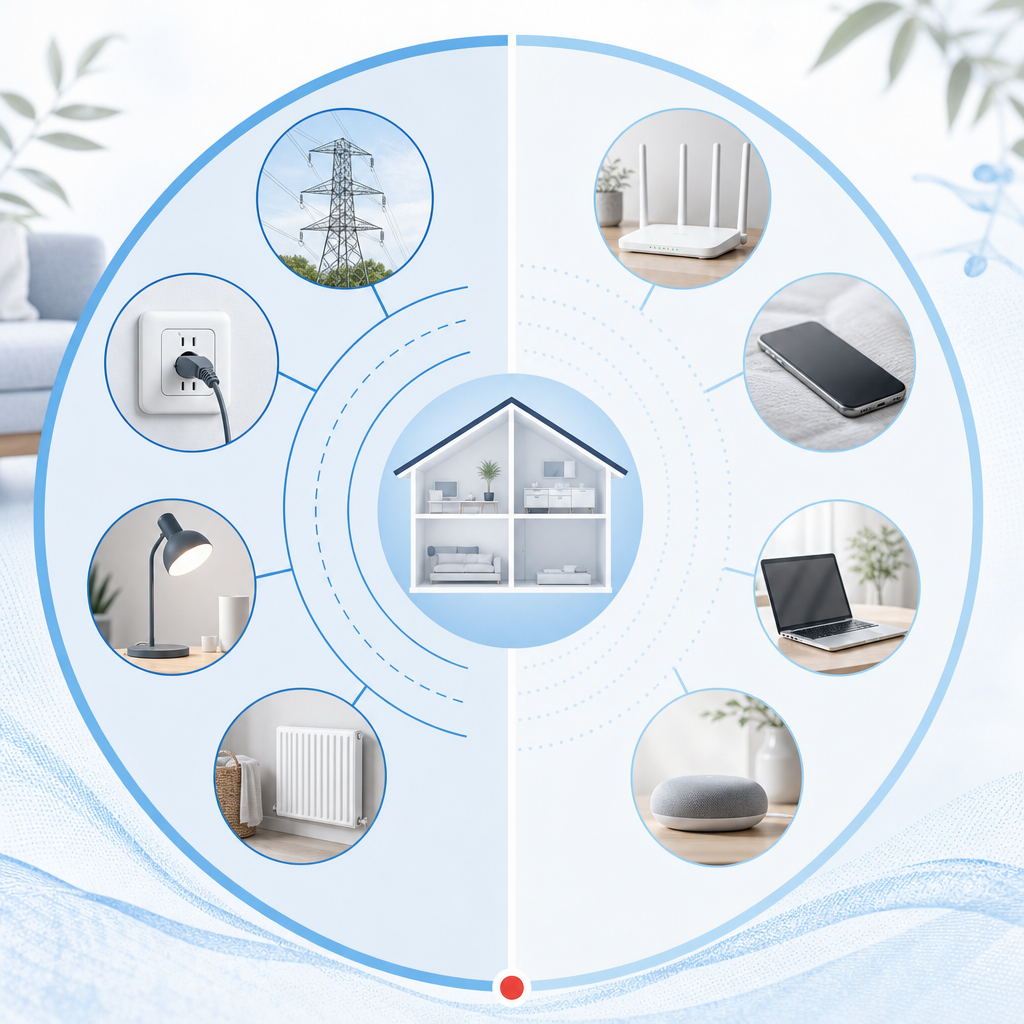
EMF exposure occurs whenever a person is within an electromagnetic field produced naturally or by electrical and wireless technology. Everyday sources include power wiring, appliances, mobile phones, wireless routers and Bluetooth equipment. Exposure varies with the source, its frequency, power, distance, duration and the physical environment around it.
Electromagnetic fields are not one uniform category. Extremely low-frequency fields occur around electricity infrastructure, wiring and powered appliances. Radiofrequency fields are associated with mobile communications, Wi-Fi, Bluetooth and broadcasting. Ionising radiation, such as X-rays, is a different category with enough energy to damage biological tissue directly.
Most consumer electronics produce non-ionising EMF. Australian exposure guidance is informed by the Australian Radiation Protection and Nuclear Safety Agency (ARPANSA) and international bodies such as the International Commission on Non-Ionizing Radiation Protection (ICNIRP).
Compliance with a public exposure limit is important, but it does not answer every personal wellbeing question. Our position at EMF Neutralizer is that modern exposure should also be considered as an environment. A person may spend much of the day near a laptop, router, mobile, monitor, wireless accessories and household electronics simultaneously.
Mainstream health authorities do not currently conclude that ordinary exposure below applicable limits causes the non-specific symptoms discussed in this article. We take a more precautionary position on the invisible electromagnetic burden created by several sources operating around a person. That position should be understood as our interpretation, not settled medical consensus.
What symptoms are commonly attributed to EMF exposure?
Symptoms of EMF exposure reported by concerned individuals commonly include headaches, tiredness, sleep problems, reduced concentration, dizziness, nausea, heart palpitations, tinnitus and skin sensations. None is unique to electromagnetic fields. The same symptoms can arise from medical conditions, stress, poor sleep, ergonomics, noise, lighting or other environmental factors.
Headaches and head pressure
Headaches are frequently associated with prolonged mobile or computer use, but several variables change at the same time. Screen glare, visual focus, neck posture, missed meals, dehydration, stress and reduced movement can all contribute.
Look for patterns rather than isolated events. Does discomfort appear only during concentrated desk work? Does it also occur during comparable work with wired connections and the mobile placed farther away? Does stepping outdoors help because exposure changes, or because posture, light, air and stress also change?
A sudden severe headache, a headache following injury, or one accompanied by weakness, confusion, fainting or other acute neurological symptoms needs urgent medical attention. Healthdirect Australia provides Australian guidance on headache warning signs and care pathways.
Fatigue and reduced concentration
People concerned about EMF often describe heavy fatigue, brain fog or a scattered feeling after time in device-dense spaces. These experiences can be disruptive, but fatigue is especially non-specific. Sleep debt, iron deficiency, infection, mood disorders, medication effects and other conditions can produce similar complaints.
Sleep disturbance
Sleep complaints can include difficulty falling asleep, frequent waking, unrefreshing sleep or feeling alert at bedtime despite daytime exhaustion. A bedside mobile, wireless watch, router, television and charging equipment may create both electromagnetic exposure and ordinary sleep disruption through alerts, light, sound and habitual checking.
Reducing bedroom technology can therefore be sensible even without assuming a direct EMF mechanism. Keep the mobile away from the pillow, disable unnecessary wireless functions overnight, avoid scrolling in bed and move routers out of sleeping areas where practical. Maintain access to emergency communications where needed.
Dizziness, tinnitus and skin discomfort
Some people report dizziness, vertigo, ringing in the ears, tingling, warmth, burning or skin irritation around devices and wireless infrastructure. These experiences deserve attention, particularly when they interfere with work, travel or sleep.
They also require careful medical investigation. Dizziness may relate to inner-ear disorders, migraine, blood pressure or medication. Tinnitus has several recognised causes. Skin discomfort can be associated with allergy, dermatitis, heat, dry air or chemical irritants. A device association does not automatically establish an electromagnetic mechanism.
What is electromagnetic hypersensitivity?
Electromagnetic hypersensitivity, often shortened to EHS, describes a collection of symptoms that an individual attributes to electromagnetic fields. The symptoms can be serious and disabling. However, the World Health Organization states that EHS has no clear diagnostic criteria and that scientific evidence does not establish EMF exposure as its cause. For Australian context on electromagnetic hypersensitivity (EHS), see our dedicated guide.
The World Health Organization uses the broader term idiopathic environmental intolerance attributed to electromagnetic fields. This wording separates the person's genuine symptoms from an unproven cause. It does not mean the person is imagining their illness.
Provocation studies have generally struggled to show that affected participants can reliably identify whether an EMF source is active under blinded conditions. That finding matters, but it should not be used to dismiss people. It suggests that assessment should include the whole environment, physical health, stress responses, sleep and other possible triggers.
We have heard from a customer whose severe allergies, particularly her response to mould, seemed to worsen around phones and laptops. Her condition had contributed to social isolation and made built-up areas difficult to tolerate. She first placed an EMF Neutralizer Disc on her phone and later wore a Pillar EMF Energy Pendant.
She reported becoming ill quickly when the Disc came off her phone. With the Pendant, she later felt able to travel through a city and complete an international flight to visit family. This is a powerful personal account, but it remains an individual experience. It should not be interpreted as evidence that the products treat allergies, disability or EHS.
How should cumulative EMF exposure be assessed?

Cumulative exposure is best assessed by mapping the sources around your body, how close they are and how long they operate. A single measurement does not capture an ordinary day. Review the bedroom, desk, vehicle and living areas, then identify devices that remain active unnecessarily or sit close to you.
This is where our position differs from the usual device-by-device discussion. Regulatory limits are essential safeguards, but they generally assess exposure against defined technical conditions. A lived environment is messier. Several compliant devices can operate together while noise, poor ergonomics, blue-rich screen light and psychological stress also accumulate.
That does not prove a combined EMF health effect below the limits. It does show why a practical audit should examine total conditions rather than fixating on one appliance.
Build an exposure map
Walk through the places where you spend the most time. For each source, record the room, device, distance from your usual position and hours spent near your body—the same fields as a simple exposure-map checklist. Pay particular attention to devices beside the bed, against shared walls, under desks or carried directly against the body.
A consumer meter may help identify field sources, but readings are easy to misinterpret. Different meters detect different frequency ranges, and short peaks do not automatically represent a health hazard. See our home EMF testing guide for meter types and limits. If you need technical certainty, use a suitably qualified electromagnetic field assessor.
Keep a symptom diary
Record the symptom, its severity, location, activity, sleep quality, food, hydration, stress and nearby technology. Include low-exposure periods as comparisons. A useful diary captures possible confounders rather than recording EMF alone.
Change one practical variable where possible. For example, relocate a router while leaving the rest of the routine stable. If several devices, supplements and sleep habits change together, you will not know which variable mattered.
Avoid confirmation traps
Expectations can affect symptom perception in either direction. Anticipating harm may increase vigilance and discomfort. Expecting a product to help may also shape how improvement is reported. This is one reason blinded research and careful self-observation matter.
Do not repeatedly expose yourself to a source that you believe causes severe symptoms merely to test a theory. Work with a medical professional, especially where symptoms are intense, disabling or worsening.
How can Australians reduce unnecessary EMF exposure?
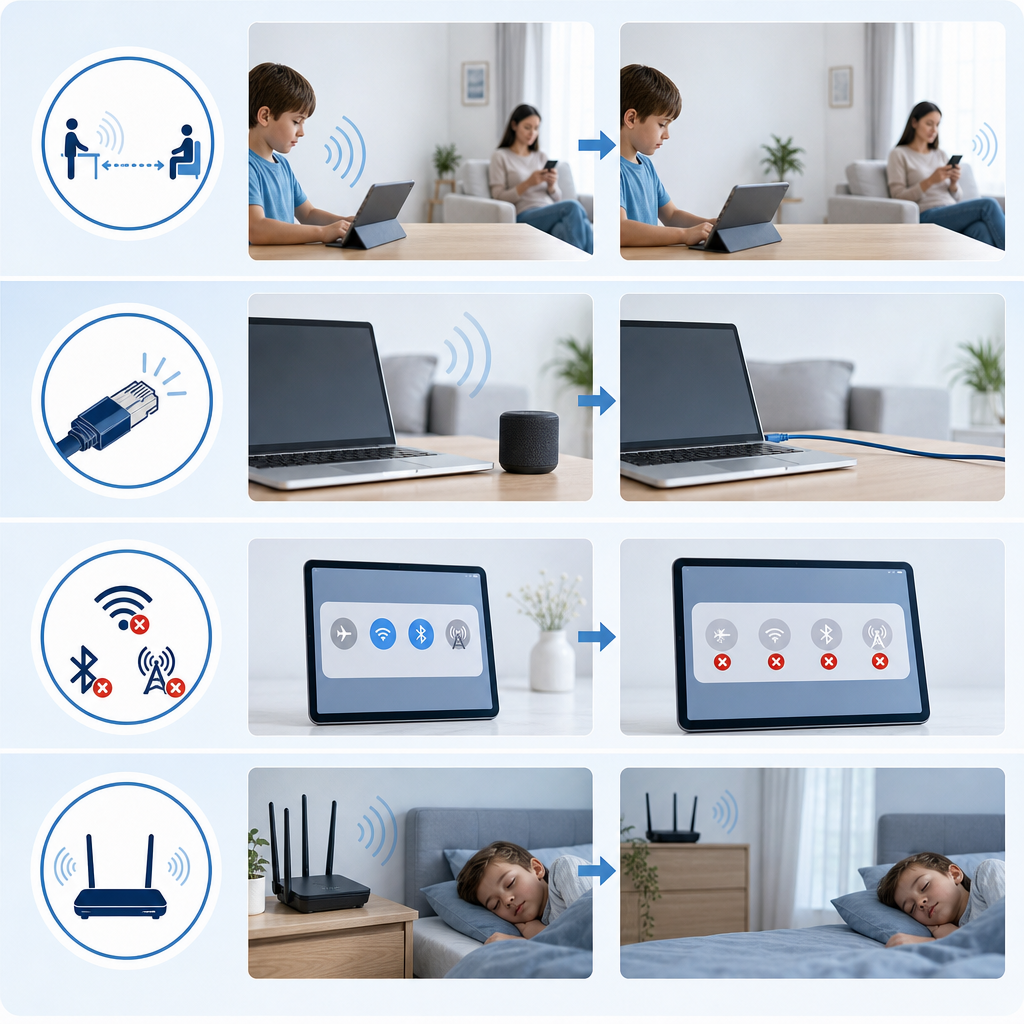
Australians can reduce unnecessary exposure by increasing distance, shortening avoidable contact, switching off unused transmitters and choosing wired connections where practical. These measures are inexpensive and do not depend on proving that EMF caused a symptom. The goal is a functional environment that supports your biology without creating fear or inconvenience.
Start with distance
Field strength generally decreases as distance from a source increases, although the pattern depends on the technology and environment. Avoid resting an active mobile against the body when a desk or bag is available. Use speakerphone for longer calls where appropriate.
Move routers out of bedrooms and away from beds, work chairs and sofas. Position them where you do not sleep or sit for long periods.
Reduce transmissions you do not need
Disable Bluetooth, mobile data, hotspot functions and other wireless features when they are not required. Download media before travel where practical. Use aeroplane mode during sleep if you do not need the mobile connection, while considering alarms, emergency contact and connected medical devices.
Powering down a router overnight may suit some households but not others. Security systems, medical equipment, home automation and emergency communications may depend on the network. Exposure reduction should never undermine safety.
Improve the whole workstation
A desk audit should address wireless equipment alongside glare, posture, movement, ventilation and interruptions. Connect peripherals by cable when convenient. If you are installing fixed ethernet cabling or altering switchboard wiring, use a licensed electrician. Place the mobile away from the keyboard. Place chargers and power boards away from where your legs rest under the desk.
These changes can reduce close exposure and improve ordinary ergonomics. If headaches remain, that is useful information. It suggests you should continue investigating rather than forcing an EMF explanation.
Consider layered EMF protection carefully
EMF Neutralizer offers Aulterra products intended for use on personal devices, in workspaces and across the home. Our approach is layered EMF protection: address concentrated device use while also considering the wider environment.
One workplace case reported to EMF Neutralizer involved long desk hours near a laptop, external monitor, mobile and wireless peripherals. After products were applied, the person reported over four weeks an estimated 70–90% reduction in headache frequency, with better concentration and less early-afternoon mental fatigue. More broadly, residential customer descriptions report an estimated 60–85% improvement in perceived EMF-related fatigue. These are qualitative experiences, not clinical evidence — individual results vary, and reported changes cannot be separated from expectations, routine adjustments or natural symptom fluctuation.
We believe these products can help neutralise your environment. They should complement practical source reduction and medical care, not replace either.
Why an environment-first test is better than chasing symptoms
My view is that symptom lists alone are the wrong starting point. Headaches and fatigue tell you that something needs attention, but not what caused it. A better process compares environments, controls obvious confounders and changes one variable at a time. This produces clearer personal evidence and reduces fear-driven decisions.
Most pages about EMF health concerns stop at one of two positions. They either present a long symptom list as implied proof, or state that exposure standards settle every personal question. Neither approach helps someone who feels unwell in a particular home or workspace.
I recommend an environment-first test built around three questions:
- What changes between the place where symptoms occur and the place where they ease?
- Which non-EMF factors change at the same time, including sleep, noise, lighting, posture, air quality and stress?
- Can one low-risk environmental variable be adjusted without disrupting the rest of the routine?
Consider someone who feels depleted only in a new bedroom near powered equipment. Moving immediately to an isolated location may bring relief, but it changes almost every variable at once. Noise, mould, temperature, light, expectations, commuting and social stress may all shift.
A better sequence is medical assessment, environmental inspection, source mapping and controlled practical changes. If a neutralising product is then introduced, keep other variables stable and document the result. Improvement matters personally, but it should still be described honestly as an observed association.
This disciplined approach is how we distinguish practical control from anxiety-based selling. The objective is not to make every customer afraid of technology. It is to help people understand cumulative daily exposure, test reasonable adjustments and make their immediate environment easier to live and work in.
When should symptoms be discussed with a doctor?
Persistent, severe, unexplained or worsening symptoms should be discussed with a doctor, even when they appear linked to a device or location. Medical assessment can identify treatable causes and establish a safe plan. Urgent symptoms, including sudden neurological changes, chest pain, fainting or a severe abrupt headache, require immediate care.
Bring your symptom diary to the appointment. Explain when symptoms started, where they occur, what improves them and what makes them worse. Mention all medications, supplements, sleep changes, recent illness and environmental concerns.
Avoid asking only whether EMF is responsible. Ask what medical conditions should be ruled out and whether any symptoms warrant specialist investigation. This keeps the consultation focused on your health rather than a debate about terminology.
Taking practical control of your environment
The sensible response to suspected EMF exposure symptoms combines healthcare, observation and low-risk environmental changes. Reduce unnecessary close contact with active devices, improve sleep and workstation conditions, then assess results without overstating certainty. If you choose an EMF Neutralizer product, treat it as one layer within a broader wellbeing plan.
EMF Neutralizer's range includes Aulterra products for personal devices, individual use and broader household environments. Browse the EMF protection hub before choosing products. Product selection should reflect where exposure is concentrated, how devices are used and whether basic source-reduction steps have already been completed.
No product should be presented as a cure for headaches, allergies, sleep disorders, electromagnetic hypersensitivity or another medical condition. Explore the range with realistic expectations, document your experience and continue appropriate medical care. Taking control means making informed decisions, not replacing one source of uncertainty with another.
References
The following sources provide recognised health, radiation-protection and clinical context for the claims in this guide. They do not endorse EMF Neutralizer products. Product outcomes and percentage estimates discussed above come from EMF Neutralizer's qualitative customer reports and have been identified separately rather than attributed to these organisations.
- World Health Organization, Electromagnetic hypersensitivity
- Australian Radiation Protection and Nuclear Safety Agency, Standard for Limiting Exposure to Radiofrequency Fields (RPS S-1)
- International Commission on Non-Ionizing Radiation Protection, Guidelines for Limiting Exposure to Electromagnetic Fields
- Healthdirect Australia, Headaches
Stay informed on EMF wellness
Get practical tips and product updates in your inbox.
Frequently asked questions
Does our "emf exposure symptoms australia" guide explain what the evidence does and does not show?
Yes. This guide explains commonly reported symptoms, why they are non-specific, how to assess cumulative exposure, and practical steps to reduce unnecessary contact with devices without replacing medical care.
What are the first signs of EMF exposure?
There is no medically established sequence of EMF exposure symptoms. People commonly report headaches, tiredness, poor sleep, reduced concentration, dizziness, tinnitus or skin sensations. These complaints have many possible causes, so timing alone cannot confirm EMF as the source.
Can Wi-Fi cause headaches and fatigue?
Some people associate headaches or fatigue with Wi-Fi environments, but health authorities have not established that ordinary exposure below applicable limits causes these symptoms. Medical factors and other environmental conditions should also be investigated.
Is electromagnetic hypersensitivity a recognised medical diagnosis?
The symptoms are recognised as real, but electromagnetic hypersensitivity does not have clear diagnostic criteria or an established causal link to electromagnetic fields. The World Health Organization recommends assessment of medical, psychological and environmental factors.
How can I test whether a device is affecting me?
Keep a symptom diary, establish a baseline and change one variable at a time. Compare similar activities with the device farther away, wireless functions disabled or a wired alternative used. Avoid deliberate exposure tests if symptoms are severe.
How quickly can symptoms improve after reducing exposure?
There is no reliable universal timeline. Some qualitative customer accounts describe rapid subjective improvement, while others describe changes across a four-week period. Persistent symptoms still require medical investigation.
Do EMF Neutralizer products treat electromagnetic hypersensitivity?
EMF Neutralizer products should not be treated as a diagnosis, cure or replacement for healthcare. They can be considered alongside practical exposure reduction and advice from qualified health professionals.

Richard Kent
Science-backed EMF wellness education from the EMF Neutralizer team.
Related articles
EMF and pregnancy risks
EMF and pregnancy risks remain uncertain at normal household exposure levels. Australian and international regulators have not established that compliant everyd…

EMF Guides Index Australia 2026: Navigate Our Guides, Products and Science
If you have landed here wondering what EMF protection actually means, whether it applies to you, and where to start, you are in the right place. This page is de…

Electromagnetic Hypersensitivity EHS Australia: Symptoms, Causes and What Actually Helps (2026)
If you have ever walked into a room full of running electronics and felt your head start to pound, your concentration dissolve, or a creeping fatigue that no am…