EMF Levels Inside Cars: What Australian Drivers Need to Know
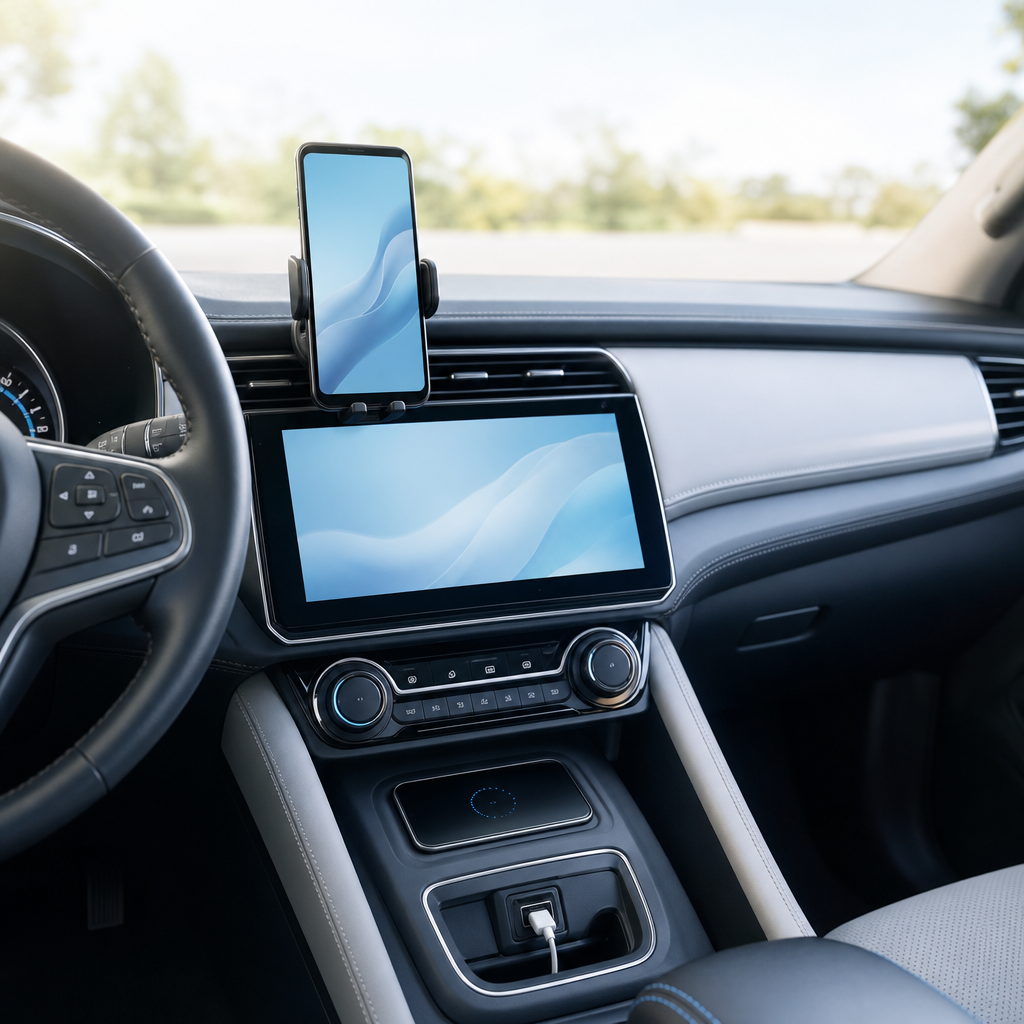
EMF levels in cars come from several sources at once: low-frequency magnetic fields from wiring, motors and batteries in every vehicle type, plus radiofrequency signals from phones, Bluetooth, wifi and infotainment. Measurements reported in published studies generally sit below reference levels, but the enclosed cabin and long drive times make cumulative exposure worth understanding.
Most Australians think about EMF at home, if at all. The car rarely makes the list. Yet a commuter, rideshare driver or family on a long road trip can spend hours a day inside a small metal box packed with electronics and wireless devices.
This guide explains where electromagnetic fields come from inside petrol, hybrid and electric cars, what ARPANSA guidance says, and where we hold a different view on combined exposure. It closes with practical habits and one simple option for the cabin. It does not make medical claims, and it does not invent readings.
Key Takeaways
- Every vehicle type has magnetic fields from its electrical system. Petrol cars are not field-free, and EVs are not automatically the highest.
- Phones, Bluetooth, wifi hotspots, GPS and wireless chargers add radiofrequency sources inside the cabin.
- Germany's Federal Office for Radiation Protection (BfS) reports that motor power is not an indicator of magnetic field strength, and that the highest values typically occur in the foot area.
- ARPANSA sets Australian reference levels for individual exposures. Our position is that cumulative, simultaneous exposure is the more useful measure for daily drivers.
- Simple habits cost nothing: move phones away from your body, switch off unused wireless features and keep charging cables clear of your lap and feet.
- The Aulterra car USB neutraliser is a practical add-on for whole-cabin harmonising, and can be paired with a phone disc or pendant.
Protect your family from EMF exposure
Browse our science-backed neutralizer products.
Shop EMF ProtectionEMF in Cars at a Glance
The table below is qualitative. It shows the type of field and where it appears, without inventing readings.
- Type of field
- Radiofrequency
- Where it appears
- All vehicle types
- Type of field
- Radiofrequency
- Where it appears
- Most modern cars
- Type of field
- Radiofrequency plus electronics
- Where it appears
- Most modern cars
- Type of field
- Low-frequency magnetic
- Where it appears
- Cars with built-in or aftermarket pads
- Type of field
- Low-frequency magnetic
- Where it appears
- All vehicle types
- Type of field
- Low-frequency magnetic
- Where it appears
- Hybrid and EV
Why Is a Car Cabin a Different EMF Environment?
A car cabin is an enclosed metal shell where you sit within arm's reach of wiring, electronics and your own devices for long stretches. Metal walls affect how radio signals behave, and the distances to sources are short. That combination, repeated daily, is what makes the cabin distinct from most other spaces.
Three features stand out.
An enclosed metal body. A car body is a conductive shell. Radio signals from outside are weakened as they pass through it. Phones inside respond by working harder to hold a connection. ARPANSA notes that mobile phones adjust their transmit power to the signal available, so poor reception generally means higher output. Driving through low-coverage regional areas or dense city canyons makes this more likely.
Close proximity. At home, you can put distance between yourself and a router. In a car, the phone is on the seat, in a cup holder or mounted at eye level. The charging cable runs beside your leg. The infotainment unit is within reach. There is very little room to move away from anything.
Long, repeated exposure times. A one-hour commute each way adds up to a large share of the week. Rideshare and delivery drivers may spend most of their working day in the vehicle. Field strength matters, but so does time.
What Are the Main Sources of EMF Inside a Car?
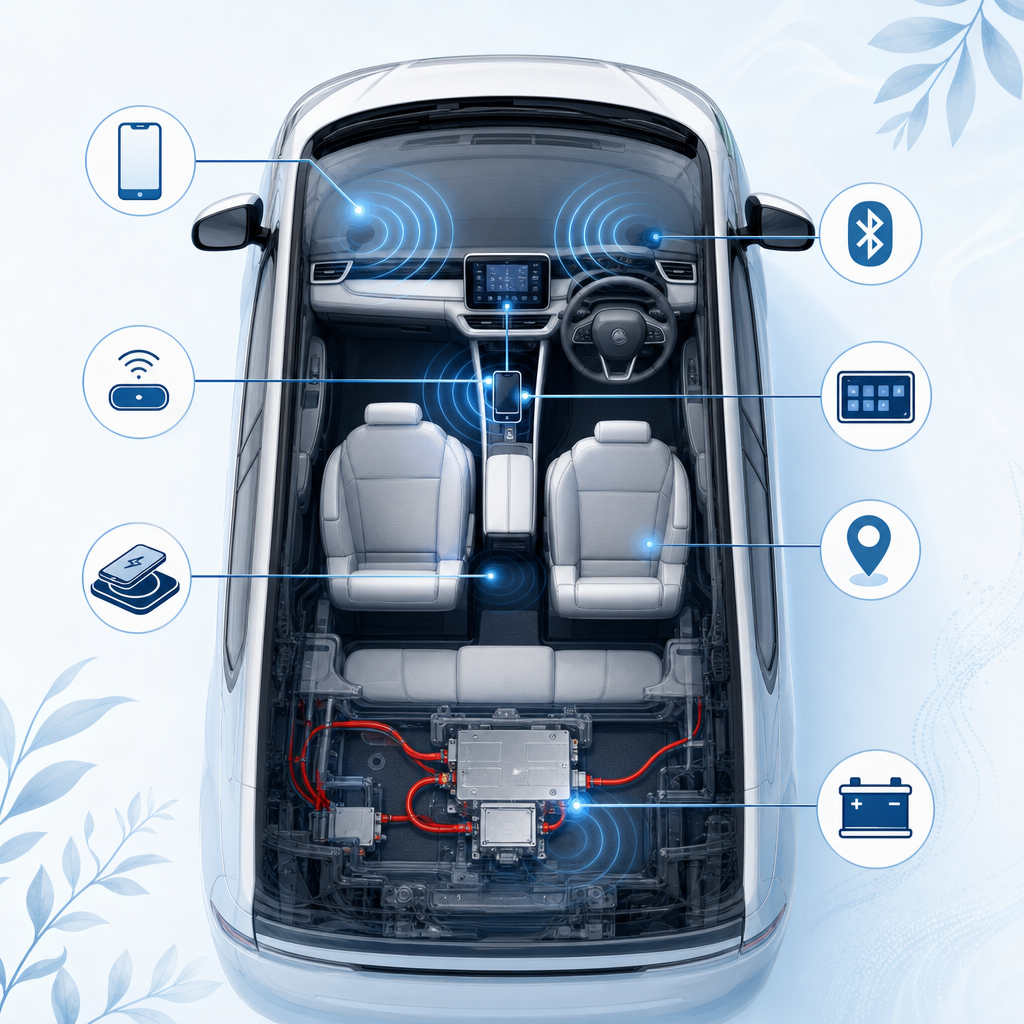
The main sources are phones, Bluetooth, wifi hotspots, infotainment and GPS units, wireless chargers, and the vehicle's own electrical system. The first group produces radiofrequency fields. The electrical system, including EV and hybrid batteries, motors and cabling, produces low-frequency magnetic fields. Most modern cars combine both.
Radiofrequency sources
Phones searching for towers while moving. A phone in a moving car keeps handing off between towers. Add a weak signal inside a metal body and the phone may transmit more often and at higher power. This is why a phone's position in the cabin matters more than most drivers realise.
Bluetooth. Bluetooth is low power, but it runs continuously for hands-free calls, audio streaming and phone-to-car pairing. It is rarely switched off.
Wifi hotspots. Many new cars offer an in-car wifi hotspot, and drivers often turn on their phone's hotspot for passengers or a tablet. Each one is another transmitter in the cabin.
Infotainment, GPS and telematics. Modern touchscreens, satellite navigation, connected services and tyre pressure sensors all communicate wirelessly. Many cars also have an embedded mobile connection for software updates and emergency calling.
Low-frequency magnetic sources
Wireless chargers. Wireless charging pads create a magnetic field to transfer power. Many drivers leave the phone on the pad for the whole trip, close to the body.
Vehicle wiring and electrical systems. Alternators, starter circuits, fans, pumps and wiring all produce magnetic fields in every car.
Hybrid and EV batteries, motors and cabling. High-voltage, high-current components are what set hybrids and EVs apart. Cables carrying large currents run beneath the floor and along the vehicle, and the fields fluctuate with acceleration, braking and charging. The next section explains what researchers have reported.
Do Petrol, Hybrid and Electric Cars Differ in EMF Levels?
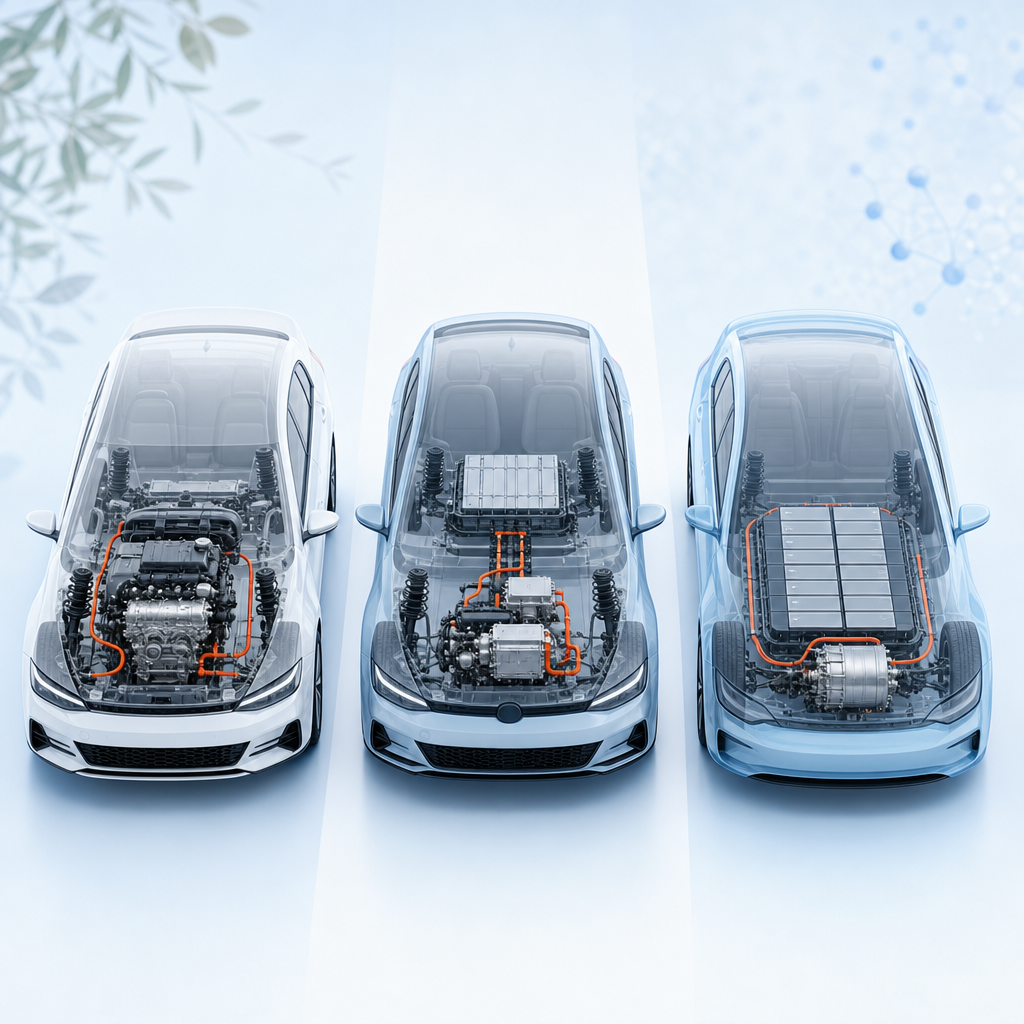
They differ in character more than in any simple ranking. BfS reports that magnetic fields occur in all motor vehicles, and that motor power is not an indicator of field strength. An EV is not automatically the highest, and a petrol car is not automatically free of fields. Layout and cable routing matter.
The most useful recent source is the BfS 2025 press release on magnetic fields in vehicles. Its headline points, as set out in the release, are:
- Magnetic fields occur in all motor vehicles.
- The highest values are typically in the foot area.
- Motor power is not an indicator of magnetic field strength.
The release also covers ways to reduce peak values and describes the study behind the findings. We recommend reading it in full rather than relying on our summary. We are not quoting numbers here because we do not want to misstate them.
What this means in practice
Petrol cars have fields from the alternator, ignition, wiring and fans. Radiofrequency sources from phones and infotainment are the same as in any other car.
Hybrids add a traction battery, inverter, motor and high-current cabling. Fields can vary with driving conditions because current changes as the car accelerates and brakes.
EVs are built around the same high-current components, at larger scale. Layout matters. How close the cabling and battery sit to the seats and footwells affects what a driver is nearest to.
The point for Australian buyers is simple. Do not assume a petrol car is a low-EMF cabin, and do not assume an EV is a high-EMF one. Wireless features inside the cabin affect all of them equally.
ARPANSA's published guidance on electromagnetic energy and power-frequency fields remains the right Australian reference for context on these sources.
Do Australian EMF Standards Account for Cumulative Exposure?
ARPANSA sets reference levels for individual exposure to radiofrequency and low-frequency fields, and measured car levels generally fall within them. Those standards are built around established effects of exposure to particular sources. They do not describe what a driver experiences from many different sources at once, hour after hour. That gap is where our position sits.
To be fair to the standards: the ARPANSA Radiation Protection Standard for radiofrequency fields (RPS S-1, 2021) is built on a review of the scientific evidence and includes safety margins. ARPANSA's position is that the evidence does not establish harm from exposures below the limits. The WHO fact sheet on electromagnetic fields and public health takes a similar line while noting that research continues. We do not dispute that, and nothing here is a claim of harm.
Our view is different in emphasis. A driver is rarely exposed to one thing. In a single trip, a phone transmitting, Bluetooth streaming, a hotspot running, a wireless charger active, a GPS unit communicating and the vehicle's own electrical system all operate together. They sit alongside the exposure the same person had at home that morning and will have at the office that day.
At EMF Neutralizer, we believe the aggregate daily burden is the relevant measure. A reference level tells you whether one source is within limits. It does not describe the invisible electromagnetic burden of sitting inside several sources for sixteen hours a day. That is a position, not a regulatory finding, and you are entitled to weigh it accordingly. What it does justify is a practical question: if you can reduce unnecessary sources at no cost, why not?
What Practical Habits Reduce EMF Exposure While Driving?
Start with the free options: keep your phone away from your body, turn off wireless features you are not using, and keep charging cables clear of your lap and feet. These habits take seconds, apply to any vehicle, and do not depend on anyone's view of the science.
- Phone placement. Use a mount rather than a pocket, lap or the seat beside your thigh. Hands-free calling keeps the phone off your head.
- Switch off what you are not using. Turn off the phone hotspot when no passenger needs it. Turn off Bluetooth if you are not streaming. Disable the car's wifi hotspot if you do not use it.
- Rethink the wireless charger. If you are not low on battery, leave the phone off the pad. A cable charges just as well and keeps the field source out of the cabin.
- Mind the cables. Route charging leads away from your lap, legs and feet. In a hybrid or EV, remember BfS found the highest magnetic field values typically in the foot area, so avoid parking bags, devices and wires there.
- Park the second phone. Rideshare drivers often run two phones. Keep the second one in the boot or glovebox when it is not in use.
For a deeper look at handset habits, see our separate guide on how to reduce phone radiation exposure without a case.
How Can You Harmonise the Whole Cabin?
The Aulterra car USB neutraliser is designed to harmonise the cabin environment from a single USB port, and it works best as one layer alongside the habits above. Pair it with discs on phones and a pendant or wristband for the driver and you address the car, the devices and the person.
Habits reduce what you can control. They cannot remove the vehicle's own fields or the phones your passengers carry. That is where a neutraliser fits, in our approach to layered EMF protection.
The car USB neutraliser. It plugs into a USB port in the cabin and is intended to harmonise the space around the driver and passengers. It is simple to use. There is no app, no pairing and no settings.
EMF Neutralizer discs. A disc is applied directly to a device, such as your phone, tablet or dash-mounted navigation unit. This addresses the source at close range. Our guide on how to apply an EMF neutraliser disc covers placement.
Pendants and wristbands. These are worn by the driver and travel with you from the car to the office to home. If you are deciding between formats, our comparison of pendant vs wristband vs disc sets out the differences, and our guide to the best EMF protection jewellery in Australia covers the pendant range.
Customers who begin with a whole-house unit often add stick-on discs for personal hotspots such as phones and tablets. The car follows the same logic: harmonise the space, then the devices, then the person.
We want to be direct about limits. This is not a clinical treatment, and nothing here is a medical claim. We are describing how we approach the cumulative daily exposure that comes with modern life.
Ready to try it? Shop the Aulterra car USB neutraliser at emfneutralizer.com.au for whole-cabin harmonising. If your exposure extends beyond the car, pair it with a phone disc or a pendant so you take control of your immediate environment wherever you are.
The Commute Is the Layer Most EMF Audits Skip
Most people who start thinking about EMF begin with the bedroom, then the home office. The car rarely gets a look, even though it is often where the longest unbroken stretch of exposure happens. That is the point we think is under-discussed.
Consider a rideshare driver working an eight-hour shift. This is a hypothetical example, not a customer case. Her phone runs navigation and the driver app, mounted at eye level. A second phone sits on the wireless charger. Bluetooth streams audio, a hotspot serves passengers, and the car's infotainment unit stays connected. The vehicle's own electrical system runs underneath. She goes home to a router, a smart meter and a laptop.
Each source may sit comfortably below ARPANSA reference levels. But no one has asked what her day looks like when you add them together. Most home-focused EMF advice stops at the front door, and she has already spent most of her waking hours elsewhere.
The feedback we hear from customers supports the case for treating this as a whole-day issue. Based on qualitative customer descriptions across residential use cases, we estimate a 60-85% improvement in perceived EMF-related fatigue after applying our products. This is our own estimate, drawn from what customers have told us, not clinical data. It is not specific to cars, and it does not prove any mechanism. We cite it because it is the honest extent of what we have.
Our view is this: if you are going to neutralise your environment, include the place where you spend your commute. Your home should work with you, not against you, and so should your car.
References
- Bundesamt fur Strahlenschutz (BfS), press release on magnetic fields in motor vehicles, 2025. https://www.bfs.de/SharedDocs/Pressemitteilungen/BfS/EN/2025/005.html
- ARPANSA, Radiation Protection Standard for Limiting Exposure to Radiofrequency Fields 100 kHz to 300 GHz (RPS S-1), 2021. https://www.arpansa.gov.au/
- ARPANSA, guidance on electromagnetic energy and mobile phones. https://www.arpansa.gov.au/
- World Health Organization, Radiation: Electromagnetic fields (fact sheet). https://www.who.int/news-room/fact-sheets/detail/radiation-electromagnetic-fields
Stay informed on EMF wellness
Get practical tips and product updates in your inbox.
Frequently asked questions
Are EMF levels higher in electric cars?
Not necessarily. BfS reports that magnetic fields occur in all motor vehicles and that motor power is not an indicator of field strength. EVs and hybrids add high-current components, but layout and cable routing matter as much as the drivetrain. Radiofrequency sources such as phones are the same in any car.
Is it safe to use my phone in the car?
ARPANSA's position is that exposures below its reference levels are not established to cause harm. Phones may transmit at higher power when signal is weak, which is common in a metal-bodied car. Using hands-free, keeping the phone off your body and avoiding low-coverage calls are simple, low-cost choices.
Do hybrid cars have more EMF than petrol cars?
Hybrids add a battery, inverter, motor and high-current cabling to the usual electrical system, so the type of source is different. That does not translate into a simple ranking. BfS found fields in all vehicle types, with the highest values typically in the foot area.
How can I reduce EMF exposure while driving?
Mount your phone away from your body, turn off unused Bluetooth and hotspots, avoid leaving a phone on a wireless charger, and keep cables clear of your lap and feet. You can then add layers such as a car USB neutraliser, phone discs or a pendant.
Does an EMF neutraliser for a car actually work?
We can only describe our own experience. Customers describe feeling better in environments where they use our products, and we estimate a 60-85% improvement in perceived EMF-related fatigue from qualitative descriptions across residential use cases. That is not clinical evidence, and we make no medical claims.

Richard Kent
Science-backed EMF wellness education from the EMF Neutralizer team.
Related articles
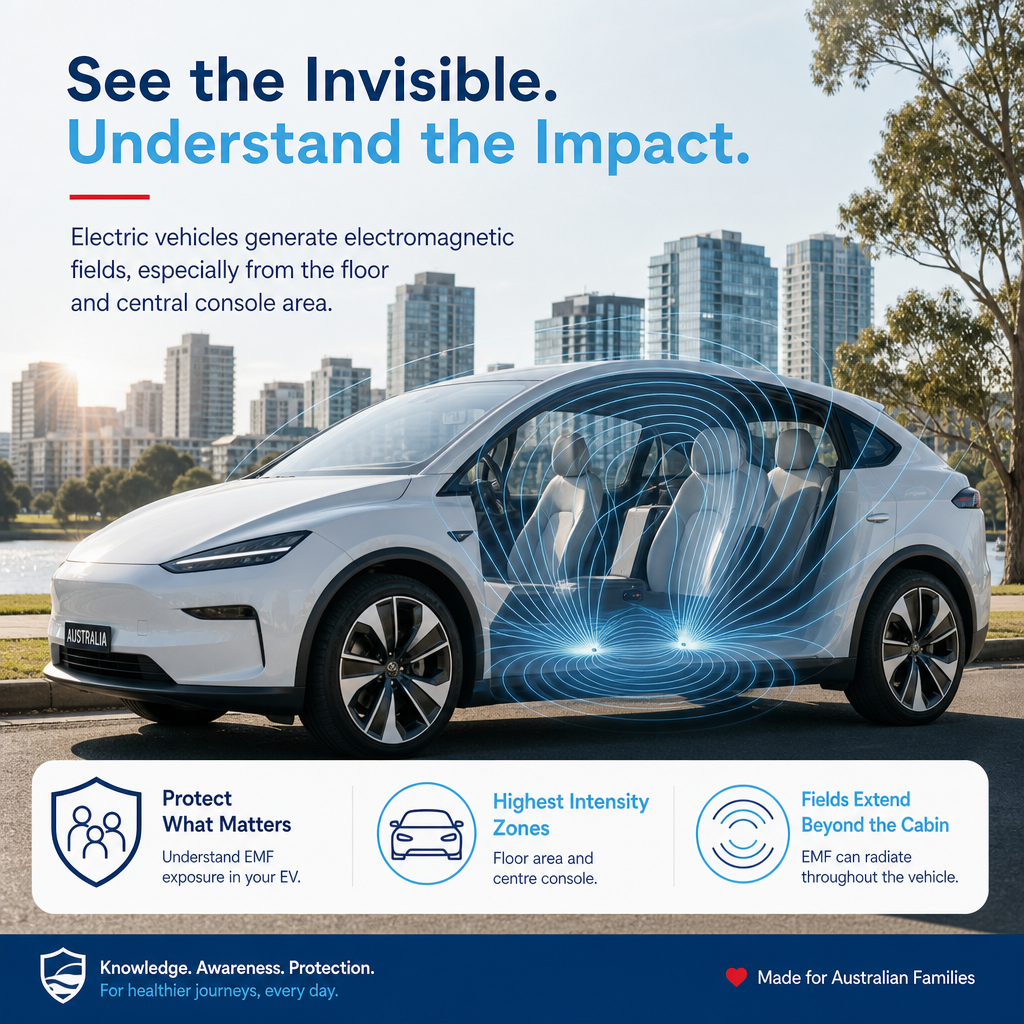
Electric Vehicle EMF Exposure in Australia: What EV Drivers Should Know About In-Car Fields
Published measurements generally place electric vehicle magnetic fields within ICNIRP and ARPANSA reference levels, so there is no regulatory basis for alarm. F…

EMF and Children Baby Safety Australia: Practical Strategies for Families
Modern Australian homes are filled with wireless technology. We have smart monitors in the nursery, tablets in the playroom and mesh Wi-Fi networks blanketing e…
EMF Guides Index Australia 2026: Navigate Our Guides, Products and Science
If you have landed here wondering what EMF protection actually means, whether it applies to you, and where to start, you are in the right place. This page is de…