What Is EMF Radiation? A Plain-English Explainer for Australians (2026)
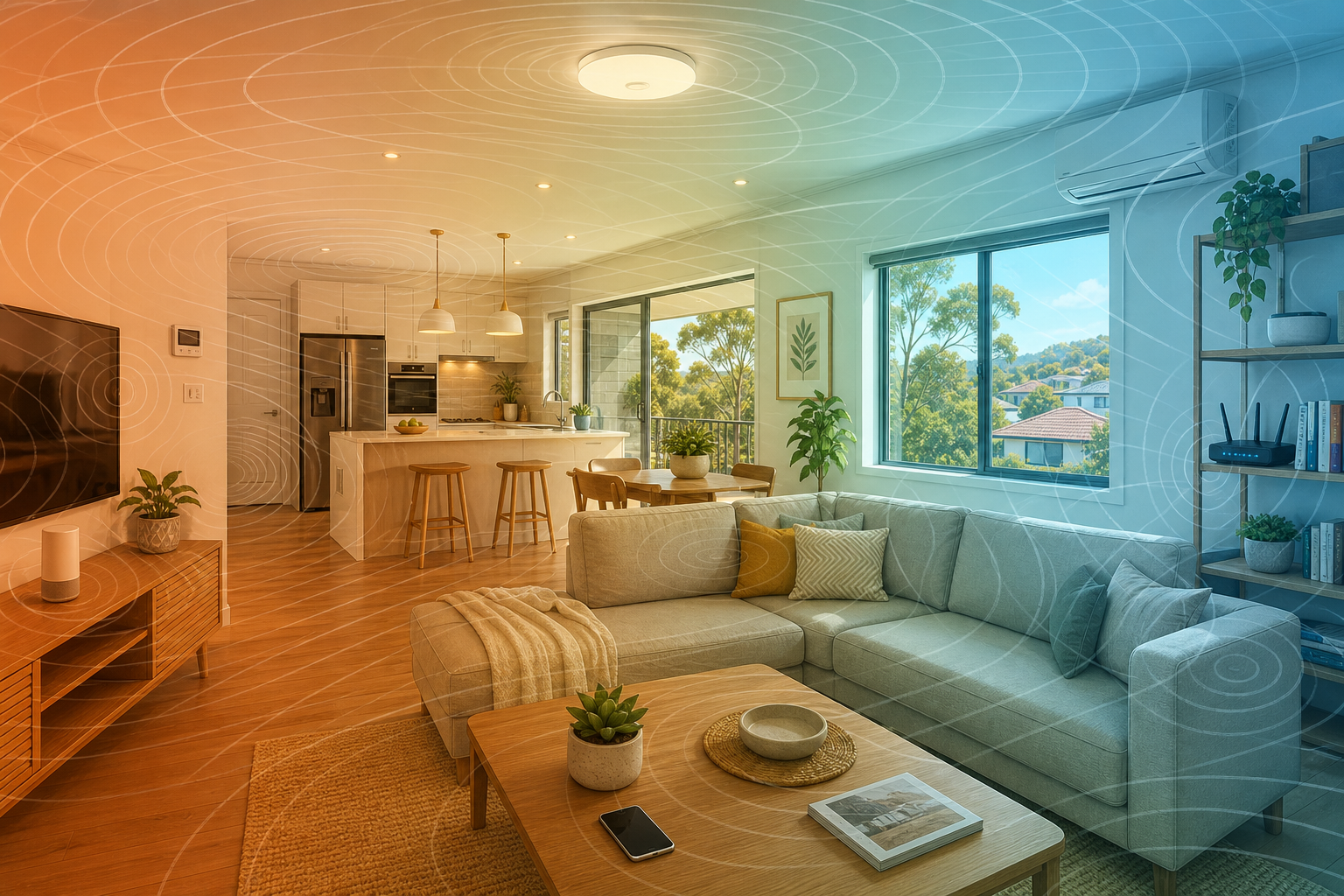
If you have typed "what is EMF radiation" into a search bar at midnight, you are not alone. Millions of Australians are surrounded by wireless devices around the clock, and a growing number of them are starting to ask questions the mainstream conversation has been slow to answer clearly. The term gets thrown around in health forums, parenting groups, and workplace wellness discussions, but genuine plain-English definitions are harder to find than the fear-mongering. This article fixes that.
Here is the honest starting point: electromagnetic fields are not a new invention and they are not inherently sinister. They are a fundamental feature of physics. What has changed dramatically over the past two decades is the sheer density of artificial EMF sources inside the average Australian home and office. A bedroom in 2026 might contain a Wi-Fi router two rooms away, a smart meter on the external wall, a mobile phone charging on the bedside table, a laptop left on overnight, smart lighting, a digital alarm clock, and a television on standby. Each of those devices sits below regulated safety thresholds when assessed in isolation. The question worth asking, and the one this article addresses honestly, is whether isolated assessment reflects the reality of how Australians actually live.
This piece is a foundation. It will teach you what EMF actually means, walk you through the electromagnetic spectrum in plain terms, identify the most common sources in Australian homes and offices, and then explain the cumulative-load argument that standard regulatory frameworks do not fully account for. By the end, you will have enough grounding to make informed decisions about your own environment rather than relying on either dismissive reassurances or unsubstantiated alarm. For EMF protection in Australia by exposure setting, see our buyer's guide when you are ready to act.
Key Takeaways
- EMF stands for electromagnetic field, a form of energy produced by electrically charged objects. It exists on a spectrum ranging from extremely low-frequency power lines to high-frequency ionising radiation like X-rays.
- Everyday wireless technology including Wi-Fi, mobile phones, and smart meters sits in the non-ionising portion of the spectrum, meaning it does not have enough energy to break chemical bonds in DNA directly.
- The average Australian home now contains dozens of simultaneous EMF sources operating around the clock, a situation that did not exist when most safety thresholds were established.
- Regulatory standards assess individual devices in isolation. They were not designed to account for the cumulative daily exposure that results from living and working inside a dense cluster of always-on devices.
- Some people in high-device environments report sleep disruption, persistent headaches, and fatigue that improve when EMF sources are reduced or neutralised.
- Practical steps exist to neutralise the biological impact of everyday EMF load, from simple device placement changes to Aulterra neutraliser products and our EMF protection devices collection that address aggregate exposure rather than one device at a time.
Protect your family from EMF exposure
Browse our science-backed neutralizer products.
Shop EMF ProtectionSummary Table: The EMF Spectrum at a Glance
- Type
- Extremely Low Frequency
- Common Australian Sources
- Power lines, household wiring
- Ionising?
- No
- Regulated By
- ARPANSA
- Type
- Low/Medium Frequency
- Common Australian Sources
- AM radio, electrical appliances
- Ionising?
- No
- Regulated By
- ARPANSA
- Type
- Radio Frequency
- Common Australian Sources
- FM radio, baby monitors
- Ionising?
- No
- Regulated By
- ACMA / ARPANSA
- Type
- Microwave/RF
- Common Australian Sources
- Wi-Fi routers, mobile phones, Bluetooth, microwave ovens
- Ionising?
- No
- Regulated By
- ARPANSA / ACMA
- Type
- RF pulses + mains-powered fields
- Common Australian Sources
- Smart meters (Australian AMI) — often highest-impact fixed source on a shared wall
- Ionising?
- No
- Regulated By
- ARPANSA / ACMA
- Type
- Millimetre Wave
- Common Australian Sources
- 5G (high-band), radar
- Ionising?
- No
- Regulated By
- ARPANSA
- Type
- Ionising
- Common Australian Sources
- X-rays, gamma rays, UV (high-energy)
- Ionising?
- Yes
- Regulated By
- ARPANSA / State regulators
What Does EMF Actually Mean?
EMF stands for electromagnetic field. That phrase sounds technical, but the underlying concept is accessible once you understand what fields are in everyday physics.
Any electrically charged particle creates an electric field in the space around it. When that charge moves, which is what happens when electrical current flows through a wire or a circuit, it also creates a magnetic field. The two fields travel together and are inseparable. This pairing is the "electromagnetic" part. The "field" part simply means a region of space where a force can be felt or detected, even though nothing physically solid is present.
The "radiation" element comes from the fact that these fields can propagate outward through space as waves, carrying energy with them. This is true of light, of heat, of radio signals, and of the invisible signals your router uses to connect your phone to the internet. The word "radiation" in everyday language has been contaminated by its association with nuclear energy and X-rays, but in physics it simply means energy travelling outward from a source. Visible light is electromagnetic radiation. The warmth you feel from the sun is electromagnetic radiation. The signal your phone uses to receive a text message is electromagnetic radiation.
The critical distinction between these types of radiation is not whether they radiate, but how much energy each wave carries. That is determined by frequency.
Frequency, Wavelength, and Energy
Electromagnetic waves oscillate, meaning they cycle up and down at a certain rate. Frequency describes how many of those cycles happen per second, measured in hertz (Hz). One hertz means one cycle per second. Your household electricity in Australia runs at 50 Hz, meaning the current alternates fifty times per second. A 5G mobile signal in a major Australian city might operate at several gigahertz, meaning billions of cycles per second.
Higher frequency means shorter wavelength and more energy per photon (the individual packets of energy in electromagnetic radiation). This relationship is why the type of radiation matters so much for health discussions: at high enough frequencies, each photon carries enough energy to strip electrons from atoms and break chemical bonds. That is the definition of ionising radiation.
Ionising Versus Non-Ionising: The Defining Line
Ionising radiation includes X-rays, gamma rays, and the high-energy portion of ultraviolet light. When this type of radiation passes through biological tissue, it can damage DNA directly by breaking chemical bonds. This is why X-rays are tightly controlled, why radiographers leave the room during scans, and why excessive UV exposure causes skin cancer. The biological damage mechanism is well established.
Non-ionising radiation sits at the lower-frequency end of the spectrum. It does not carry enough energy per photon to break chemical bonds. This includes visible light, infrared, radio waves, microwaves, and the extremely low-frequency fields from power lines. Wi-Fi, Bluetooth, mobile phone signals, and smart meters all fall into this non-ionising category.
The mainstream conclusion often drawn from this distinction—that non-ionising EMF is therefore safe because it cannot directly damage DNA the way ionising radiation can—is accurate only as far as direct bond-breaking mechanisms go. Where the argument becomes more nuanced, and where the evidence base is still actively developing, is in the question of whether chronic, cumulative, low-level non-ionising exposure produces biological effects through other mechanisms, and whether those effects accumulate meaningfully across years of constant exposure to multiple simultaneous sources. We will return to this in detail.
The EMF Spectrum Simplified: Where Everyday Technology Sits
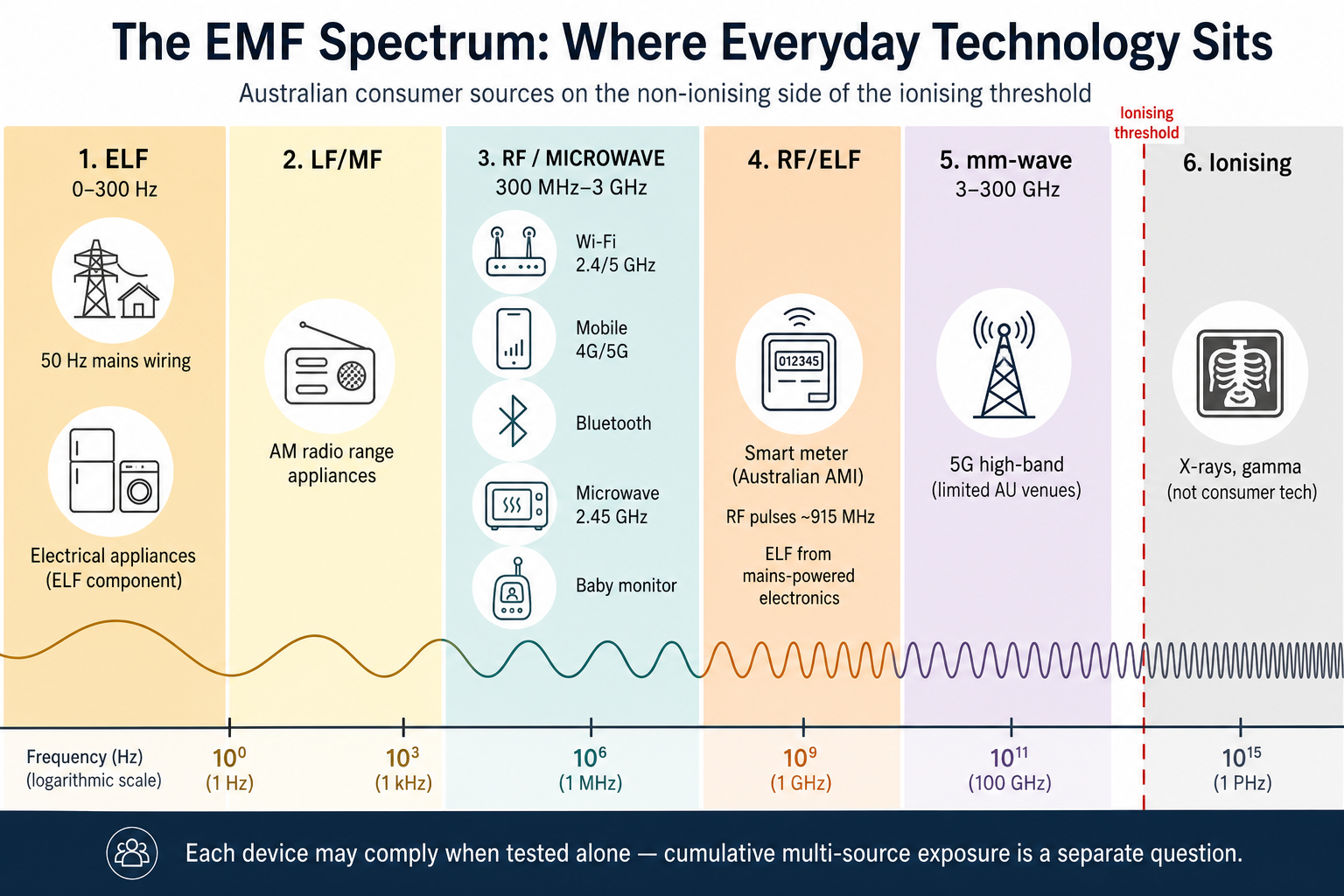
Think of the electromagnetic spectrum as a long ruler. At the far left sit the very low-frequency, low-energy waves: the 50 Hz hum of Australian mains electricity, the fields around a hairdryer, the emissions from power lines running along suburban streets. At the far right sit the extremely high-frequency, high-energy waves: gamma rays from radioactive decay, medical X-rays, the UV-C light used in sterilisation equipment.
Everything Australians encounter from consumer electronics sits firmly in the low-to-mid section of that ruler, well below the ionising threshold.
Extremely Low Frequency (ELF): Power Lines and Household Wiring
ELF fields range from 0 to 300 Hz. The primary source in Australian homes is the 50 Hz alternating current in the walls, in appliances, and in external power infrastructure. Smart meters, which are now standard in most Australian states following network upgrades, also produce ELF fields from their internal electronics in addition to the radiofrequency pulses they send to the network.
The International Agency for Research on Cancer (IARC) classified ELF magnetic fields as a Group 2B possible carcinogen in 2002, based primarily on epidemiological studies suggesting a statistical association between childhood leukaemia and proximity to high-voltage power lines. The classification is important context: Group 2B means "possibly carcinogenic" which is the lowest positive classification and indicates limited evidence, not established causation. Coffee and pickled vegetables are also in Group 2B.
Australian exposure to ELF fields is regulated by the Australian Radiation Protection and Nuclear Safety Agency (ARPANSA), which publishes reference levels for public and occupational exposure.
Radiofrequency and Microwave: Wi-Fi, Mobile Phones, and Bluetooth
RF and microwave frequencies are where most of the public conversation about EMF concentrates, and for good reason: this is the band in which most wireless consumer technology operates.
- Wi-Fi routers operating on the 2.4 GHz band (and increasingly on 5 GHz for Wi-Fi 6 and 6E networks)
- Mobile phones connecting to 4G LTE and 5G networks across Telstra, Optus, and TPG/Vodafone's Australian infrastructure
- Bluetooth devices including earbuds, keyboards, smartwatches, and wireless speakers
- Microwave ovens operating at 2.45 GHz
- Smart home devices including Google Nest, Amazon Echo, and Apple HomePod products
- Baby monitors
- Cordless landline phones
All of these fall below the ionising threshold by a massive margin. The relevant regulatory framework in Australia is ARPANSA's Radiation Protection Standard for Maximum Exposure Levels to Radiofrequency Fields, which adopts limits aligned with the International Commission on Non-Ionizing Radiation Protection (ICNIRP) guidelines. The Australian Communications and Media Authority (ACMA) also regulates device compliance as part of its electromagnetic compatibility framework.
5G: The Current Flash Point
5G in Australia currently operates across three frequency bands: low-band (below 1 GHz), mid-band (1-6 GHz), and high-band millimetre wave (24-100 GHz, currently deployed in limited venues such as stadiums and transport hubs). The vast majority of 5G coverage Australians encounter day to day uses sub-6 GHz frequencies that sit in the same RF range as existing 4G and Wi-Fi technology.
Millimetre wave 5G carries higher frequencies but its waves are absorbed within millimetres of skin surface and penetrate negligible depth into tissue. ARPANSA's position as of 2026 is that 5G signals within their exposure limits do not present established health risks. The ongoing debate is whether those limits adequately account for cumulative exposure when combined with all other RF sources a person encounters simultaneously, a point we address directly in the cumulative-load section below.
Common EMF Sources in the Average Australian Home and Office
Theory is useful. A concrete inventory of what you are actually living with is more useful.
Let me walk through a typical scenario: a home office in a suburban Australian house in 2026. The person working there, let us call her Sara, would recognise this immediately.
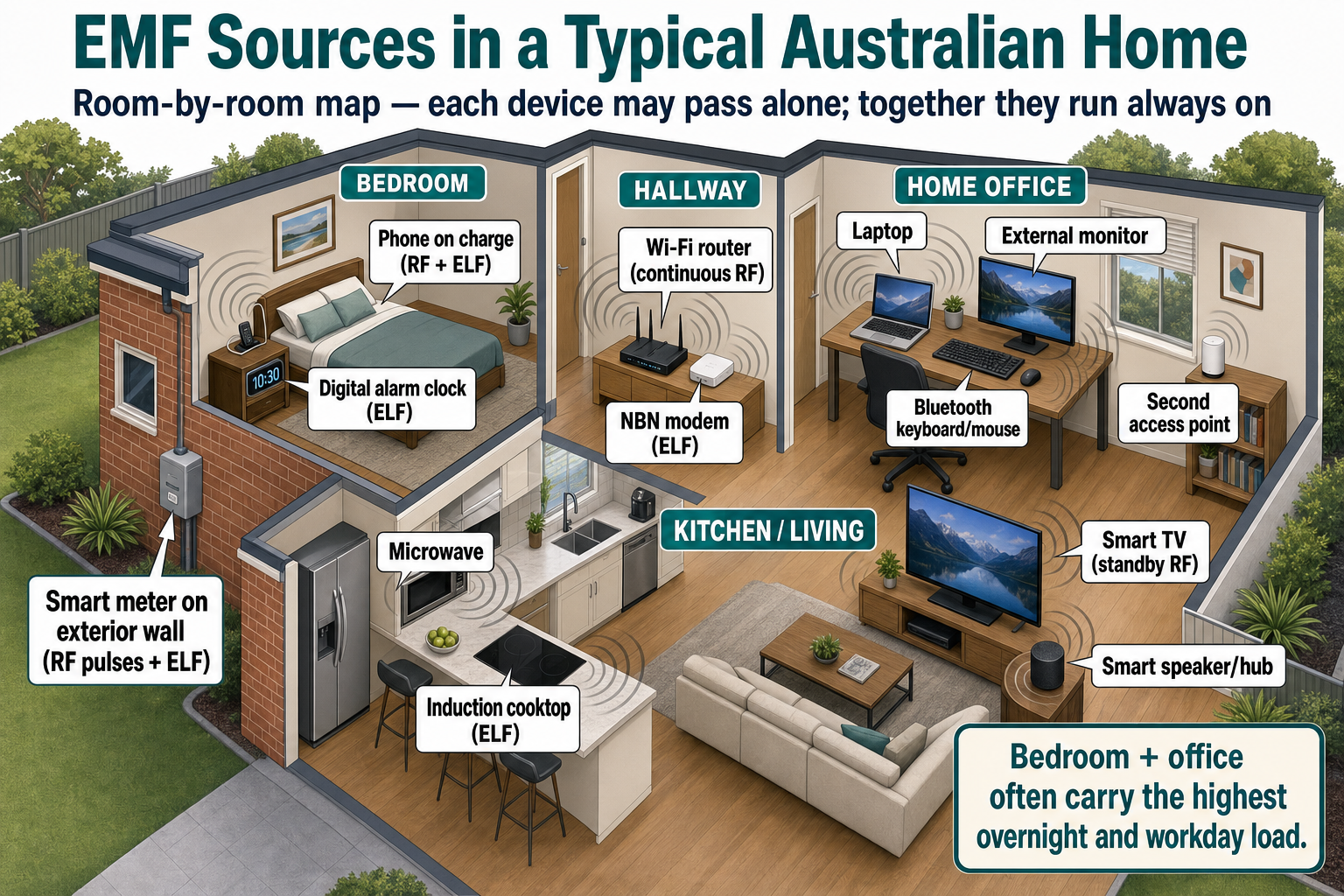
Sara wakes in a bedroom where her iPhone charges on the bedside table, producing both radiofrequency signals as it connects to the Wi-Fi and low-frequency fields from the charger transformer. The NBN modem and Wi-Fi router sit in the hallway roughly four metres from her bed pillow, broadcasting continuously. On the external wall of the bedroom, behind the bedhead, is the smart meter installed by the network distributor, pulsing radiofrequency data to the grid at regular intervals.
She moves to her home office. On her desk: a laptop, an external monitor, a wireless keyboard and mouse (both Bluetooth), a mobile phone, and a desk lamp plugged into a powerboard. A second Wi-Fi access point has been installed in the office for better signal coverage. She works at this desk for eight to ten hours, surrounded by this cluster of simultaneously operating EMF sources. By early afternoon, a familiar dull headache has started to build behind her eyes. She has attributed it to screen time. But screen time alone does not fully explain why the headache began appearing only after she upgraded to a more powerful router and added a second monitor.
This scenario is not unusual. It is, in fact, ordinary for a device-connected Australian professional in 2026.
The Full Source Map
Here is the typical EMF source inventory for an Australian home and office environment:
In the bedroom:
- Mobile phone on charge (RF and ELF)
- Tablet or laptop left on or in sleep mode (RF and ELF)
- Smart meter on or near exterior walls (RF pulses, ELF fields)
- Wi-Fi router within range (RF, continuous)
- Electric blanket (strong ELF at body-contact distance)
- Digital alarm clock (ELF)
- Smart lighting (RF if mesh-connected)
- Baby monitor in nearby rooms (RF)
In the home office:
- Laptop (ELF from components, RF from Wi-Fi and Bluetooth)
- External monitor (ELF)
- Mobile phone (RF and ELF)
- Wireless peripherals (Bluetooth RF)
- Wi-Fi router or access point (RF, continuous)
- Desk fan or heater (ELF)
- Powerboards with multiple devices (ELF)
Elsewhere in the home:
- Microwave oven (RF when operating, ELF from motor)
- Smart TV (RF, continuous when in standby if network-connected)
- Induction cooktop (strong ELF at close range during cooking)
- Electric vehicle charger (ELF when charging)
- Smart home hubs and assistants (RF, continuous listening mode)
- NBN equipment including FTTB amplifiers (ELF)
Electric Vehicles: The New Variable
EV ownership in Australia is accelerating. The Federal Chamber of Automotive Industries reported that new EV registrations have grown substantially year-on-year, and home charging infrastructure is now a standard consideration for many suburban households.
EV chargers produce ELF magnetic fields during charging, and the fields inside an EV cabin from the battery management system, inverter, and motor are a subject of active research. Preliminary measurements published in European transport safety literature indicate that floor-level ELF fields in some EV models can be measurably higher than in equivalent internal combustion vehicles, particularly during acceleration. The biological significance at typical occupancy distances remains debated, but for a person who commutes daily in an EV and then works in a dense office environment, the cumulative picture is worth considering. See our electric vehicle EMF exposure guide for Australian context on cabin fields, charging, and practical steps.
Why Regulated Single-Device Thresholds Miss the Bigger Picture
This is where the standard narrative and the EMF Neutralizer position diverge, and I want to make the distinction with precision rather than hyperbole.
ARPANSA's exposure standards are real, credible, and based on substantial scientific review. I am not dismissing them. What I am saying is that they were designed to answer a different question than the one most Australians need answered in 2026. For a dedicated walkthrough of WHO and ARPANSA guidelines on EMF exposure in Australia, see that guide next.
Regulatory thresholds, set by ARPANSA and aligned with ICNIRP guidelines, establish the maximum exposure from a single device or single source that is considered safe for the general public. They are based on acute exposure scenarios: how much energy can biological tissue absorb from a specific source before a demonstrable physiological effect occurs, primarily tissue heating in the RF range. The ICNIRP guidelines on which ARPANSA's limits are based use a specific absorption rate (SAR) measurement that quantifies how much RF energy is absorbed per kilogram of tissue. Australian mobile phones must comply with a SAR limit of 2 W/kg averaged over 10 grams of tissue.
That is a meaningful limit for a single device. It does not address the following scenario: a person simultaneously exposed to a router at 2.4 GHz, a phone at 850 MHz (4G), a Bluetooth earbud at 2.4 GHz, a smart meter pulsing at 915 MHz, and an induction cooktop at 20-100 kHz, all operating at once for sixteen or more hours, every day, seven days a week.
The Cumulative Exposure Problem
The cumulative daily exposure argument rests on a straightforward observation: the regulatory framework was built on single-source, acute-exposure models. Modern living is none of those things.
Consider the analogy of noise. A single car passing your house at 65 decibels is not damaging to hearing. Multiple lanes of traffic, a nearby train line, and office machinery all at 65 decibels simultaneously is a different biological experience. Noise standards in Australian workplaces under Safe Work Australia guidelines account for this through cumulative exposure limits across a full working day. The equivalent logic has not been applied to the aggregate EMF environment most Australians inhabit.
The World Health Organisation's International EMF Project acknowledges that the interaction of fields from multiple sources is complex and that research into combined exposures is ongoing. The WHO's broader position, accurate as of 2026, is that no confirmed adverse health effects have been established from non-ionising EMF at levels below ICNIRP guidelines. What that statement carefully does not say is that combined, chronic exposure at sub-threshold levels from multiple simultaneous sources has been definitively studied and cleared. It has not. The research simply has not been done at the scale and duration the question demands.
At EMF Neutralizer, we believe that waiting for a thirty-year longitudinal study of cumulative multi-source RF exposure before taking any action is not a decision, it is a default. And defaulting to maximum exposure in the absence of certainty is not a neutral choice, it is an active one.
What the Research Does Show
Without overstating the science, several research threads are relevant to the cumulative-load argument:
IARC Group 2B classification for RF fields: In 2011, IARC classified radiofrequency electromagnetic fields as Group 2B (possibly carcinogenic) based primarily on elevated glioma risk in the heaviest mobile phone users across the Interphone and Hardell studies. In 2024, IARC published its updated Monograph 102 process, with a working group that assessed a broader body of literature. The classification discussion continues, and the weight of evidence for heavy, long-term RF exposure remains an active scientific question.
The BioInitiative Report: A working group of independent scientists has reviewed thousands of studies on biological effects of non-ionising EMF and has argued that the current ICNIRP thresholds are inadequate to protect against non-thermal biological effects. The BioInitiative position is contested by mainstream regulatory bodies but represents a credible minority scientific view that the body of evidence for biological effects below thermal thresholds is larger than standard guidelines acknowledge.
Aulterra's published research (the technology behind the products we import): The most significant finding from Aulterra's own research programme, conducted at independent laboratories including work by Dr Maria Syldona, concerns DNA renaturation under mobile phone EMF exposure. In that study, human DNA exposed to phone radiation without the Aulterra compound showed substantially reduced renaturation (the process by which separated strands return to their double-helix structure). With the Aulterra compound present, renaturation rates were comparable to baseline conditions with no phone exposure. That result has been peer-reviewed and published, and it supports the proposed neutralisation mechanism: retuning chaotic man-made fields toward a coherent waveform so the biological stress response is reduced, not blocking or eliminating the signal. Aulterra International develops and manufactures in the United States; we distribute their products in Australia. The full overview, with links to published papers, is on our science and evidence page. For a plain-English introduction to the technology, see What Is Aulterra?.
Blood-based observations from independent testing: One of our own customers, Devin, undertook live blood analysis using dark-field microscopy to test her personal response to microwave oven EMF exposure. Before EMF exposure, her red blood cells were described by the practitioner as moving freely with no aggregation. After four minutes near an operating microwave, significant clumping (rouleaux formation) was observed. When she repeated the test while wearing an EMF Neutralizer pendant, the clumping was markedly reduced. She described the results plainly: "It's very obvious that the microwave caused clumping of the blood and also very clear that this did not happen while wearing the pendant." This is one individual's self-funded independent observation, not a clinical trial.
Sleep and melatonin research: A body of studies, including research by Burch and colleagues published in peer-reviewed journals, has examined the relationship between occupational EMF exposure and salivary melatonin levels. Some studies find suppressed melatonin in higher-exposure workers. Melatonin is the hormone that regulates the sleep-wake cycle. Disrupted melatonin production is a plausible mechanism linking EMF exposure to sleep disruption, one of the most commonly reported symptoms among people in high-device environments.
How EMF Exposure May Show Up Day to Day
I want to be precise here because this section is where credibility can be lost if the claims are overstated. The research on what is called electromagnetic hypersensitivity (EHS) is mixed. Double-blind provocation studies have generally not confirmed that people who identify as EHS can reliably detect EMF exposure above chance. That is an honest statement.
What is also honest is this: those provocation studies typically test acute exposure to a single EMF source in a controlled environment, not the chronic daily saturation of a home with fifteen always-on devices. The negative provocation results do not tell us much about cumulative load effects over months and years. They test a different question.
What I observe in practice, across the customers who come to us, is a consistent cluster of reported symptoms in high-device environments. These are not fabricated. They are reported by physiotherapists, office workers, parents, and shift workers across Australia. The symptoms include:
Sleep disruption: Difficulty falling asleep, waking in the early hours, feeling unrefreshed despite adequate sleep duration. This is the most commonly reported symptom, and it is biologically plausible given the melatonin research cited above. Sleeping with a phone on the bedside table and a router four metres away means the brain is bathed in RF fields throughout the night, precisely the period when the body should be carrying out cellular repair processes.
Persistent headaches, particularly in home office environments: I worked with someone experiencing exactly this. They were at a desk all day surrounded by a laptop, external monitor, mobile phone, and wireless peripherals. Persistent headaches had become a feature of the workday, arriving by early afternoon and making concentration difficult. After applying EMF Neutralizer Discs to each device in the workspace, headache frequency and afternoon concentration improved noticeably over four weeks—the same general pattern we hear from many home-office customers, though individual results vary.
Fatigue that does not resolve with rest: This is distinct from general tiredness. People describe it as a specific kind of depletion, a sense that energy is being drawn from them, that rest does not fully restore. Across residential use cases, the qualitative improvement we observe following product application is estimated at 60-85% for perceived EMF-related fatigue. These are customer outcome descriptions, not clinical measurements, and I present them as such. But they are consistent and they are numerous.
Cognitive fogginess and difficulty concentrating: The sensation of being scattered or unable to maintain focus, particularly noticeable in environments with dense wireless infrastructure.
Headaches, vertigo, and a persistent "hum": One of the most striking accounts I can share involves a customer who moved into a new apartment with a transformer box directly outside the bedroom window and a strange electromagnetic hum through the shared wall. She was experiencing headaches, vertigo, fatigue, depression, ringing ears, and what she described as a feeling of extreme mental scatteredness, like severe ADHD. The apartment was objectively beautiful, but she felt her energy being drained from the moment she arrived home. After installing a Whole House USB and wearing a Pillar EMF Energy Pendant, she woke the following morning feeling genuinely refreshed for the first time in weeks. Her own words: "I was starting to question my sanity, so this is a really big deal for me." (Individual results vary.)
Severe sensitivity and social withdrawal: The most extreme end of this spectrum is genuinely disabling for some people. I have worked with a woman who has lived with severe EMF sensitivity her whole life. Her allergic reactions, particularly to mould, are intensified by proximity to phones and laptops. Her sensitivity is so profound she is legally recognised as disabled. For most of her life, relief meant physical isolation from built-up areas. After applying an EMF Neutralizer Disc to her phone and later wearing a Pillar EMF Energy Pendant, she can now drive through the city without the debilitating reactions that previously defined her life. She even managed an international flight to visit family, wearing the pendant throughout. This is not a mild quality-of-life improvement for her. It is the difference between participation and isolation.
I present these accounts not as proof of any clinical mechanism, but as the reality of people's lived experience in EMF-dense environments. Dismissing them entirely is not a scientific position. It is incuriosity dressed as scepticism.
What You Can Do About Your Cumulative EMF Load
Understanding the problem is step one. Taking practical steps to neutralise your environment is what actually changes your daily experience. The good news is that reducing your invisible electromagnetic burden does not require abandoning modern life. It requires thoughtful, layered action.
Foundational Habit Changes
Before spending money on any product, there are habit changes that cost nothing and reduce your cumulative daily exposure meaningfully:
Move your phone off the bedside table. Place it across the room or in another room entirely while you sleep. This single change removes the closest-proximity RF and ELF source from your sleeping body for six to eight hours. Given that sleep is when the body carries out the majority of its cellular repair, this is the highest-return free action available.
Switch your router to a scheduled off cycle. Most modern routers have a timer function or can be connected to a smart plug on a schedule. Switching the router off from 10pm to 6am removes eight hours of continuous RF broadcast from your home environment. If your work requires 24-hour connectivity, at minimum move the router as far as possible from where people sleep.
Turn off devices at the powerboard, not just standby. Devices left on standby continue to draw current and continue to produce ELF fields from their transformers. A powerboard with a switched master socket eliminates this at the wall.
Create distance from your laptop when possible. RF field strength decreases rapidly with distance, following the inverse square law. Doubling the distance from a source reduces field intensity to a quarter. Using an external keyboard and mouse to create physical distance from the laptop body reduces your direct exposure substantially.
Consider your smart meter placement. You cannot change where your smart meter is installed, but you can consider how you arrange furniture on the corresponding interior wall. Bedroom furniture, in particular, should not be positioned with the headboard against the smart meter wall.
Layered EMF Protection: Where Products Add Value
Habit changes reduce exposure at the margins. For people who work in dense device environments and cannot meaningfully change their infrastructure, or for those who have already made the simple changes and still report symptoms, layered EMF protection through dedicated products addresses the aggregate load in ways that behaviour change alone cannot. Compare discs, whole-house USB, and car options on our EMF neutraliser page.
The Aulterra products we import and supply work at multiple levels of your environment simultaneously:
Device-level protection: EMF Neutralizer Discs applied directly to individual devices—phones, laptops, tablets, microwave ovens, and routers—address the field emissions from each source at the point of origin. The principle is not shielding, which would interfere with device function, but neutralisation: modifying the coherence of the emitted field so that the body's response to it is reduced. Peter Mitchell, a Principal Physiotherapist on the Gold Coast, performed his own applied kinesiology testing on the discs across his laptop, phone, his children's devices, and his clinical equipment. His assessment: "very effective in reducing stress levels that are affected by the radiation coming from all these mobile devices." He now supplies EMF Neutralizers to some of his clients.
Personal protection: The Pillar EMF Energy Pendant and Vitality Wristband provide a field of support the wearer carries with them, addressing ambient exposure in environments the individual cannot control: offices with multiple colleagues' devices, public transport, shopping centres, and, critically, during sleep in a home that still contains always-on infrastructure. For the customer managing severe sensitivity who was previously unable to function in urban environments, the pendant provided the personal protection layer that made participation in ordinary life possible again.
Whole-home protection: The Whole House USB addresses the electromagnetic environment of a dwelling from a single installation point. This is particularly valuable where smart meter placement is unavoidable, where the building's wiring is old and unshielded, or where the household contains a high density of always-on devices across multiple rooms. For the customer in the apartment next to the transformer and with the in-wall hum, the whole-house unit in combination with personal protection produced a result within a single night that weeks of unaided sleep had not delivered.
The most effective approach combines all three levels: device-specific protection for the sources closest to the body, personal protection for mobile exposure, and whole-home coverage for the ambient environment. This is what we mean by layered EMF protection.
Setting Realistic Expectations
I will be direct here because I believe transparency is more useful than overselling. EMF Neutralizer products are not a cure for any medical condition. If you are experiencing persistent symptoms that concern you, see a general practitioner. The improvements people report, in headache frequency, sleep quality, fatigue, and concentration, are their subjective experience of their own biology after reducing or neutralising their EMF load. Reported outcomes cluster consistently, and the qualitative data from our customer base is meaningful and encouraging. But they are customer outcome descriptions, not results from randomised controlled trials, and I present them on that basis.
What the products can do is reduce the electromagnetic burden your body is carrying in everyday environments. Whether that reduction produces perceptible improvements in how you feel depends on your individual sensitivity, the density of your EMF environment, and the consistency with which the products are used. For most people in device-dense environments, the answer is yes. For some, like the customers whose stories I have shared here, the answer is life-changing.
Your Home Should Work With You, Not Against You
The broader philosophy I want to leave you with is this: your home should work with you, not against you. The spaces where you sleep, where you recover, where you raise children, and where you do your most important thinking have been quietly populated with dozens of always-on electromagnetic sources over the course of the past fifteen years. That did not happen by anyone's deliberate choice. It is simply what the adoption of wireless technology at scale looks like inside a domestic environment.
Knowing what you now know about the EMF spectrum, about the cumulative-load argument, and about the reported experiences of Australians living in high-device environments, you are in a position to take control of your immediate environment rather than inherit it by default. The steps are practical. The investment is modest relative to the hours you spend in your home. And the goal is simply this: a living environment that supports your biology rather than one that adds an invisible load you have been carrying so long you have stopped noticing it is there.
Explore our Aulterra EMF neutraliser products as a practical first step, or use our EMF protection guide hub to match your highest-exposure setting to the right product and deeper reading. Start with one product in the environment where you spend the most time, measure how you feel across four weeks, and build from there. That is not fear. That is informed, deliberate action about a real and measurable aspect of your daily environment.
References
-
ARPANSA Radiation Protection Standard for Maximum Exposure Levels to Radiofrequency Fields (2002, updated guidance current to 2026) — The primary Australian regulatory framework for RF exposure limits, published by the Australian Radiation Protection and Nuclear Safety Agency. Describes the specific absorption rate limits and reference levels used to assess device compliance in Australia.
-
International Agency for Research on Cancer (IARC) Monograph Volume 102: Non-Ionizing Radiation, Part 2: Radiofrequency Electromagnetic Fields (2013) — The IARC classification of RF electromagnetic fields as a Group 2B possible carcinogen, based on review of epidemiological and laboratory evidence. This is the foundational document for understanding the cancer-risk research context.
-
World Health Organisation International EMF Project: Electromagnetic Fields and Public Health (WHO Fact Sheet, updated) — The WHO's consolidated position on electromagnetic fields and health, summarising the state of evidence on non-ionising EMF health effects and identifying research gaps including combined multi-source exposure studies.
-
BioInitiative Working Group: BioInitiative Report 2012 (updated 2020) — A review of over 1,800 peer-reviewed studies on biological effects of non-ionising EMF, compiled by independent researchers. Argues that current ICNIRP-derived limits are insufficient to protect against non-thermal biological effects. Represents the principal scientific minority view on EMF thresholds.
-
Burch JB et al., "Melatonin metabolite excretion among cellular telephone users," International Journal of Radiation Biology, 2002 — Research examining the association between mobile phone use and salivary melatonin levels in occupationally exposed workers. One of several studies exploring the EMF-melatonin-sleep disruption pathway.
-
Australian Communications and Media Authority (ACMA): Electromagnetic Radiation and Radio Communications Devices (current guidance) — ACMA's regulatory framework for electromagnetic compatibility and compliance of wireless communications devices sold in Australia, including the requirements that enforce ARPANSA limits at the point of device approval.
Stay informed on EMF wellness
Get practical tips and product updates in your inbox.
Frequently asked questions
Does our "what is emf radiation australian explainer" explain the difference between ionising and non-ionising EMF radiation?
Yes. Ionising radiation, which includes X-rays and gamma rays, carries enough energy per photon to break chemical bonds in biological tissue, including DNA. Non-ionising radiation, which includes radio waves, microwaves, Wi-Fi signals, and mobile phone emissions, does not carry enough energy to break chemical bonds directly. Everyday wireless technology sits in the non-ionising portion of the spectrum. The ongoing scientific debate concerns whether chronic, cumulative, low-level non-ionising exposure produces biological effects through indirect mechanisms over extended periods.
Are Australian EMF safety standards adequate for modern device use?
ARPANSA's standards are credible and based on substantial scientific review, but they were designed to assess individual devices in isolation rather than the cumulative exposure from dozens of simultaneous EMF sources in a modern home or office. The specific absorption rate limits and reference levels for radiofrequency fields are based on acute single-source exposure models. They do not account for a person surrounded by a router, smart meter, laptop, phone, Bluetooth peripherals, and smart appliances simultaneously for sixteen hours a day.
What is electromagnetic hypersensitivity (EHS) and is it recognised in Australia?
Electromagnetic hypersensitivity refers to a constellation of symptoms including headaches, fatigue, sleep disruption, and cognitive difficulty that some people attribute to EMF exposure. The WHO acknowledges EHS as a reported condition. In Australia, EHS is not formally recognised as a medical diagnosis under Medicare. However, in severe cases, the functional impacts of EHS may be consistent with disability under the Disability Discrimination Act 1992.
How does a smart meter affect my home's overall EMF environment?
Smart meters produce EMF in two forms: extremely low-frequency fields from their internal electronics and radiofrequency pulses from their wireless communication with the distribution network. The meter transmits periodically throughout the day and night. Smart meters contribute to the cumulative EMF load of the home, particularly in rooms on the shared wall, and their placement relative to sleeping areas is worth considering when arranging bedroom furniture.
Can EMF from household devices really affect sleep quality?
The relationship between EMF exposure and sleep is biologically plausible. Research has examined associations between RF and ELF exposure and melatonin production, the hormone that regulates the sleep-wake cycle. Mobile phones on charge beside the bed produce both RF fields and ELF fields from the charging transformer throughout the night. Sleep disruption is the most frequently reported symptom among customers in high-device environments, and it is the symptom most commonly reported to improve following product use and device management changes.
What is specific absorption rate (SAR) and how is it measured in Australia?
SAR, or specific absorption rate, measures how much radiofrequency energy is absorbed per kilogram of body tissue from a device. ARPANSA requires that mobile phones sold in Australia comply with a SAR limit of 2 W/kg averaged over any 10 grams of tissue. SAR is measured in laboratory conditions at maximum device output power against a standardised head model. The limitation is that it captures energy from a single phone in isolation, not the combined absorption from all wireless devices a person uses simultaneously.
Are children more vulnerable to EMF exposure than adults?
Children's skulls are thinner and their brains are still developing, meaning radiofrequency energy from a phone penetrates proportionally deeper into brain tissue compared to an adult. Research has modelled this differential penetration and found meaningful differences in paediatric versus adult RF absorption profiles. Australian paediatric health organisations recommend limiting young children's use of wireless devices, particularly for extended calls.
How do I know if EMF exposure is contributing to the symptoms I experience?
The strongest approach is to systematically reduce your EMF load over a defined period, four weeks is a reasonable trial, and observe whether reported symptoms change. This means moving the phone from the bedside, turning off the router at night, increasing physical distance from devices, and if you choose to use protection products, applying them consistently to your highest-use devices. Tracking sleep quality, headache frequency, and energy levels against a daily log provides a personal baseline. Across our customer feedback in high-device environments, people often describe estimated, qualitative improvements—roughly 60–85% reduction in perceived fatigue and 70–90% reduction in headache frequency in the aggregate—but these are self-reported outcome descriptions, not clinical measurements, and individual results vary.
Richard Kent
Science-backed EMF wellness education from the EMF Neutralizer team.
Related articles
Best EMF Protection for Electric Cars Australia: Tesla, BYD and Other EV Owners' Guide
The best EMF protection for an electric car is a layered setup: an Aulterra Whole Car USB in the cabin, Neutralizer Discs on the phone, dash cam and wireless ch…
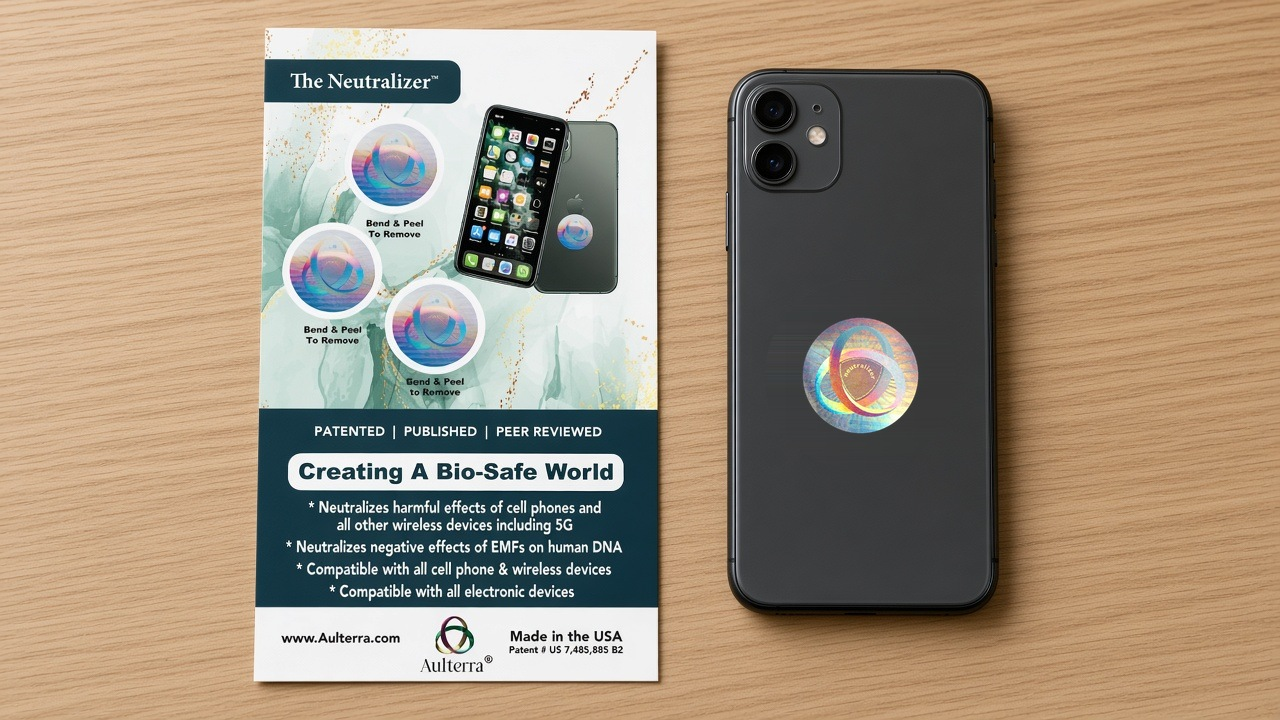
How to Apply EMF Neutraliser Disc: A Step-by-Step Guide for Phones and Home Devices
To apply an Aulterra EMF neutraliser disc, clean and dry the back of your phone, peel the disc, and press it on firmly, clear of camera lenses and ports, then f…
Does Phone EMF Protection Actually Work? An Evidence-Based Look for Australians
Phone EMF protection products such as the Aulterra neutraliser disc do not block or reduce mobile radiation, and they are not designed to. Genuine harmonising d…