
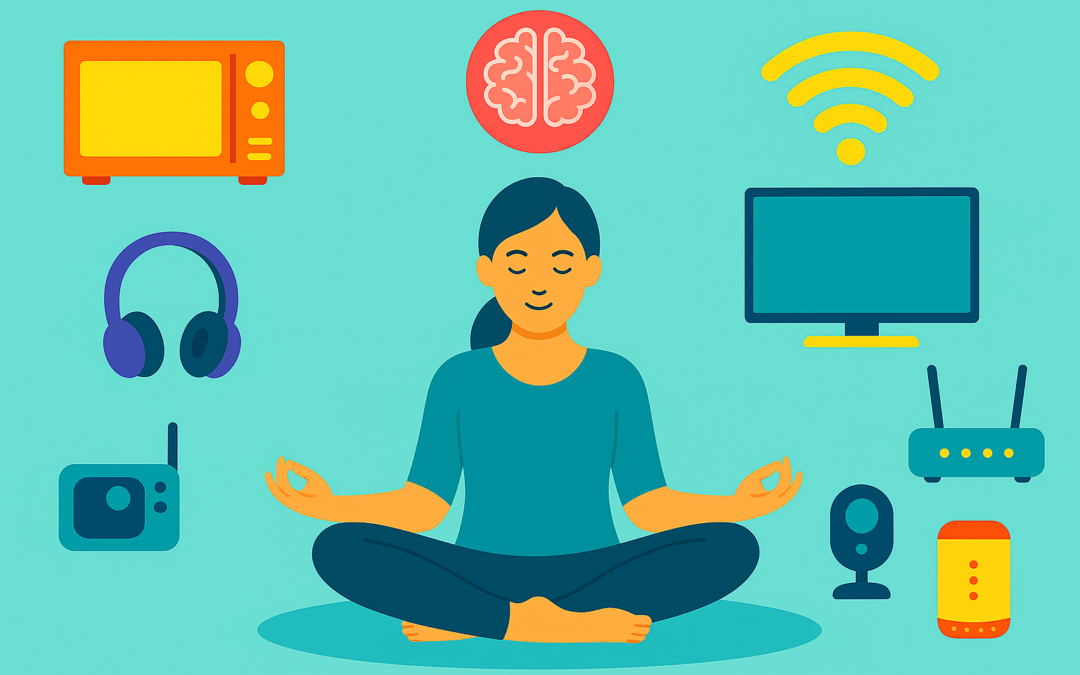
In today’s world, it’s nearly impossible to avoid electromagnetic fields (EMFs). From the moment we wake up and check our mobile phone, to working under LED lights, to streaming content via Wi-Fi—all of it exposes our body to a steady stream of EMF radiation. These invisible areas of energy—produced by devices like routers, power lines, laptops, and even household appliances—are part of what scientists refer to as the electromagnetic spectrum.
While EMFs are categorised as non ionizing radiation, which is generally considered low-energy and not directly harmful like x-rays or gamma rays, there’s mounting scientific evidence suggesting that long-term or high-intensity EMF exposure may affect the body in ways we’re only beginning to understand. Symptoms like chronic fatigue, headaches, poor sleep, and cognitive fog are commonly reported among those who are regularly exposed to radio frequency electromagnetic fields and extremely low frequency exposures—especially in urban environments with high-tech saturation.
Research from organisations like the World Health Organization, National Cancer Institute, and Environmental Health Sciences divisions of the Environmental Protection Agency continues to investigate the possible health effects of EMFs. Some studies even suggest a possible association with conditions like childhood leukaemia, breast cancer, and brain cancer, though more conclusive scientific literature is needed to establish causality.
So the big question we often hear is: if I reduce my EMF exposure today, how long does it take for my body to bounce back?
That’s exactly what we’re unpacking in this guide. I’ll walk you through how the body may respond to reduced exposure, what factors affect recovery time, and—most importantly—what proactive steps you can take right now to support your health.
Key Takeaways
- EMF exposure is widespread due to daily use of mobile phones, Wi-Fi routers, power lines, and other electronic devices.
- The body’s ability to heal from EMF radiation depends on factors like exposure level, frequency, duration, and individual health.
- Studies have explored the link between EMFs and health issues including sleep disturbances, headaches, fatigue, and even cancer risk.
- Reducing EMF exposure and supporting the body with sleep, nutrition, and stress reduction can improve recovery outcomes.
- EMF Neutralisation offers a scientifically supported way to retune harmful frequencies, making them less biologically disruptive without interfering with device use.
Summary Table
| Factor Influencing Recovery | Description |
|---|---|
| Severity of Exposure | Higher exposure to radiofrequency electromagnetic fields may require longer recovery periods. |
| Duration of Exposure | Chronic exposure to non ionizing radiation may lead to cumulative health effects. |
| Individual Sensitivity | People with electromagnetic hypersensitivity may take longer to recover. |
| Overall Health & Lifestyle | Diet, sleep quality, stress levels, and immune strength affect healing speed. |
| EMF Reduction Strategies | Using EMF neutralisers, turning off devices at night, and increasing distance can aid recovery. |
Understanding EMF Radiation
EMFs—or electromagnetic fields—are all around us, whether we see them or not. They’re generated by the electric and magnetic fields surrounding power lines, mobile phones, household appliances, and wireless technologies like Wi-Fi and Bluetooth. These fields form part of what’s known as the electromagnetic spectrum, which ranges from extremely low frequencies (ELFs) to higher energy forms like infrared radiation, x-rays, and gamma rays.
Most everyday EMF exposure falls into the non ionizing radiation category, meaning it doesn’t have enough energy to directly damage DNA the way ionizing radiation can. That said, growing scientific literature is investigating how long-term exposure to radio frequency electromagnetic fields—especially from mobile phones, routers, and smart meters—might affect the body’s natural rhythms, energy regulation, and overall health.
At EMF Neutralizer, we see a consistent pattern among customers who experience health effects like poor sleep, mental fog, irritability, and chronic fatigue. While not everyone feels EMFs the same way, the Environmental Health Sciences community continues to study what long-term EMF exposure means for the general public, particularly for vulnerable groups like children or people with pre-existing conditions.
Understanding what EMFs are—and the frequency ranges that impact humans most—is the first step to making smarter, more protective choices for your home, work, and wellbeing.
Factors Affecting Healing Time
There’s no one-size-fits-all answer to how long it takes the body to recover from EMF radiation. Healing depends on a range of personal and environmental factors, including how much exposure you’ve had, how long it’s been going on, and how sensitive your system is.
1. Level of EMF Exposure
Higher exposure levels—especially to radiofrequency electromagnetic fields from mobile phones, smart meters, and Wi-Fi routers—can place more stress on the body’s regulatory systems. The more intense the exposure, the longer it may take your body to rebalance.
2. Duration of Exposure
Someone who’s spent years in a high-EMF environment (say, sitting next to a router or working around industrial electronics) may need more time to recover than someone with only occasional exposure. Chronic exposure tends to build up over time, which can stretch the healing timeline.
3. Individual Sensitivity
Some people are simply more sensitive to electromagnetic fields than others. Those with electromagnetic hypersensitivity (EHS) often report stronger reactions and longer recovery periods. Age, genetics, stress levels, and overall health also play a role.
4. Lifestyle and Support Systems
Your body’s ability to bounce back is influenced by how well you support it. Good sleep, clean nutrition, movement, and stress reduction all help accelerate recovery. The more supportive your routine, the quicker your body can recalibrate.
5. Use of EMF Protection
Reducing exposure is critical—but adding neutralisation makes an even bigger difference. Our customers often find that once they start using tools like the Whole House USB Neutralizer or Neutralizer Discs, symptoms ease faster and more consistently. That’s because the body’s not just being shielded—it’s being given the chance to relax and restore in a balanced energetic environment.
Heavy Metals & EMF Sensitivity
Heavy metals and electromagnetic fields (EMFs) might seem unrelated at first glance, but they can interact in surprising ways to affect your health. Understanding the connection between these two factors is essential to addressing their combined impact on your well-being.
In fact, having heavy metals in your body can actually make you more sensitive to EMF exposure. Heavy metals can intensify oxidative stress caused by EMFs, amplifying symptoms like fatigue, brain fog, and anxiety. This dual toxicity can leave you feeling worse than you would from the individual sources alone. Addressing both issues in tandem often provides more relief than focusing on just one.
In terms of imagery, I’ve created a few options for you to choose from for the Healing from EMF Exposure article. These are a different illustration style from theMyths Debunked image. That one leaned more scientific and conceptual, whereas these are a little more approachable and “friendly” in tone—hopefully striking the right balance for your audience.
Typical Recovery Timelines
How long does it take to feel better after reducing EMF exposure? The truth is, it varies. But based on what we’ve seen with our community, there are some general patterns you can expect.
Short-Term Exposure
If you’ve only been exposed to EMFs in a limited or occasional way—like spending a few hours near a high-powered router or forgetting to turn your phone off before bed—your body may bounce back fairly quickly. Many people report feeling clearer or more relaxed within a few hours to a couple of days once the EMF source is removed or neutralised.
Long-Term or Chronic Exposure
If you’ve been in a high-EMF environment daily—say, living next to power lines, working under fluorescent lights, or using wireless devices constantly—it may take more time. Recovery in these cases can range from a few weeks to several months, depending on the length and intensity of the exposure, your baseline health, and how actively you support your healing.
We’ve worked with individuals who saw significant improvement within two weeks of implementing EMF protection products, improving their sleep habits, and reducing electromagnetic field exposure at home. Others, particularly those with electromagnetic hypersensitivity, needed longer and more comprehensive lifestyle changes to notice meaningful shifts.
The key takeaway? Your body can recover—but only if it’s given the chance. The earlier you start making changes, the sooner you may feel the difference.
Strategies to Support Healing
The body is remarkably resilient—but it thrives best when supported. If you’re dealing with symptoms you believe are linked to EMF exposure, here are some effective strategies that can help speed up recovery and promote balance.
1. Reduce Daily EMF Exposure
Start by identifying and minimising exposure to common sources like your Wi-Fi router, mobile phone, and smart devices. Use EMF meters to detect hot spots in your home, and create low-EMF zones—especially in bedrooms and workspaces.
Quick wins:
- Turn off Wi-Fi at night.
- Keep your phone in flight mode while you sleep.
- Avoid carrying your mobile in your pocket or bra.
2. Use EMF Neutralisation, Not Just Blocking
Traditional blockers can limit functionality and don’t always address the biological impact of EMFs. Our technology works differently. Products like our Neutralizer Discs, Whole House USB Neutralizer, and Car EMF Neutralizer are designed to retune the frequencies, helping to make EMFs less disruptive to your body.
Customers often report improvements in sleep, mood, and energy within days or weeks of introducing these products into their routine.
3. Prioritise Sleep and Recovery
Healing requires rest. EMFs can disrupt melatonin production, making restorative sleep harder to achieve. The EMF Energy Pillow offers a dual benefit: it supports better sleep and neutralises EMFs in your sleeping environment.
Keep electronic devices out of your bedroom where possible—or at least 1.5–2 metres from your bed.
4. Focus on Nourishment and Detox
A healthy diet rich in antioxidants can help combat oxidative stress potentially linked to non ionizing radiation. Stay hydrated, minimise processed foods, and support your body’s natural detox pathways through gentle movement and breathwork.
5. Incorporate Grounding and Nature Time
Walking barefoot on grass, sand, or earth—known as grounding—can help reset your body’s natural rhythms and reduce inflammation. It’s simple, free, and a brilliant complement to other EMF-reducing strategies.
6. Manage Stress Proactively
EMFs may amplify stress responses in the body. Practices like meditation, breathwork, and regular exercise help regulate your nervous system and make you more resilient overall.
The Role of EMF Neutralisation
If there’s one message I like to share with every customer it’s this: you don’t have to block EMFs—you can neutralise them. And that distinction matters.
While shielding technologies aim to block electromagnetic fields, they often come with trade-offs. Blocking can interfere with device functionality, limit access to Wi-Fi or Bluetooth, or create inconsistent results. Worse, it doesn’t address the underlying biological stress your body may experience when exposed to non ionizing radiation.
That’s where EMF Neutraliser technology comes in. Powered by Aulterra’s proprietary blend of activated paramagnetic minerals, our products work at the frequency level. They interact with radiofrequency electromagnetic fields and extremely low frequency exposures, retuning chaotic energy patterns into harmonised, biologically compatible frequencies.
This means:
- Your devices still function exactly as they should.
- The EMFs they emit become significantly less disruptive.
- Your body gets the breathing space it needs to recover and regulate naturally.
Whether you’re using a Neutralizer Disc on your mobile phone, a Whole House USB Neutralizer for full-home protection, or a Car EMF Neutralizer for safe commuting, you’re not cutting tech out of your life—you’re using it smarter, and safer.
EMF Neutralisation isn’t about fear. It’s about empowering yourself with solutions that work with your lifestyle—not against it.
Final Thoughts
EMFs are part of modern life—but that doesn’t mean they have to control your wellbeing. Whether you’re feeling the subtle effects of EMF radiation or simply want to reduce your exposure proactively, your body has the ability to adapt and recover—especially when you give it the right support.
The key is action. Small steps like turning off your Wi-Fi at night, using EMF-neutralising tools, and spending more time grounded in nature can make a significant difference. And for those of us who rely on our mobile phones, laptops, and smart devices daily, EMF Neutraliser products provide a way to stay connected while reducing the biological stress associated with long-term exposure.
You don’t need to disconnect to protect your health—you just need a smarter approach. EMF Neutralisation offers a practical, science-backed way to create a low-EMF environment that supports better energy, sleep, focus, and peace of mind.
So if you’re ready to support your recovery and reduce the impact of EMFs, we’re here to help—with real-world solutions that work for real lives.
FAQs Answered
Q: How can I detox EMF radiation from my body naturally?
While electromagnetic fields (EMFs) can’t be “flushed out” like toxins, you can help your body recover from EMF exposure by reducing your daily contact with high-frequency devices such as Wi-Fi routers, mobile phones, and smart meters. Grounding techniques (like walking barefoot on natural surfaces), antioxidant-rich diets, quality sleep, and the use of EMF-neutralising products like EMF Neutralizer Discs or Whole House USB Neutralizers can support your body’s natural energetic balance.
Q: What are the potential long-term health effects of EMF radiation?
Scientific literature has linked prolonged EMF exposure to symptoms such as sleep disruption, chronic fatigue, brain fog, and headaches. Some research has explored associations with more serious outcomes like hormonal imbalance, oxidative stress, and even increased risks of childhood leukaemia or brain cancer—particularly with long-term proximity to sources like mobile phones and power lines. The World Health Organization and the International Agency for Research on Cancer classify certain radio frequency electromagnetic fields as possibly carcinogenic to humans.
Q: What are the symptoms of EMF sensitivity (EMF poisoning)?
EMF sensitivity—often referred to as electromagnetic hypersensitivity (EHS)—can cause a wide range of symptoms, including:
- Head pressure or tingling sensations
- Persistent fatigue or dizziness
- Difficulty concentrating (brain fog)
- Insomnia or disrupted sleep
- Anxiety or heart palpitations
These symptoms often intensify near high-EMF sources like wireless routers, Bluetooth devices, or mobile towers.
Q: How does EMF exposure affect the brain and nervous system?
EMF exposure, particularly from close-range devices like mobile phones and wireless earbuds, may alter brainwave patterns, reduce melatonin production, and impact sleep quality. Emerging studies have also explored its effects on memory, learning ability, and cognitive function. The biological impact appears to be stronger in children due to thinner skulls and developing nervous systems.
Q: What materials are most effective at absorbing or neutralising EMF radiation?
Materials like carbon-based fabric, copper mesh, and aluminium sheets can help absorb or block electromagnetic radiation—especially in shielding applications. However, these solutions may also interfere with signal quality. EMF Neutralisation technology works differently: instead of blocking EMFs, it transforms disruptive frequencies into biologically harmonious waveforms, helping reduce stress on the body while allowing your devices to function normally.