EMF Protection for Car Australia: Why Your Vehicle Is a Radiation Hotspot (2026)
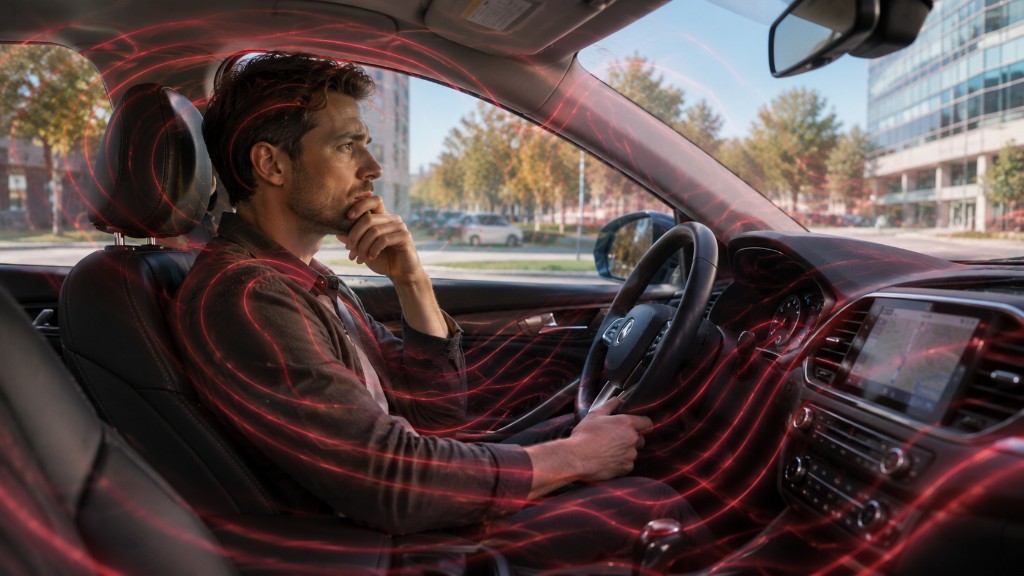
Most Australians think of their car as a safe, familiar space. It gets them to work, drops the kids at school, and carries them through the morning commute with the radio on and the phone mounted on the dash. What they rarely consider is what is happening inside that metal cabin from an electromagnetic perspective. The car is one of the most concentrated EMF environments most people ever sit inside, and they do it for an average of more than an hour every single day.
The metal body of a vehicle does something counterintuitive. Rather than simply blocking electromagnetic radiation from outside, it acts as a partial Faraday cage: reflecting and amplifying the signals generated inside the cabin from your own devices. Every Bluetooth call, every GPS ping, every 4G or 5G data burst from your phone or in-car modem bounces off the steel and glass around you and concentrates within a space roughly two metres long and a metre wide. You and your passengers sit in the middle of that. If you have children in the rear seats, they are sitting in it too.
At EMF Neutralizer, we do not believe the right response to this is panic. The right response is informed, practical action. This article will walk you through exactly why cars create such a concentrated EMF environment, what sources are contributing to your cumulative daily exposure, how Australian driving habits compound the problem, and what you can actually do about it. If you want to neutralise your environment and take control of your immediate environment, the car is one of the highest-leverage places to start — see compare EMF protection products for home, travel and personal options in one place.
Key Takeaways
- The metal cabin of a car reflects and concentrates EMF from internal sources, creating a higher effective exposure than the same devices used outdoors
- Australian commuters average more than 60 minutes of daily driving, meaning sustained, repeated exposure rather than brief, incidental contact
- Multiple simultaneous sources, including phone, Bluetooth, GPS, infotainment systems, and in-car Wi-Fi, compound the invisible electromagnetic burden in ways that single-device safety thresholds do not account for
- Children in rear seats are closer to certain antenna and device positions and have thinner skulls, making their relative exposure a legitimate consideration
- EMF blocking strategies are largely ineffective in a car and can make exposure worse by forcing devices to boost signal strength
- EMF neutralisation, using a device like the Aulterra Whole Car USB, works differently and is specifically designed for the vehicle environment
Protect your family from EMF exposure
Browse our science-backed neutralizer products.
Shop EMF ProtectionSummary Table: EMF Sources in a Typical Australian Car
- Frequency Range
- 700 MHz - 3.5 GHz
- Typical Output
- 0.2 - 2 W (peak)
- Key Study Reference
- ARPANSA RPS3 guidelines
- Frequency Range
- 2.4 GHz
- Typical Output
- 1 - 100 mW
- Key Study Reference
- IEEE 802.15.1 specification
- Frequency Range
- 1.575 GHz
- Typical Output
- Passive receive, low emission
- Key Study Reference
- ITU-R documentation
- Frequency Range
- 700 MHz - 2.6 GHz
- Typical Output
- 100 mW - 2 W
- Key Study Reference
- ARPANSA exposure standard
- Frequency Range
- 1 - 300 kHz (ELF/LF)
- Typical Output
- Variable, model-dependent
- Key Study Reference
- Firstenberg et al., bioelectromagnetics literature
- Frequency Range
- 10 kHz - 1 GHz
- Typical Output
- Low, but close-proximity
- Key Study Reference
- WHO EMF Project documentation
- Frequency Range
- 315 MHz / 433 MHz
- Typical Output
- Very low, intermittent
- Key Study Reference
- SAE J2657 standard
Why Cars Are Unique EMF Environments
The Partial Faraday Cage Effect
A true Faraday cage completely shields its interior from external electromagnetic fields. The metal body of a car does something less clean and considerably more problematic. It is an imperfect, partial Faraday cage, and the distinction matters enormously.
Because the cabin has gaps, including windows, door seals, and ventilation openings, external signals from mobile towers and Wi-Fi networks can still enter. But the metal panels surrounding you reflect and recirculate the EMF generated by your own internal devices. Your phone attempting to connect to a 5G tower outside does not simply radiate outward and dissipate. A meaningful proportion of that signal bounces off the door panel to your left, the roof above you, and the windscreen in front of you, and reflects back toward the source, which is you and your phone.
Research published in the bioelectromagnetics literature has consistently shown that using a mobile phone inside a vehicle increases the effective exposure to the user compared with using the same phone in open space. A 2004 study by Wiart et al. modelled signal absorption inside vehicles and found that the specific absorption rate (SAR) values measured in confined metallic environments were notably elevated compared to open-air conditions. More recent work examining 4G and 5G frequencies has reinforced this finding as signal frequencies have increased.
This is not a fringe claim. It is basic physics applied to a space most Australians spend a significant portion of their day in.
BITRE Commute Data and Daily Exposure Duration
The Bureau of Infrastructure and Transport Research Economics (BITRE) has consistently reported that Australian commuters spend substantial time in private vehicles. In metropolitan areas, average one-way commute times by car sit between 30 and 45 minutes, meaning daily round-trip driving time of 60 to 90 minutes for the majority of working Australians. In outer suburban areas of Sydney, Melbourne, and Brisbane, those numbers are higher.
This is not occasional exposure. This is a daily, repeated, sustained period of sitting inside a concentrated EMF environment. When you stack that on top of workplace EMF exposure from laptops, monitors, and office Wi-Fi, and then home exposure from routers, smart meters, and devices, the cumulative daily exposure becomes the relevant figure. Regulatory thresholds assessed on a single-device basis simply do not reflect this reality.
Rideshare drivers, truck drivers, delivery drivers, and anyone who spends professional time behind the wheel face an even more acute version of this problem. A full-time rideshare driver may spend six to ten hours per day inside a cabin with their phone continuously transmitting data, a Bluetooth headset active, and GPS running. The invisible electromagnetic burden in that scenario is orders of magnitude greater than a casual commuter.
Every EMF Source in Your Car
Mobile Phone: The Dominant Source
Your mobile phone is the single largest contributor to in-car EMF exposure, and it behaves differently inside a vehicle than it does outside one. When you drive through areas with weak signal coverage, which happens regularly across suburban Australia and almost constantly on regional roads, your phone automatically increases its transmission power to maintain a connection. This means the phone in your cupholder or on your dash mount is actively compensating for signal loss by radiating more intensely, often at times when you are most enclosed in the vehicle.
Voice calls are more radiation-intensive than silent data use, which means hands-free calling through the car speaker system does not eliminate exposure. It may actually concentrate it. The phone is still transmitting at full power. You have simply moved the speaker away from your ear, while the device itself sits within a metre of your body.
Bluetooth: Constant Background Exposure
Bluetooth operates at 2.4 GHz and is technically a lower-power protocol than 4G or 5G. However, it is also almost never turned off in a modern car. The moment you start the engine, your infotainment system begins searching for paired devices. Your phone connects and maintains that connection continuously. If you use wireless earbuds or a hands-free headset, you have added a second Bluetooth transmitter operating next to your head.
Low power does not mean no exposure. In the context of a metal-walled cabin where signals reflect and accumulate, continuous Bluetooth transmission contributes meaningfully to the aggregate electromagnetic load inside the vehicle.
GPS Navigation
GPS receivers are primarily passive devices, meaning they receive signals from satellites rather than transmitting strongly. However, most modern navigation applications run on your phone and use a combination of GPS satellites, mobile data, and Wi-Fi positioning to maintain accuracy. The navigation software itself drives continuous data transmission from your phone to update maps, traffic, and routing in real time. The GPS component is relatively benign; the data-hungry application running on top of it is not.
Infotainment Systems and In-Car Wi-Fi
Modern vehicles increasingly ship with integrated 4G or 5G modems built into the dash or roof lining. These modems operate independently of your phone and maintain a continuous cellular data connection for the vehicle. They power features like live traffic, streaming audio, over-the-air software updates, and in-car Wi-Fi hotspots for passengers.
An embedded vehicle modem sitting 30 to 60 centimetres from the driver's seat and transmitting continuously represents a meaningful fixed EMF source that most drivers are unaware of. It cannot be turned off without disabling connected features that many people consider essential.
Electric Vehicles: An Additional Layer
Electric vehicles introduce a source of EMF that petrol cars do not have at the same scale: the battery management system and electric drivetrain. EV powertrains generate extremely low frequency (ELF) and low frequency (LF) electromagnetic fields, typically in the 1 Hz to 300 kHz range, as a consequence of the high currents flowing through battery cables, inverters, and motors.
Research from the Norwegian Institute of Public Health and bioelectromagnetics studies across European vehicle fleets have measured ELF-EMF levels in EVs. While findings vary by make and model, some studies have recorded ELF magnetic field strengths in the passenger compartment that exceed the ICNIRP reference levels for the general public under certain driving conditions, particularly during hard acceleration or regenerative braking.
Australia's EV adoption is accelerating. The Electric Vehicle Council reported that EV sales in Australia grew significantly through 2024 and 2025, and by 2026 EVs represent a meaningful share of new vehicle registrations. Australian EV drivers face the combined EMF load of both the conventional wireless device sources and the additional ELF fields from the drivetrain.
This does not mean EVs are uniquely dangerous. It means the full picture of in-car EMF is more complex for EV drivers, and layered EMF protection is correspondingly more important.
How Australian Driving Habits Increase Exposure
The Suburban Commuter
Australia is one of the most urbanised nations on earth, and Australian cities are geographically large. Sydney, Melbourne, and Brisbane are among the most sprawling major cities globally. The consequence is long commutes by private vehicle for a large proportion of the population. ABS data on transport consistently shows that car travel dominates Australian commuting, with more than 60% of workers driving to their place of employment.
A suburban commuter in western Sydney or Melbourne's outer east might drive 45 minutes each way, six days per week. That is nine hours per week sitting inside a partial Faraday cage with a phone actively transmitting. Over a working year, that figure approaches 450 hours of sustained car-based EMF exposure before any other environmental factors are considered.
Families with Children
Children in the rear seat of a car occupy a position that is often directly adjacent to Bluetooth antennas, in-built modem antennas, and the reflected field of the driver's phone. Children's skulls are thinner than adult skulls, and their brain tissue has a higher water content, both of which are associated with greater relative absorption of electromagnetic radiation compared to adults.
I have spoken with families where parents had never considered the rear seat as a specific EMF exposure point. Once they mapped out where their vehicle's embedded modem sat relative to where their child was buckled in, the picture changed. Installing an Aulterra Whole Car USB was one of the first practical steps they took, and it gave them a meaningful baseline of protection for the whole cabin.
Rideshare and Professional Drivers
For someone driving professionally, whether as a rideshare operator, courier, or truckie, the car is not a commute vehicle. It is a workplace. Occupational health and safety frameworks in Australia, administered through Safe Work Australia, require employers to assess and manage workplace health risks. EMF exposure is an acknowledged workplace hazard in industrial settings. For professional drivers, the vehicle cabin deserves the same level of scrutiny.
A rideshare driver running a full shift has their phone transmitting data, GPS active, and Bluetooth connected for eight or more hours consecutively. If their vehicle has an integrated modem, that is running too. The cumulative daily exposure for a professional driver represents one of the most significant personal EMF scenarios in everyday Australian life.
EMF Blocking vs EMF Neutralisation in Vehicles
Why Blocking Strategies Fail in a Car
EMF blocking works on the principle of placing a conductive barrier between you and the EMF source. EMF-blocking phone cases, shielding fabric, and similar products operate on this logic. In an open environment, with a single device, blocking can reduce the signal reaching your body.
In a car, blocking creates a problem that compounds the one you are trying to solve. When you put a phone in an EMF-blocking case, the phone's antenna detects a weaker outgoing signal (because the case is attenuating it) and responds by increasing its transmission power to re-establish the network connection. The phone works harder, generates more radiation, and your net exposure may actually increase.
The confined metallic environment of a car amplifies this dynamic. Blocking one signal source does not reduce the total electromagnetic load in the cabin because the signals from multiple sources are reflecting and accumulating regardless. You cannot block your way out of a Faraday cage effect.
The Neutralisation Approach
Neutralisation works on a fundamentally different principle. Rather than attempting to prevent EMF from existing, neutralisation seeks to alter the nature of the EMF field in a way that makes it less biologically disruptive. The Aulterra approach, which underpins the Aulterra Whole Car USB, uses a paramagnetic mineral compound to interact with the coherent, artificial EMF waveforms emitted by electronic devices. The intention is not to block or reduce signal strength but to introduce a naturally occurring field that influences the structure of the artificial EMF, reducing its biological impact without interfering with device function.
This distinction is important for practical reasons. A neutralising device does not interfere with your phone signal, your GPS accuracy, or your Bluetooth connection. Your car continues to operate exactly as designed. What changes is the character of the electromagnetic environment inside the cabin.
You can read more about the mechanism and the supporting research on our science and evidence page and our how it works page.
How the Aulterra Whole Car USB Works
The Aulterra Whole Car USB is designed specifically for the vehicle environment. It plugs into any standard USB port in your car, which almost every vehicle made in the last decade has in the centre console or dash. If yours does not, a standard USB adapter in the 12V power outlet works just as well. From that position it works to neutralise the EMF throughout the cabin.
The device contains a proprietary blend of paramagnetic minerals that have been homeopathically activated. When plugged in, it does not draw power in any meaningful way and does not emit a signal of its own. Instead, it interacts with the ambient electromagnetic fields in the cabin and works to alter their coherence in a way that is less disruptive to biological tissue.
It is a simple, passive installation. You plug it in and it works continuously without any maintenance, charging, or adjustment required.
For those who want layered EMF protection across both the vehicle and individual high-output devices inside it, pairing the whole car USB with Aulterra Neutralizer Discs applied directly to your phone provides a more comprehensive approach. The disc addresses the phone's direct output at the source, while the whole car USB works on the broader cabin environment.
If you want guidance on which combination is right for your specific vehicle, commute pattern, or family situation, contact us here and we will work through it with you.
Practical Tips to Reduce Car EMF Beyond Devices
Using a neutralisation product is the most comprehensive and practical step for whole-cabin EMF management. Alongside that, there are behavioural changes that meaningfully reduce exposure.
Put Your Phone on Aeroplane Mode When You Are Not Navigating
If you are not actively using your phone for navigation, music streaming, or hands-free calls, switching it to aeroplane mode eliminates its transmission entirely. This is especially relevant if your phone is sitting in your pocket or in a mount close to your body. For passengers, particularly children, aeroplane mode during car travel is a simple, zero-cost step.
Use Speakerphone or the Car's Audio System, Not a Bluetooth Headset
Routing calls through the car's speaker system with your phone in the glove box or back seat increases the distance between you and the transmitting device. Distance is one of the most effective natural reducers of EMF intensity, following an inverse square relationship: doubling the distance reduces field strength to roughly a quarter of its original level.
Bluetooth headsets and earbuds placed in or near your ear for extended periods are a particular concentration point. Using the car's built-in hands-free system with the phone stowed away is a better option for regular call volume.
Disable In-Car Wi-Fi When Not in Use
If your vehicle has an integrated cellular modem powering a Wi-Fi hotspot for passengers, disable it when the hotspot is not actually being used. The modem will continue to operate for vehicle functions, but disabling the hotspot reduces the demand on the transmitter and the associated data traffic. Check your vehicle's infotainment menu for cellular or connectivity settings.
Open Windows on Long Drives
Opening windows partially disrupts the Faraday cage effect by introducing gaps in the metallic enclosure. It is not a complete solution, but it changes the reflection dynamics inside the cabin and allows some of the internally generated EMF to dissipate outward rather than recirculating. On highway drives in particular, running with windows slightly open is a simple passive step.
Avoid Phone Calls at Low Signal Strength
When your phone displays one or two bars of signal, it is actively boosting its transmission power to maintain the connection. This is when in-car phone exposure peaks. If you can, delay calls until you are in an area with stronger signal, or use a message-based alternative where feasible. This is especially relevant in tunnels, underground car parks, and regional areas.
Testimonial
"I wanted to give you feedback on the car USB I bought. Thank G-D I see a very noticeable difference with it. I would usually become exhausted every time driving my car and need the bathroom frequently. Now I can drive an hour and a half without stopping for the restroom even ONCE! I'm also much more calm when driving. So Thank you, Thank you, and one more time THANK YOU!" — Y M Dorfman
References
-
ARPANSA Radiation Protection Standard RPS3: Maximum Exposure Levels to Radiofrequency Fields - The Australian Radiation Protection and Nuclear Safety Agency's primary regulatory document setting exposure limits for radiofrequency electromagnetic fields in Australia. This standard provides the baseline reference for device output limits and is the relevant Australian regulatory framework for consumer EMF exposure.
-
Bureau of Infrastructure and Transport Research Economics (BITRE), Australian Infrastructure Statistics Yearbook - BITRE's annual statistical publication documenting Australian transport usage patterns, including vehicle kilometres travelled, commute durations, and modal share by transport type across major Australian cities. Provides the factual basis for Australian driving time and commute frequency data.
-
Wiart, J. et al. (2004), Analysis of RF exposure in the human head for mobile telephones used in vehicles - Published in the journal Electromagnetics, this study modelled specific absorption rate values for mobile phone use inside vehicle cabins and compared them to open-air conditions, providing evidence for the reflective amplification effect of metallic vehicle enclosures on phone-generated EMF.
-
WHO International EMF Project documentation - The World Health Organisation's ongoing research programme on electromagnetic fields and public health, providing the international scientific context for understanding EMF source classifications, exposure scenarios, and the current state of health effects research across frequency bands relevant to consumer devices.
-
Electric Vehicle Council, Australian EV Industry Report - Annual industry publication documenting electric vehicle sales, fleet growth, and adoption trends in Australia. Provides context for the growing proportion of Australian drivers operating EVs and the associated shift in the in-vehicle EMF profile.
-
Havas, M. (2017), When theory and observation collide: Can non-ionizing radiation cause cancer? - Published in Environmental Pollution, this peer-reviewed paper reviews the biological evidence for effects of non-ionising radiation below regulatory thresholds, addressing the gap between single-device safety standards and real-world cumulative exposure scenarios.
Stay informed on EMF wellness
Get practical tips and product updates in your inbox.
Frequently asked questions
Does our "emf protection for car australia" guide explain whether electric vehicles increase in-car EMF exposure?
Yes. EVs introduce an additional EMF source that petrol vehicles do not have at the same scale: the ELF and LF magnetic fields generated by the battery management system, inverters, and electric drivetrain. Research from European vehicle studies has shown that ELF-EMF levels in the passenger compartment of some EV models can be elevated during acceleration and braking. EV drivers are dealing with a broader spectrum of EMF sources and benefit from a whole-car neutralisation approach, with perhaps greater reason to prioritise it than conventional vehicle drivers.
Does using hands-free Bluetooth in the car eliminate phone radiation exposure?
No. Using Bluetooth hands-free removes the phone from direct contact with your head, but the phone continues to transmit at full 4G or 5G power to maintain the mobile network connection. In a car cabin, that signal reflects off the metal body and recirculates throughout the space. You and all passengers are still exposed to the phone's transmission. Hands-free is better than holding the phone to your ear, but it does not resolve the overall in-vehicle EMF exposure problem.
Is it safe for children to be in a car with mobile phones and Bluetooth active?
Children absorb electromagnetic radiation at a higher relative rate than adults due to thinner skulls and higher water content in developing brain tissue. The precautionary principle supports minimising their exposure where practical. Recommended steps include switching phones to aeroplane mode when GPS is not needed, installing an Aulterra Whole Car USB, and applying Neutralizer Discs to devices that must remain active. The rear seat is often directly adjacent to embedded modem antennas, making it worth checking your specific vehicle model's antenna placement.
Does the Aulterra Whole Car USB interfere with my phone signal or GPS?
No. The Whole Car USB is a passive device that interacts with the character of EMF fields rather than blocking or attenuating them. It does not emit a competing signal, does not reduce signal strength, and does not affect the function of any device in the vehicle. Your phone, GPS, Bluetooth, and integrated modem all continue to operate exactly as they did before installation.
How long does the Aulterra Whole Car USB take to work?
Many users report noticing a difference in how they feel after driving within the first one to two weeks of use. The device operates continuously from the moment it is plugged in with no activation period, warm-up cycle, or charging requirement. Individual responses vary based on sensitivity and baseline EMF environment.
Should I use a Neutralizer Disc on my phone as well as the Whole Car USB?
Yes. For comprehensive layered EMF protection, using both is recommended. The Whole Car USB works on the ambient field throughout the cabin from all sources. The Neutralizer Disc applied to your phone works directly at the source of the device's output. Used together they provide a more complete approach, with the disc addressing point-of-emission and the whole car USB managing the overall cabin environment.
Are ARPANSA's guidelines sufficient to protect me from car EMF exposure?
ARPANSA's RPS3 standard sets limits based on single-device, acute exposure scenarios designed to prevent thermal tissue damage. These limits do not address the cumulative exposure scenario of multiple simultaneous devices operating in a reflective metallic enclosure, nor do they assess chronic, repeated daily exposure over years. The regulatory framework is a minimum safety floor, not a comprehensive health optimisation standard. Taking a proactive approach to in-vehicle EMF exposure goes beyond what the regulatory standard alone covers.
What is the best EMF protection strategy for a long-distance drive or road trip?
For a long drive, key steps include: reduce active transmission from your phone where possible by using downloaded offline maps and enabling aeroplane mode on devices not actively in use; ensure your Whole Car USB is installed before you depart; and apply Neutralizer Discs to any devices that must remain on. On long drives, cumulative exposure duration increases substantially, making the whole-cabin neutralisation approach more rather than less important. If multiple family members have their own devices, consider whether each device has a disc applied.

Richard Kent
Science-backed EMF wellness education from the EMF Neutralizer team.
Related articles

Best EMF Protection Sticker for Your Phone in Australia: An Honest Review and Comparison
The best 'EMF protection sticker' for an Australian phone user is the Aulterra Neutralizer Discs 3-Pack — small adhesive discs applied one per device, starting…

Do EMF Pendants Actually Work? An Honest Answer for Australians
EMF pendants are not designed to block or shield electromagnetic fields the way a bed canopy, Faraday enclosure, or device pouch does. They are designed to harm…
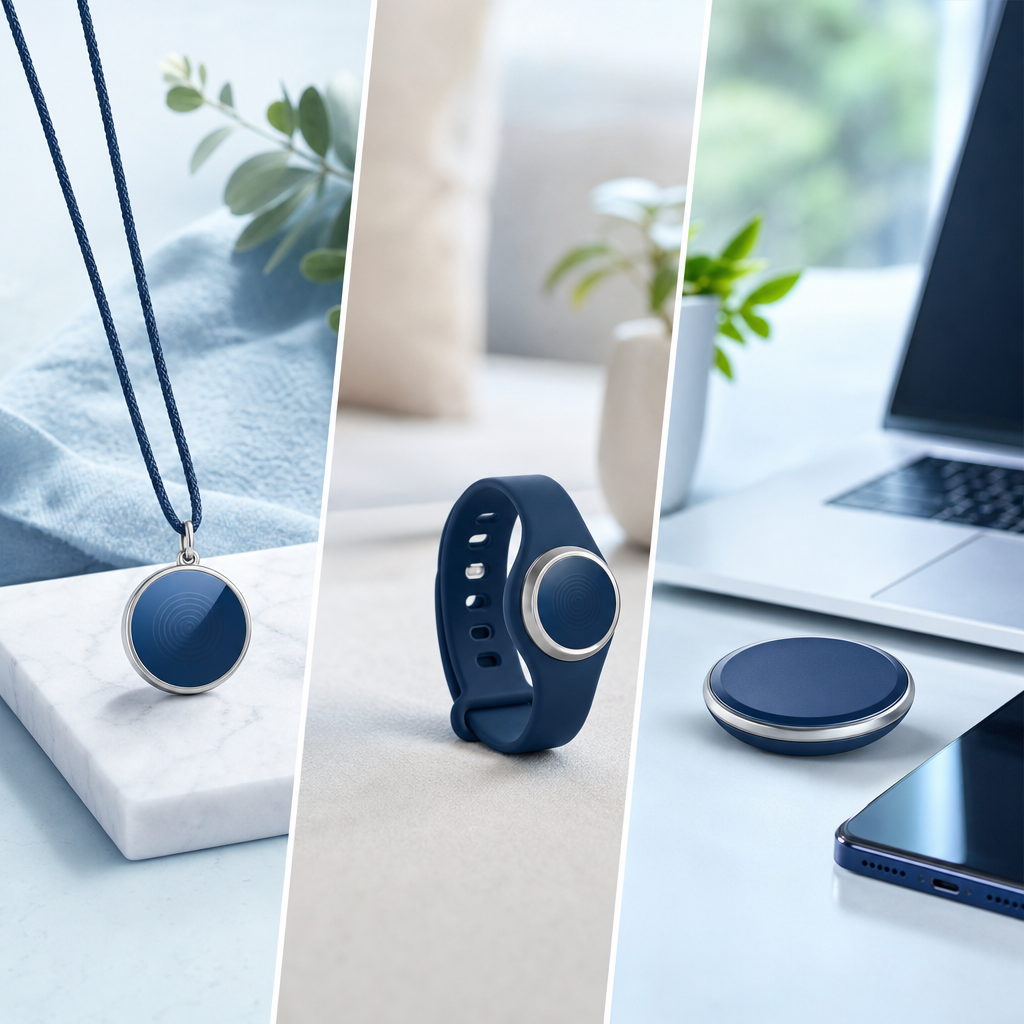
Comparison page: pendant vs wristband vs disc for EMF protection
A pendant is the strongest all-purpose choice for personal EMF protection, while a wristband suits people who prefer a wearable away from the neck. A disc is di…